
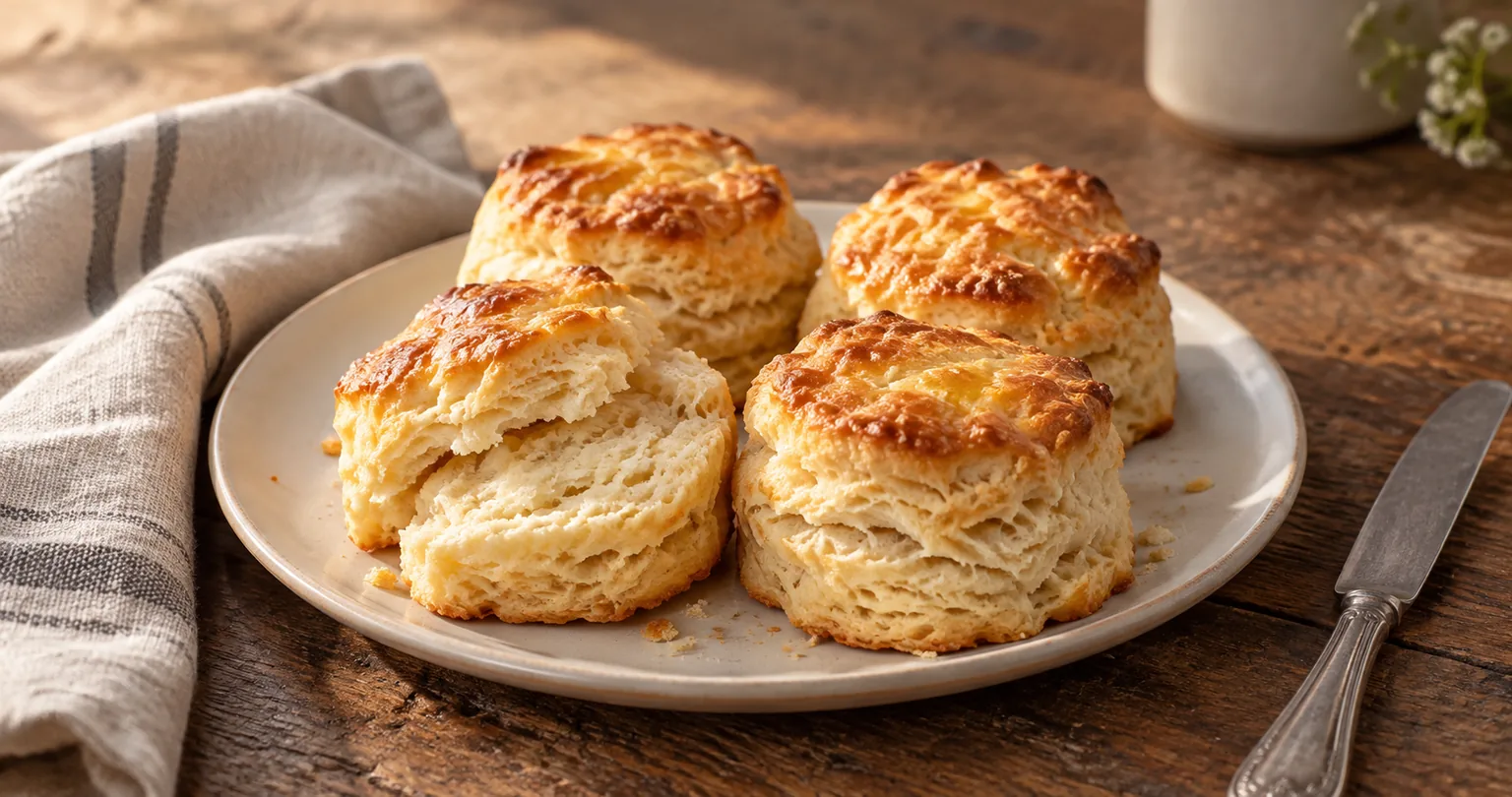
Buttermilk biscuits
- Yield
- 4 servings
Tall, flaky biscuits come down to three habits: cold butter, a light hand and a hot oven. Once those are yours, you can have a pan of biscuits on the table any morning from flour, butter and buttermilk.
IngredientsTips are one tap away.
Ingredients
Batches and reset
4 servings · US measures · 1 batch
Batching
Mix, fold and cut one base batch at a time; one half-sheet pan holds one batch. Larger yields use separate batches, and the baking time does not scale with quantity.
Original recipe: 4 servings.
The base nutrition scenario leaves out extra buttermilk and the optional flaky salt. The flour used to dust the counter and cutter is not counted, because the amount the dough picks up is not established, so nutrition is incomplete.
Before you start
- Read through the recipe before heating the oven. Gather the pan, plate, bowl, cutter and measured ingredients, and keep the butter and buttermilk cold.
Directions
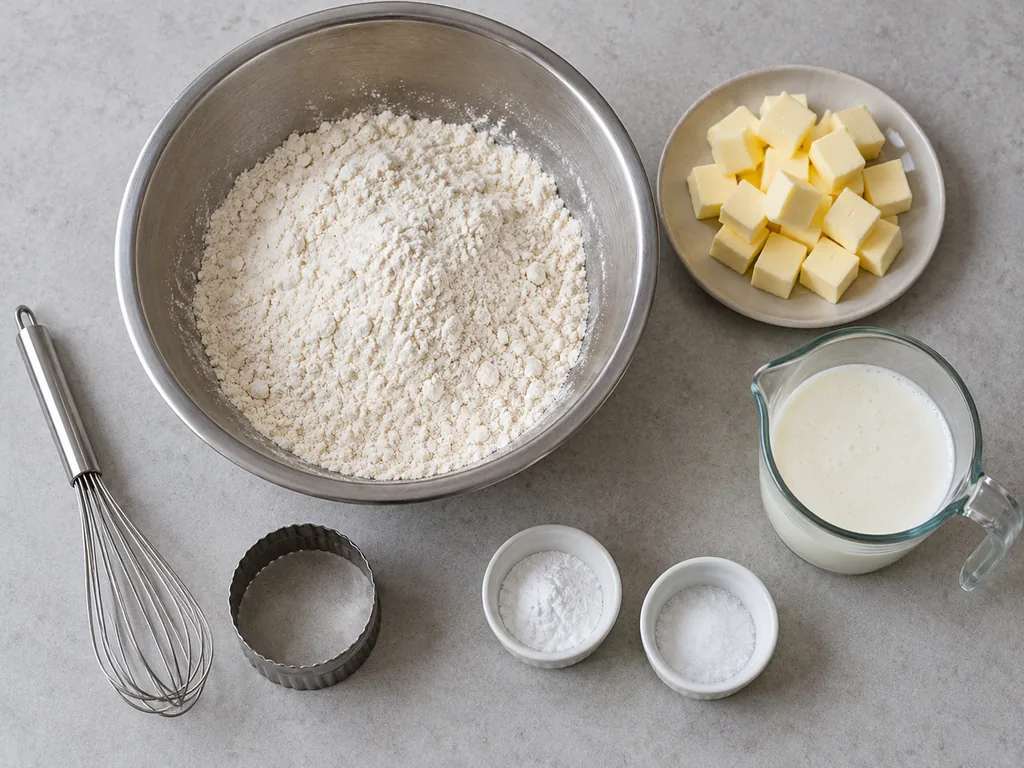
Read and gather
For the whole recipe
Read through the recipe, gather the equipment, and use the ingredient lines to measure and prepare everything. In a warm kitchen, chill the bowl and the flour as well. Everything is measured, cold and within reach.
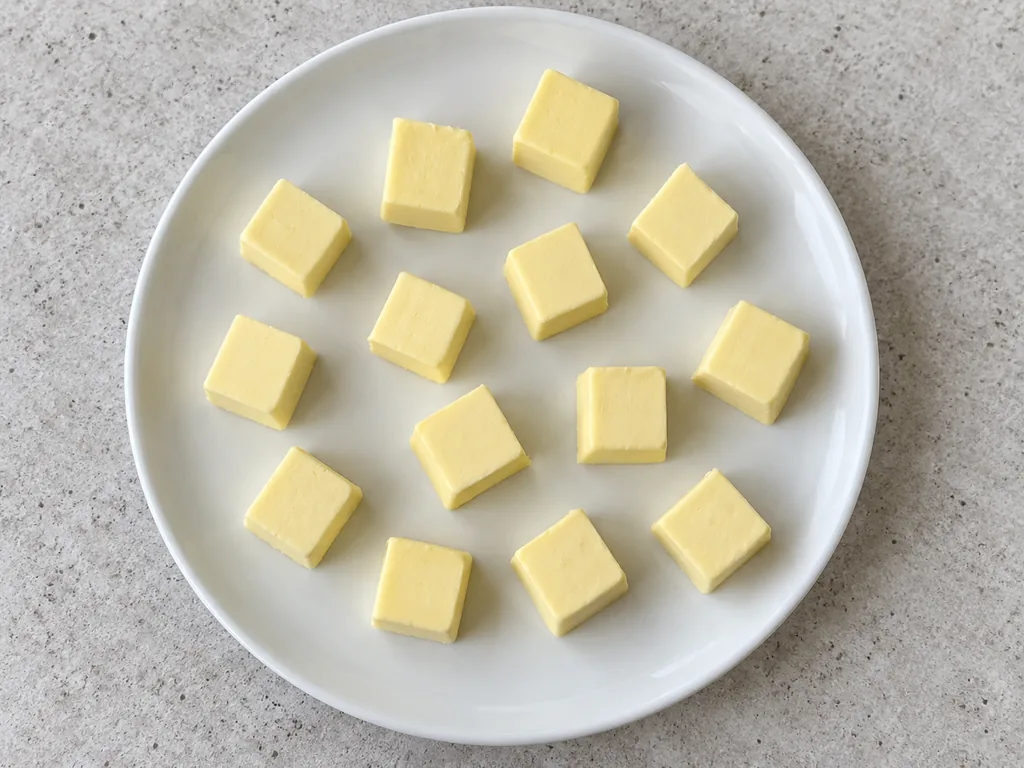
Freeze the butter
For each dough batch
Freeze the butter cubes in a single layer on the plate until they are very firm, about 10 minutes.
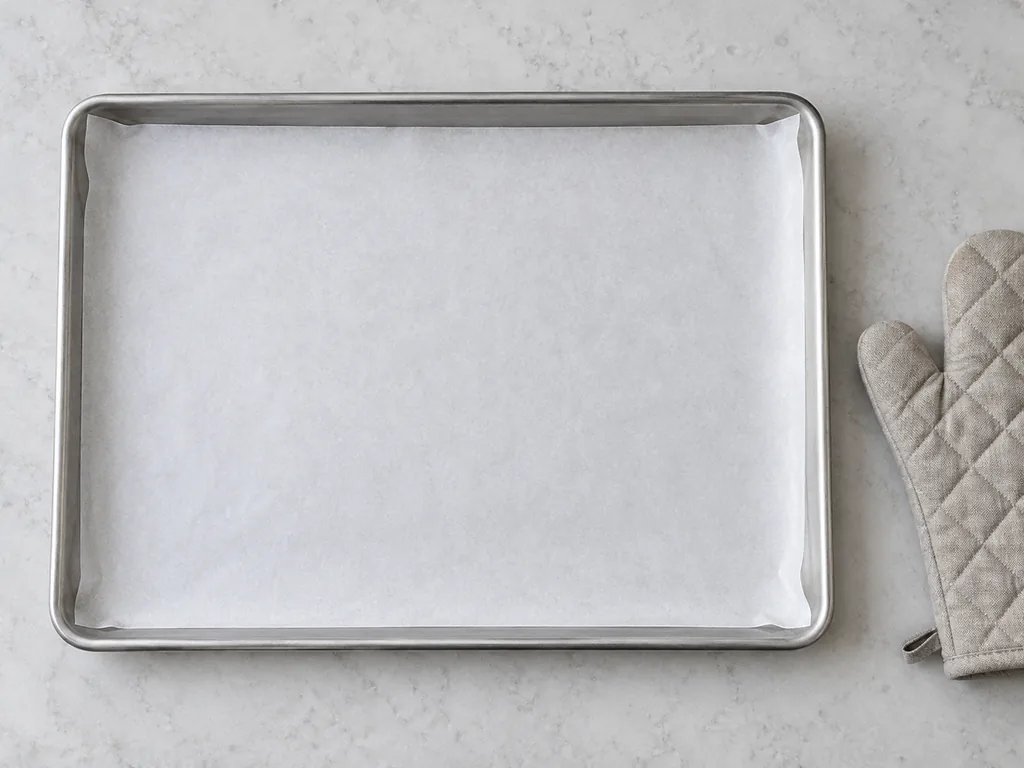
Heat the oven and line the pan
For each dough batch
Heat the oven to 450°F (230°C) with a rack in the upper-middle position, and line the 18 x 13-inch half-sheet pan with parchment. Bake only after the oven reaches 450°F.
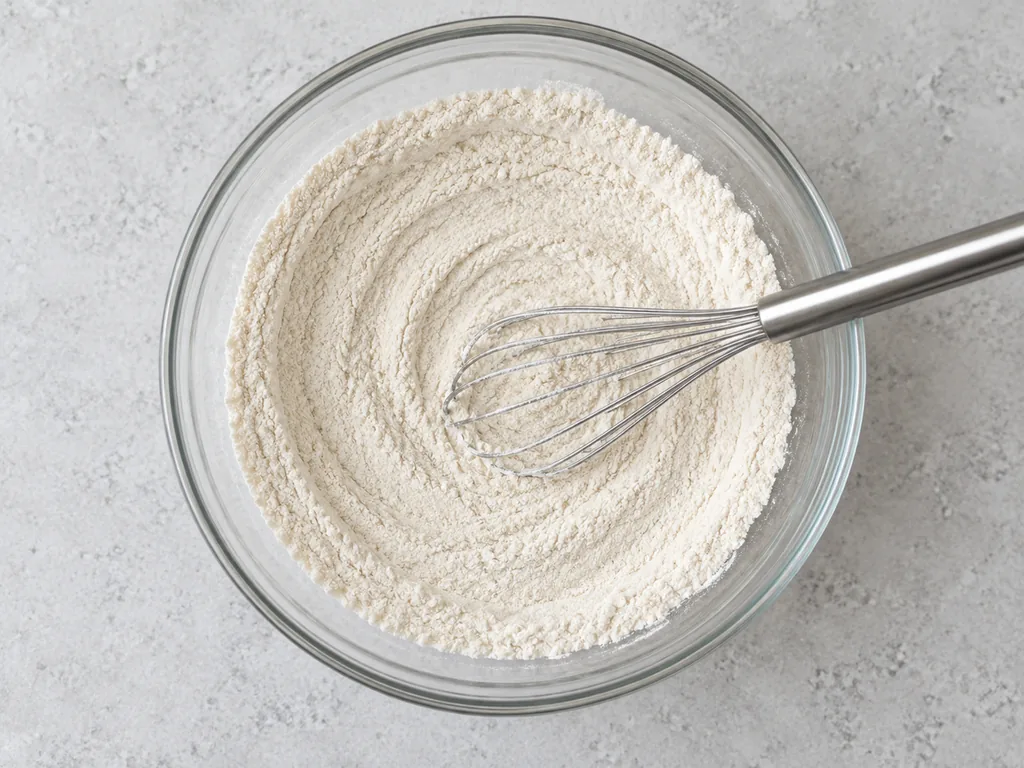
Whisk the dry ingredients
For each dough batch
Whisk the flour, baking powder, baking soda and salt in the large bowl until evenly mixed, with no clumps of soda.
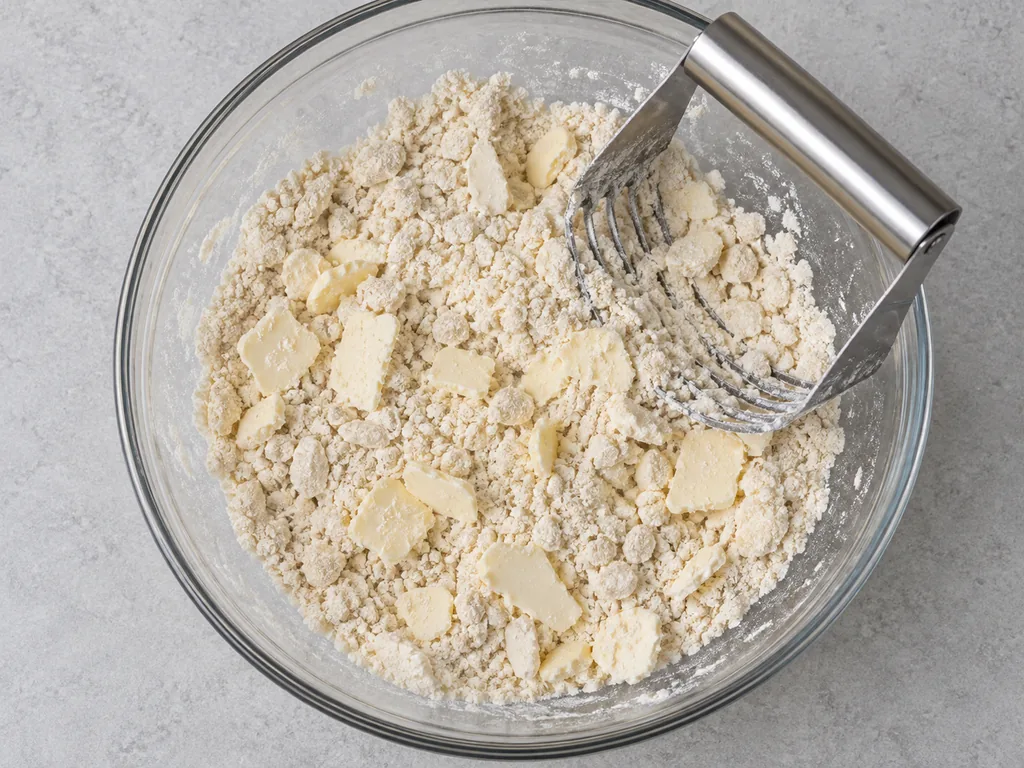
Toss and cut in the butter
For each dough batch
Toss the frozen butter cubes in the flour to coat them. Working fast, press each cube flat between your thumb and fingers, or cut through them with the pastry blender, until the mixture looks like coarse crumbs with plenty of flat butter pieces from pea-size to nickel-size.
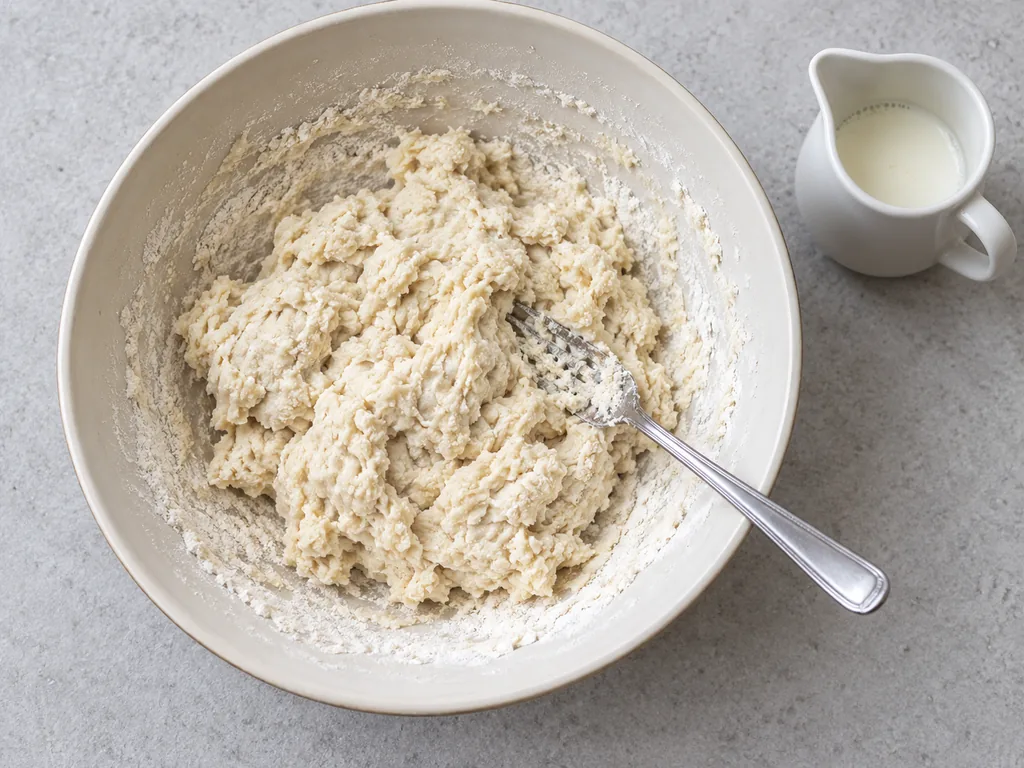
Make a hollow and add the buttermilk
For each dough batch
Make a hollow in the center and pour in the buttermilk. Stir with the fork just until a rough, lumpy dough forms and most of the flour is damp, stopping while it is still slightly sticky. If dry flour at the bottom will not join in, add extra cold buttermilk to taste, a tablespoon at a time, no more than 2 tbsp for this batch.
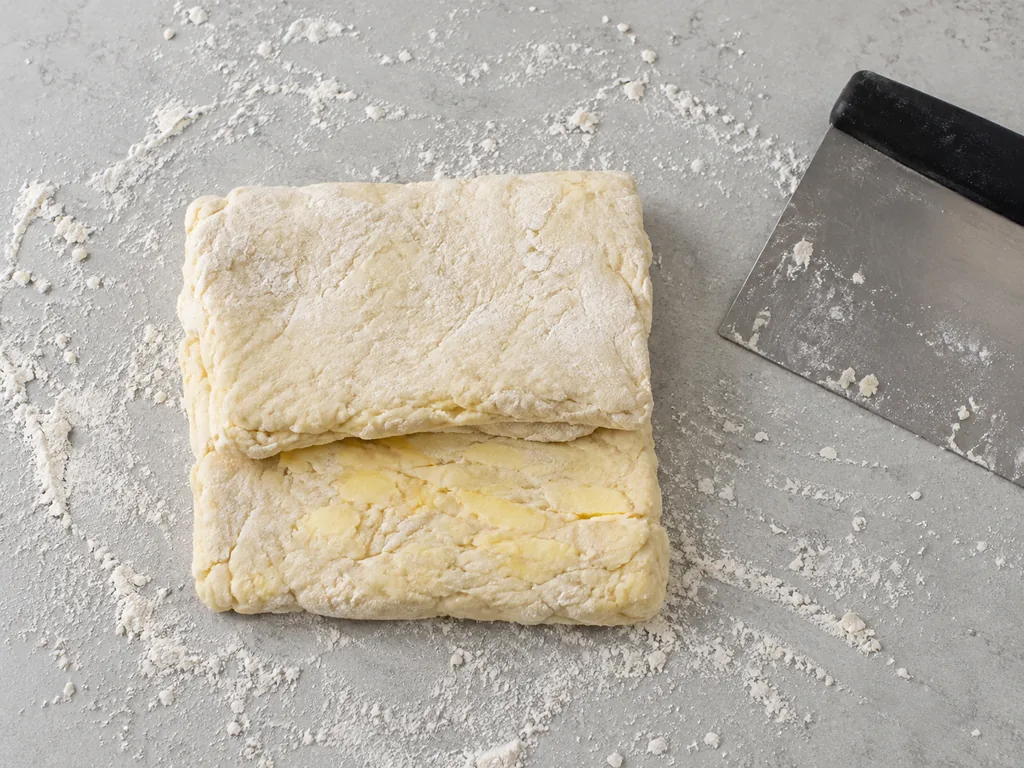
Turn out and fold the dough
For each dough batch
Turn the dough out onto the counter dusted with some of the dusting flour and pat it into a rectangle about 3/4 inch thick. Fold it in thirds like a letter, give it a quarter turn and pat it back out to about 3/4 inch thick; repeat until you have folded it three times in all. Finish by patting it about 1 inch thick, when it looks smoother and streaked with butter.
Dip the cutter and cut the biscuits
For each dough batch
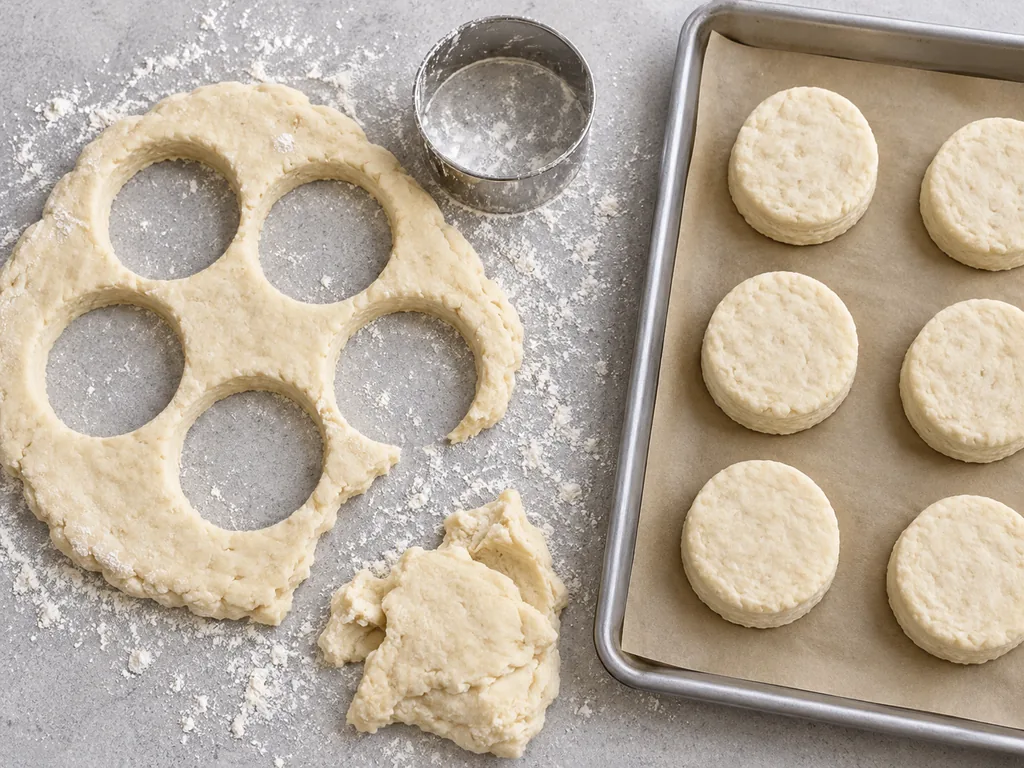
Dip the cutter in the dusting flour, press it straight down through the dough and lift it without twisting. Set the biscuits on the lined pan, touching for tall, soft sides or about 1 inch apart for crisper sides. Press the scraps together without kneading, pat them about 1 inch thick and cut again, until every biscuit has clean, straight sides.
Melt the salted butter
For each dough batch
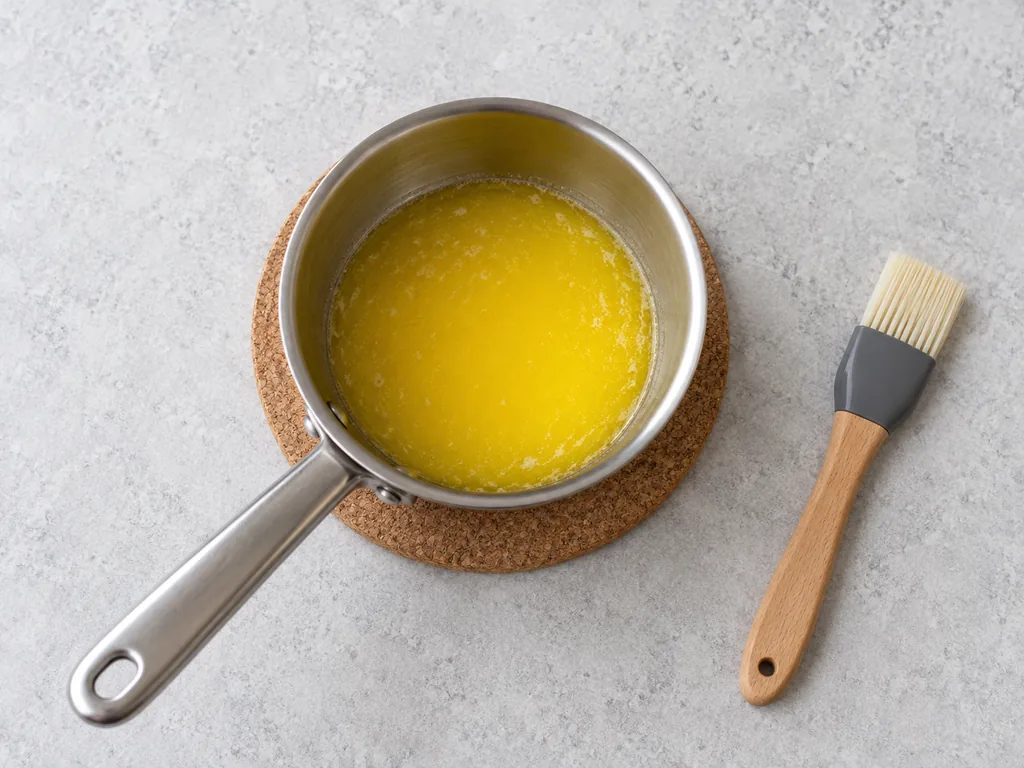
Melt the salted butter in the small saucepan over low heat, then keep it warm off the heat for brushing once it is fully liquid.
Bake
For each dough batch
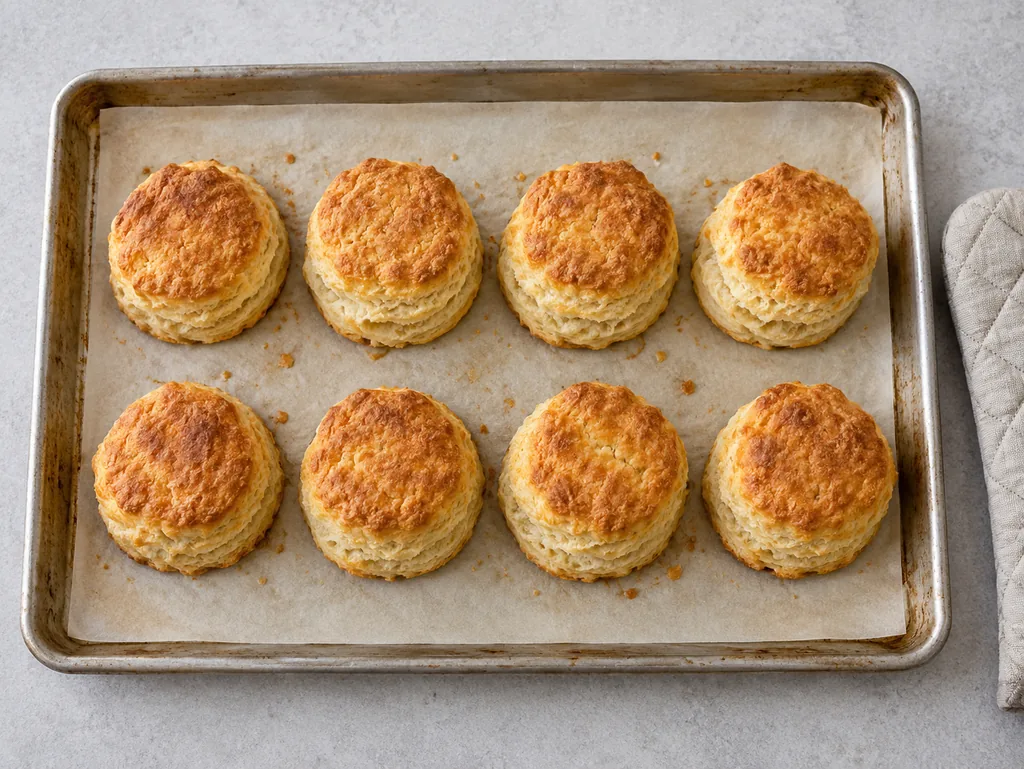
Bake on the upper-middle rack at 450°F until the biscuits are tall and deep golden brown on top, with golden bottoms and dry, flaky sides, about 13 to 16 minutes. If the bottoms brown before the tops, slide a second sheet pan underneath.
Brush and taste
For each dough batch
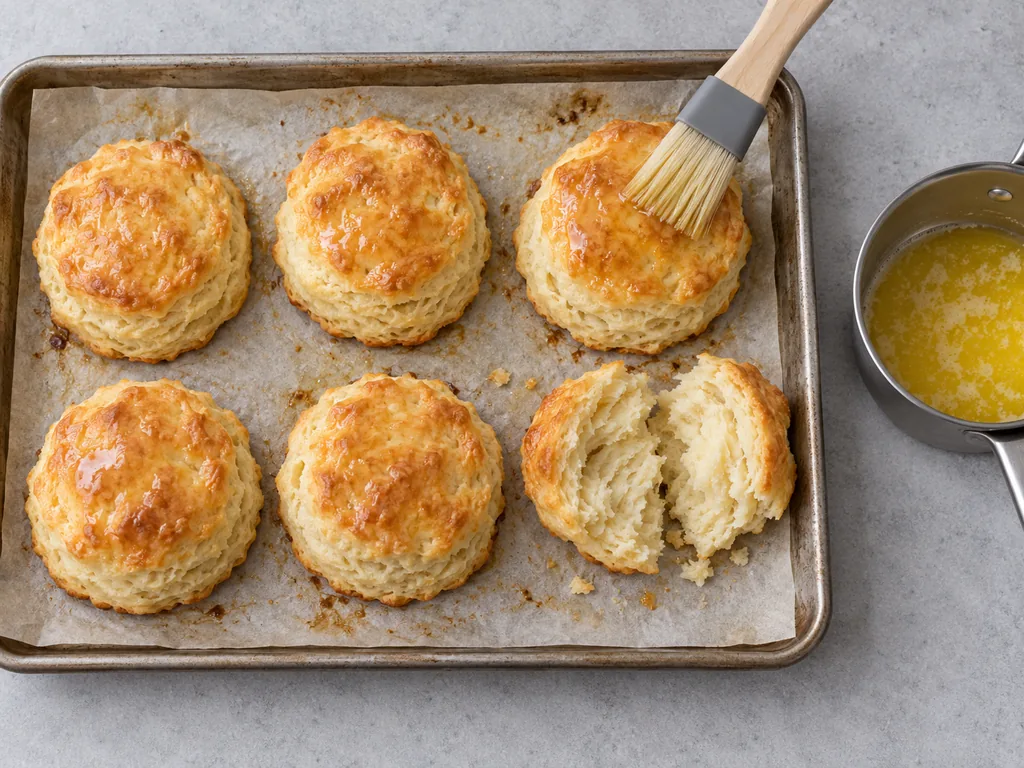
Brush all the melted butter over the hot tops as soon as the pan comes out of the oven. Split one hot biscuit and taste it. Aim for a buttery, clearly salty, lightly tangy biscuit that pulls apart in layers. If it tastes flat, sprinkle flaky sea salt to taste over the other tops.
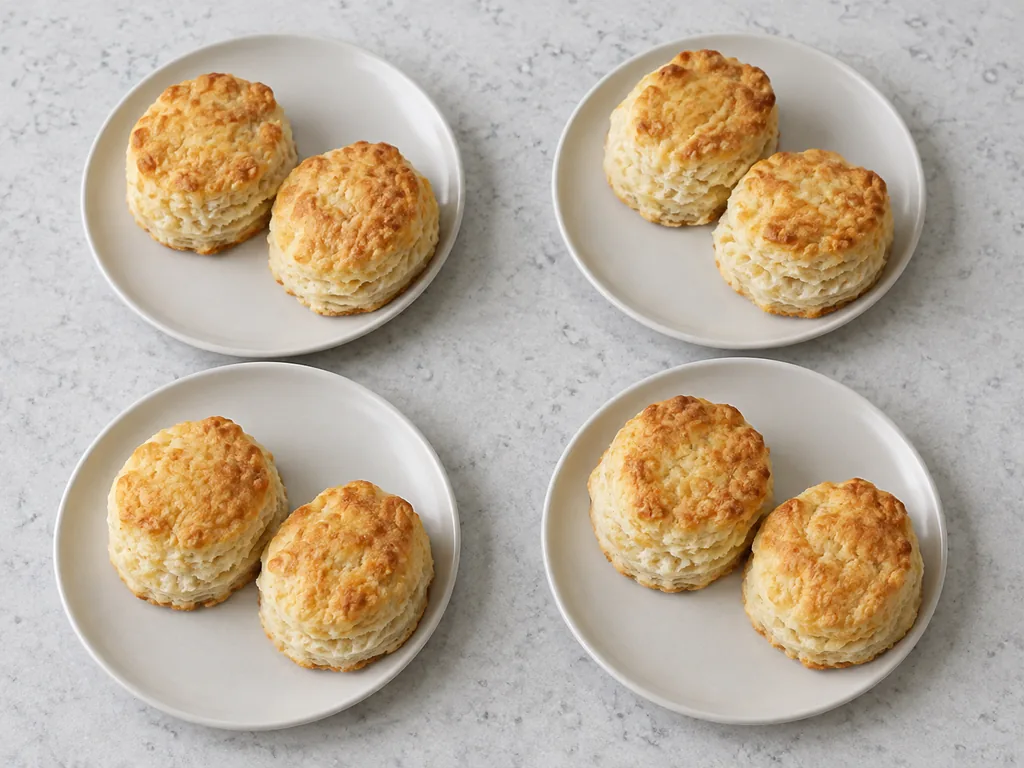
Divide and serve
For the whole recipe
Divide the biscuits into 4 servings, about two biscuits each, and serve them while they are hot. To bake later, freeze unbaked cut biscuits on the pan until solid, bag them, and bake them from frozen at 450°F, allowing a few extra minutes.
About this recipe
Research preview: these details come from our sourced research and haven't been reviewed by our chef yet.
Why it works
Associated with
Southern US, American
Biscuits developed from hard ship's biscuit; before the Civil War Southern cooks made beaten biscuits without yeast by beating and folding air into the dough. Commercial baking powder in the 19th century gave the modern biscuit; Southern soft winter wheat with less protein suited it. Alexander P. Ashbourne patented a biscuit cutter in 1875.
Taste
- Sweet
- Sour
- Salty
- Bitter
- Savory
- Heat
tall, flaky layers with a crisp golden top and soft, steamy interior · hot
Skill level
Some practice
Three habits (cold butter, light hand, hot oven) and a lamination step make it more than a dump-and-stir bread.
Allergens
Diets
Vegan: Doesn't fit as written
Occasions
Catholic Lenten Fridays (abstinence from meat)
Serving and keeping
Make ahead: freeze unbaked cut biscuits on the pan, then bag; bake from frozen adding 3-5 minutes (recipe)
Leftovers: warm in the oven
Food safety
- tall, deep golden top and bottoms, dry flaky sides (step 7)
- raw flour; do not taste raw dough
- 450°F oven; use mitts
For your food tracker
Fields for MyFitnessPal and other trackers
- Recipe url
- https://isthebestrecipe.com/breads/buttermilk-biscuits
- Name
- Buttermilk biscuits
- Servings
- 4
- Recipe yield
- 4 servings
- Recipe ingredient
- about 5 oz cold unsalted butter cut into 1/2-inch cubes, about 2 1/2 cups all-purpose flour spooned into the cup and leveled, 1 tbsp baking powder, 1/2 tsp baking soda, 1 tsp fine sea salt, about 1 cup cold buttermilk, 2 tbsp all-purpose flour for dusting the counter and the cutter, 2 tbsp salted butter for brushing
- Copy action wording
- Copy recipe and estimated nutrition
Sources
- Biscuit (bread) (Wikipedia (English), 2026-10-06)
- Biscuits and gravy (Wikipedia (English), 2026-09-29)
- Food Allergies (major food allergens under FALCPA and the FASTER Act) (U.S. Food and Drug Administration, 2026-03-11)
- Regulation (EU) No 1169/2011, Annex II: Substances or products causing allergies or intolerances (legislation.gov.uk (The National Archives) rendering of the EU text, 2011-10-25)
- Home Food Storage (storage chart) (University of Nebraska-Lincoln Extension, UNL Food)
- Handling Flour Safely: What You Need to Know (U.S. Food and Drug Administration, 2024-03-05)
- Daily Value on the Nutrition and Supplement Facts Labels (U.S. Food and Drug Administration, 2024-03-05)
- 21 CFR 101.54 Nutrient content claims for 'good source,' 'high,' 'more' (Legal Information Institute, Cornell Law School (reproducing the eCFR))
- Sodium in Your Diet (U.S. Food and Drug Administration)
Make it the best
Copy this recipe and make it your own. Change amounts, swap ingredients, rewrite steps. The original stays as it is.
Nutrition Values
Nutrition estimates aren’t available for this recipe yet.
Your notes
Kept on this device.Return: https://isthebestrecipe.com/breads/buttermilk-biscuits