
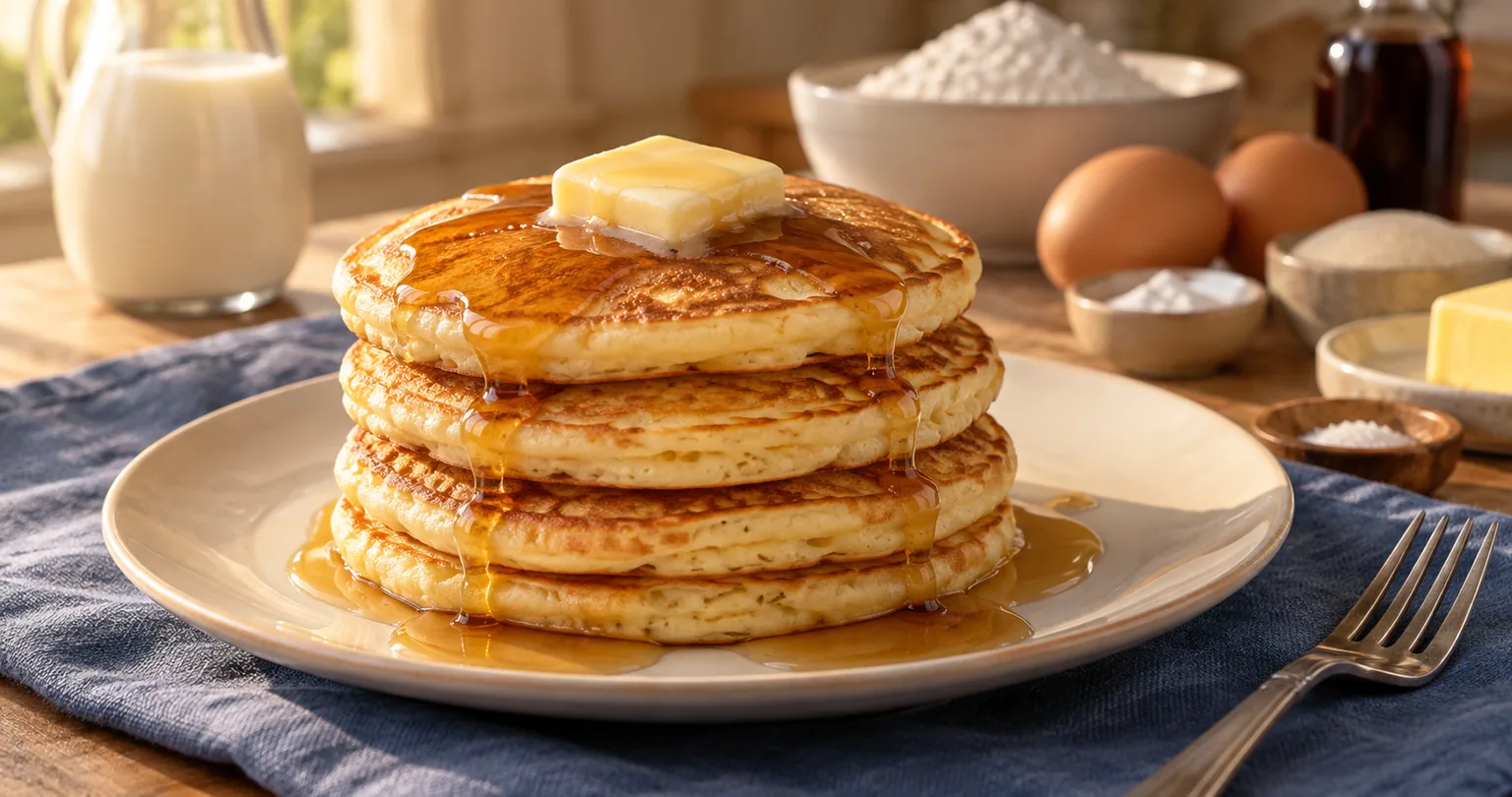
Brown-Butter Pancakes with Salted Maple
- Yield
- 4 servings
This is the slow Saturday stack: coffee first, then pancakes in batches while everyone drifts into the kitchen. The one move is browning the butter before it goes in the batter. A few minutes in the pan turns its milk solids toasty and nutty, so every bite tastes like the golden edge of a pancake. Then the batter rests, a scout pancake checks the heat, and the syrup gets warmed with more butter and flaky salt. Brown butter brings the depth, egg and milk the tenderness, salted maple the sweet-and-salty pull, and berries the fresh, sharp bite.
IngredientsTips are one tap away.
Ingredients
Batches and reset
4 servings · US measures · 1 batch
Batching
Make no more than one base batter batch at a time. Cook pancakes without crowding the skillet and serve each round promptly. Larger yields use separate batter batches; cooking time does not scale with ingredient quantities.
Original recipe: 4 servings.
The berries are optional and left out of the nutrition estimate, as is any extra fine salt added to taste. Nutrition is incomplete because the amount of pan oil absorbed is not established and the flaky sea salt has no matched record yet.
Before you start
- Read through the recipe before heating the pan. Gather the saucepan, skillet, bowls, utensils and measured ingredients.
Directions

Measure everything before the heat
For the whole recipe
Read through the recipe, then gather the equipment and use the ingredient lines to prepare and measure everything. Set the second mixing bowl next to the stove for the browned butter. Everything is measured before the pan goes on the heat.

Brown the butter until it smells like hazelnuts
For each batter batch
Brown about 2 oz unsalted butter in a small saucepan over medium heat, swirling the pan often as it foams, crackles and then goes quiet, until the bits on the bottom are the color of toasted hazelnuts and it smells nutty, about 4 to 6 minutes. Pour it straight into the second mixing bowl, scraping in every brown bit, and let it cool until just warm.
Why it works: browned, not just melted
Butter is part milk solids. Cook it past melting and those solids toast, which gives the batter a nutty, caramel-edged flavor from the same amount of butter.
If it goes wrong: the bits turn black
Brown butter turns to burnt butter fast, and burnt tastes bitter. Pour it out, wipe the pan and start again with fresh butter; pull it the moment it smells like toasted nuts.

Whisk the dry and wet separately
For each batter batch
Whisk the flour, sugar, baking powder and 1/2 tsp fine salt in the large mixing bowl until evenly mixed. In the second bowl, whisk the eggs into the browned butter until smooth, then whisk in the milk and vanilla. The dry mixture has no baking-powder streaks and the wet mixture is blended.
Swap: the buttermilk version
Buttermilk gives a tangier, more tender pancake, but its acid needs baking soda and less baking powder to balance it. That makes it its own recipe, and we are building it as a separate version rather than a straight swap here.

Fold just until combined, lumps and all
For each batter batch
Pour the wet mixture into the dry mixture. Fold with the spatula, scooping from the bottom and turning the batter over. Stop when no dry flour shows and the batter is thick and lumpy.
Why it works: the lumps are the point
Stirring flour with liquid builds gluten, the stretchy network that makes bread chewy. A few gentle folds keep it weak, so the pancakes stay tender, and the small lumps soak up liquid while the batter rests.

Let the batter rest
For each batter batch
Rest the batter uncovered until slightly thicker with a few bubbles on top, about 10 minutes.
Why it works: the rest
While it sits, the flour drinks up the liquid and the baking powder gets a head start. The batter thickens, holds its bubbles better and cooks up taller and more tender.

Warm the salted maple butter
For the whole recipe
Meanwhile, warm about 3/4 cup pure maple syrup, about 1 oz unsalted butter and 1/4 tsp flaky sea salt in the saucepan over low heat, stirring, until the butter melts into the syrup and it steams, about 2 to 3 minutes. Take it off the heat and keep it near the stove so it stays warm.
House call: salt in the syrup
Cold syrup straight from the bottle tastes flat and sinks in. Warmed with butter and a little flaky salt, it turns glossy, soaks in slowly and tastes more like maple than sugar.

Cook a scout pancake, then the rest
For each batter batch
Heat a 12-inch skillet over medium heat. Wipe it with a few drops from the measured canola oil, using tongs and a folded paper towel. Pour a small test pancake. Cook until bubbles pop and stay open and the edges look dry, then flip once. Cook the second side until golden and the center springs back with no wet batter. Taste only the cooked test pancake. Aim for a lightly sweet and faintly salty pancake. If it tastes flat, add fine salt to taste. Cook more pancakes in the same way, keeping them separate in the pan and wiping on a little of the measured oil between rounds. Do not press them with the turner. Serve each round promptly. Both sides are golden and the center springs back with no wet batter.
Technique: reading the bubbles
Bubbles that pop and stay open mean the top has started to set; if they fill back in with batter, it is too soon to flip. Dry, matte edges are your second signal. Flip once, decisively, and leave it alone.
If it goes wrong: dark outside, raw inside
The pan is too hot, and brown-butter batter colors a little faster than plain. Lower the heat and let the pan settle before the next round. Pale, flat pancakes mean the opposite, so give the pan more time on the heat.
Stack, pour and serve
For the whole recipe
Divide the pancakes into 4 servings and serve warm. Spoon the warm salted maple butter over each stack and top with about 1 cup fresh berries, if using. The pancakes are divided for serving.
Make ahead: brown the butter, not the batter
Brown butter keeps in the fridge for days; melt it gently before you whisk it in. The batter doesn't wait well because the baking powder starts working once it is wet, so cook it the same morning. Cooked pancakes freeze well; reheat them in the toaster until hot all the way through.
Make it yours: from safe to wild
Safe: press blueberries into each pancake right after you pour it. Bolder: lemon-ricotta pancakes, with ricotta folded into the batter and lemon zest in the dry mix. Wild: miso-maple, with white miso whisked into the warm syrup and toasted sesame seeds on top.
About this recipe
Why it works
Baking powder lifts the thick batter, gentle folding keeps the pancakes tender, and a short rest lets the batter thicken before cooking.
Associated with
American and Canadian home cooking
Pancakes are an old, widespread food; this thick, baking-powder style is the North American breakfast version. In the UK, Ireland and other countries, Shrove Tuesday is called Pancake Day.
Taste
- Sweet
- Sour
- Salty
- Bitter
- Savory
- Heat
Mild sweetness and vanilla in the plain batter; butter and maple syrup at the table add richness and sweetness. · fluffy, tender interior with golden surfaces · hot
Skill level
Easy
The selected method uses familiar mixing and pan-cooking steps, with surface and center cues to guide the cook.
Serving and keeping
Best served: Right after each round leaves the pan Serve each round promptly with butter and warm maple syrup, if using.
Make ahead: The batter is best cooked fresh because baking powder starts working once it is wet. Cooked pancakes can be refrigerated or frozen.
Storage: Refrigerate within 2 hours of cooking, covered. For longer keeping, freeze; frozen food stays safe at 0 °F, though quality declines the longer it is frozen.
Leftovers: Refrigerate leftovers within 2 hours and use within 3 to 4 days, or freeze them.
Food safety
- Do not taste raw batter: it contains raw flour and raw eggs. Taste only the cooked test pancake.
- Keep raw flour and eggs away from ready-to-eat foods, and wash hands, bowls and whisks after mixing.
- Do not leave cooked pancakes out for more than 2 hours, or 1 hour above 90 °F.
- Reheat refrigerated or frozen pancakes until hot throughout, to 165 °F.
We make no cross-contact statement for home kitchens. Check packaged ingredient labels.
For your food tracker
Fields for MyFitnessPal and other trackers
- Recipe url
- https://isthebestrecipe.com/breakfast/pancakes
- Name
- Brown-Butter Pancakes with Salted Maple
- Servings
- 4
- Recipe yield
- 4 servings
- Recipe ingredient
- about 3 oz unsalted butter divided, about 2 cups all-purpose flour spooned into the cup and leveled, 2 tbsp granulated sugar, 1 tbsp baking powder, 1/2 tsp fine salt, 2 eggs large eggs, about 1 3/4 cups whole milk, 1 tsp vanilla extract, about 3/4 cup pure maple syrup, 1/4 tsp flaky sea salt, 1 tbsp canola oil for wiping the pan, used a few drops at a time
- Copy action wording
- Copy recipe and estimated nutrition
Make it the best
Copy this recipe and make it your own. Change amounts, swap ingredients, rewrite steps. The original stays as it is.
Nutrition Values
Nutrition estimates aren’t available for this recipe yet.
Your notes
Kept on this device.Return: https://isthebestrecipe.com/breakfast/pancakes