
Eggs Benedict
- Yield
- 4 servings
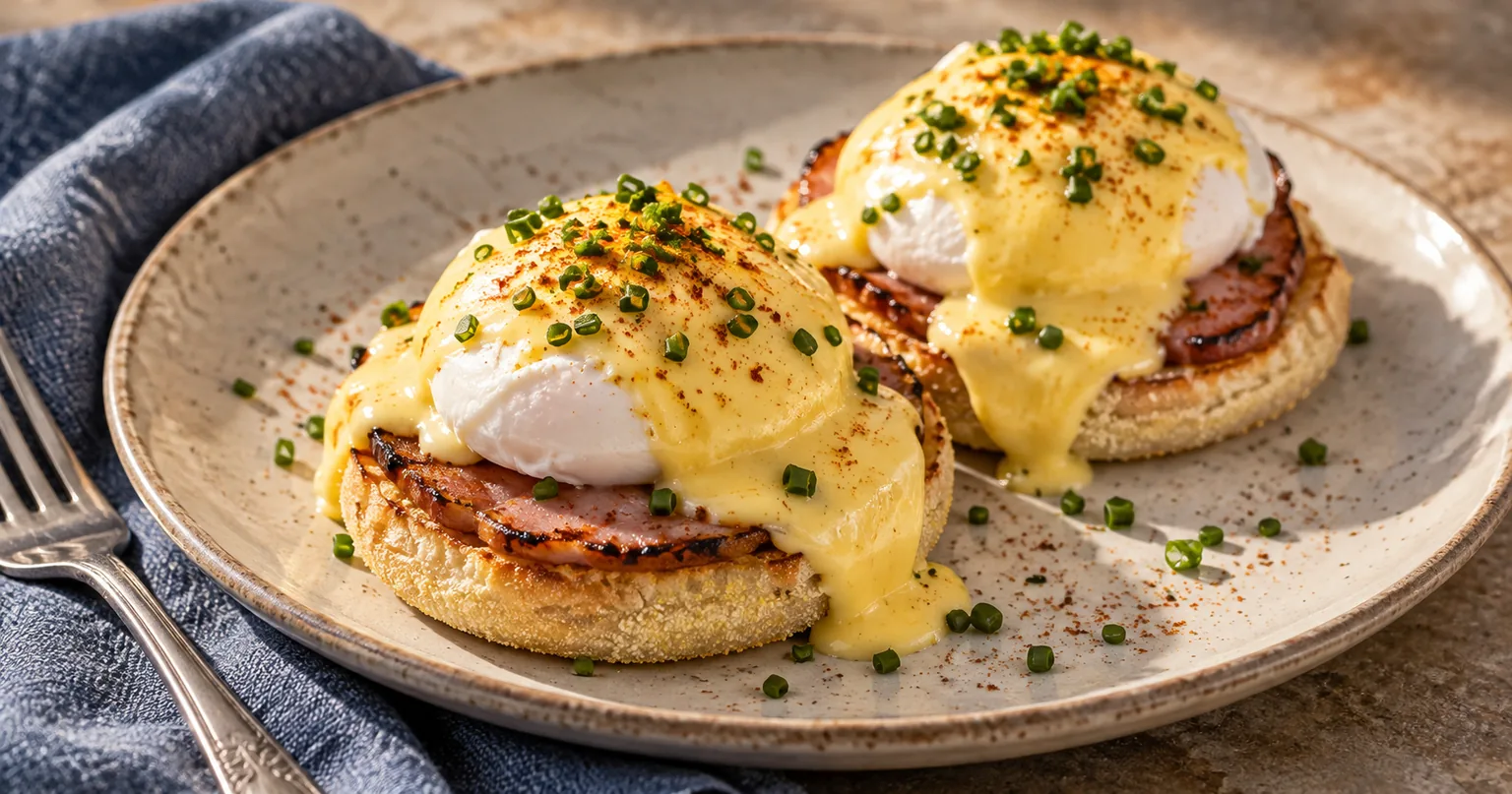
Eggs Benedict is a lesson in timing as much as cooking: a warm butter sauce, poached eggs, browned Canadian bacon and toasted muffins, all landing on the plate hot at the same moment. The hollandaise here cooks its yolks to temperature first, then takes the butter, which makes it steadier to hold while you poach.
IngredientsTips are one tap away.
Ingredients
Batches and reset
4 servings · US measures · 1 batch
Batching
Make the hollandaise for each batch in its own bowl, and poach the eggs 4 at a time. Hold finished parts in the warm oven; cooking times do not change with the number of batches.
Original recipe: 4 servings.
Sweet paprika is optional and excluded from the base nutrition scenario, as are cayenne pepper and the extra kosher salt and lemon juice added at the tasting step. Nutrition is incomplete because the yolk mass, the pan butter carried onto the bacon, the vinegar carried from the poaching water and the egg mass kept after straining are not established.
Before you start
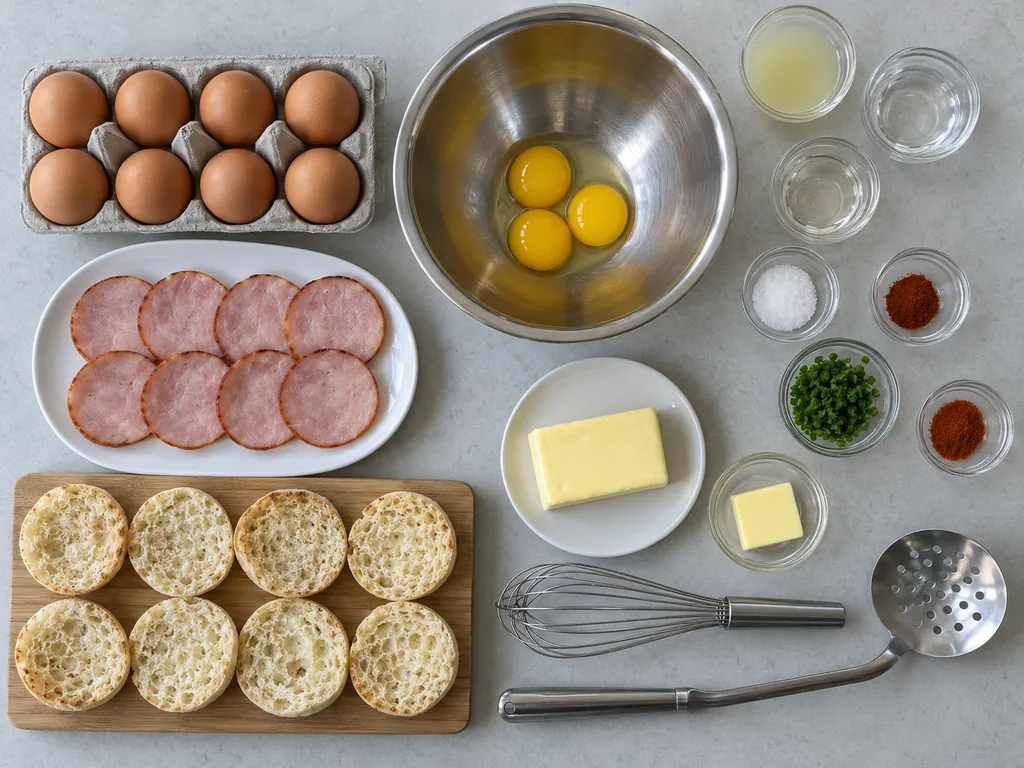
- Read through the recipe before heating anything. Gather the pans, tools, plates and measured ingredients, with the yolks separated into the heatproof bowl.
Directions
Read and gather
For the whole recipe
Read through the recipe and gather the equipment. Use the ingredient lines to prepare and measure everything, putting the yolks in the heatproof bowl. Everything is measured and the yolks are in the heatproof bowl.
Heat the oven
For each batch
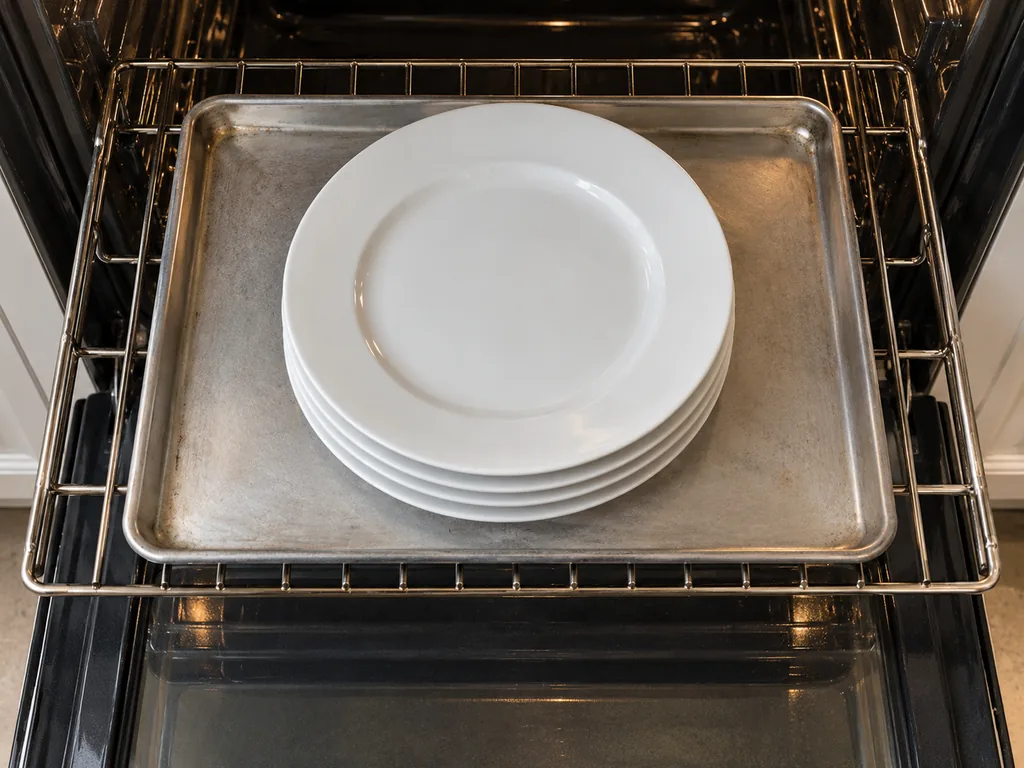
Heat the oven to 200°F with the baking sheet and plates on the middle rack, so they warm for holding and serving. The oven has reached temperature.
Melt the butter
For each batch
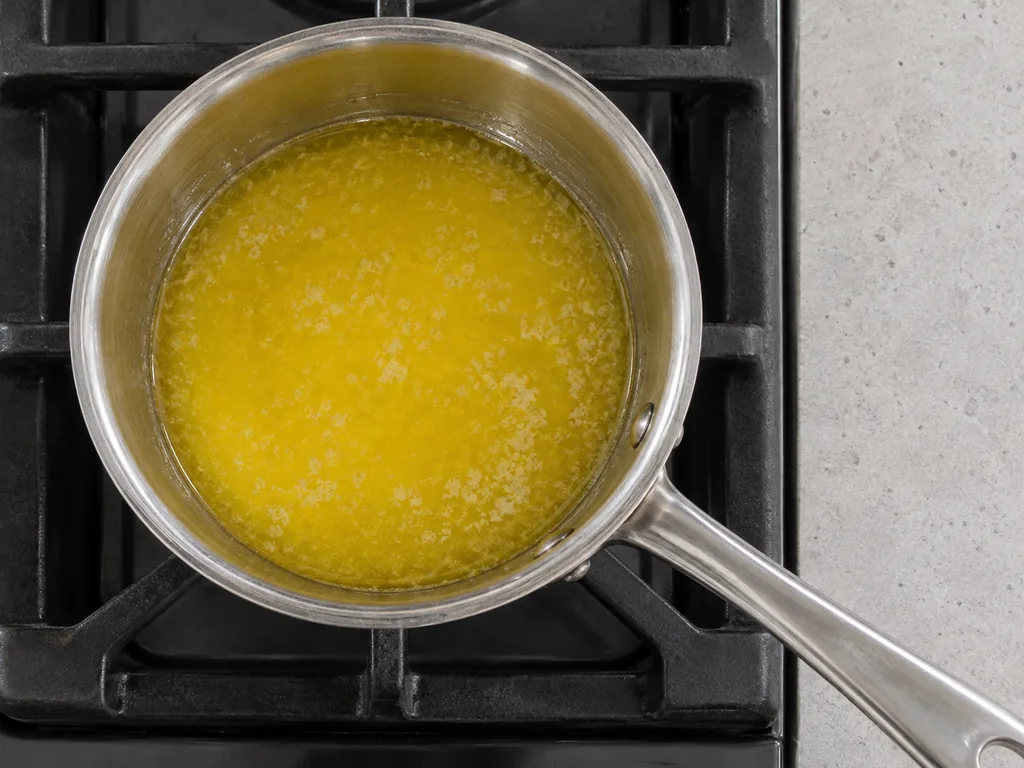
Melt the butter for the hollandaise in the small saucepan over low heat, then turn off the burner and keep it warm on the stove. The butter is fully melted and warm.
Pour and heat the water
For each batch
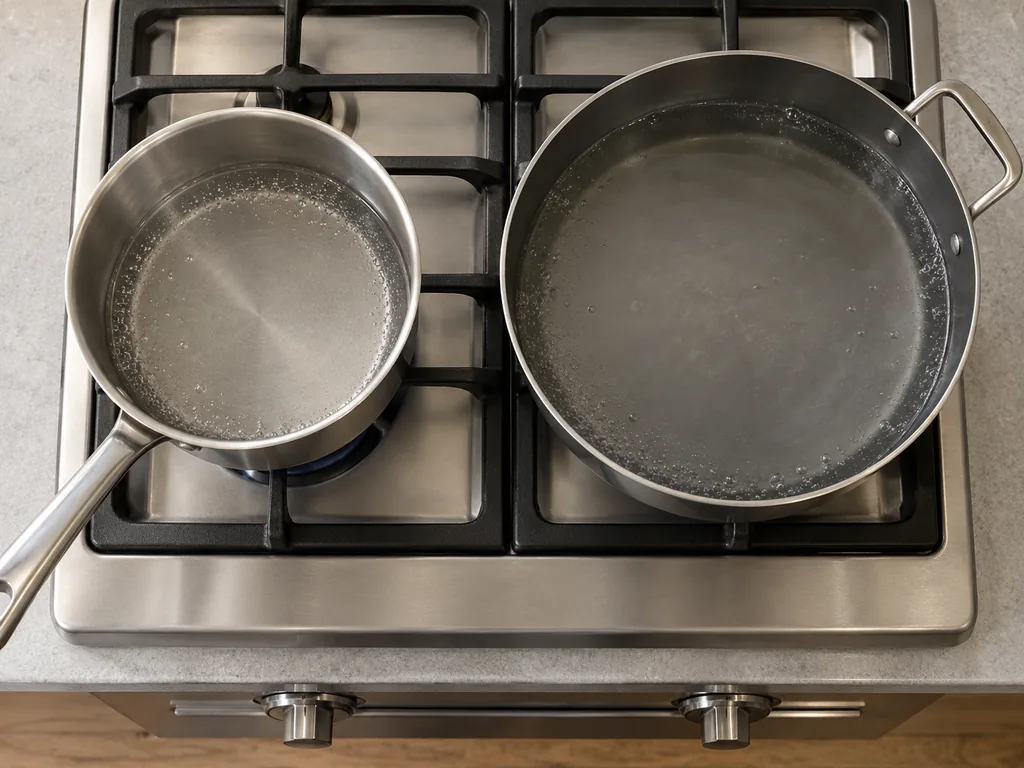
Pour water into the medium saucepan to a depth of 1 inch and into the 12-inch straight-sided skillet to a depth of 2 1/2 inches. Heat both over medium heat until they barely simmer, then turn both burners to low. Both pans of water are barely simmering.
Whisk the yolk base
For each batch
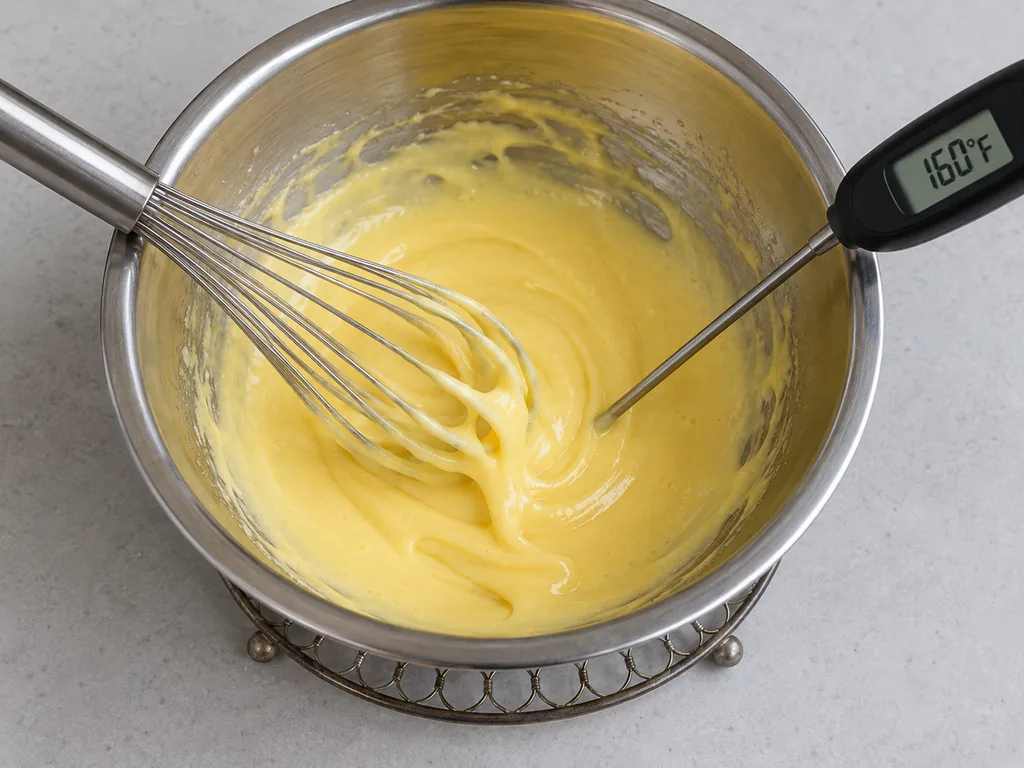
Whisk the water and 1 tbsp fresh lemon juice into the yolks in the heatproof bowl. Set the bowl over the barely simmering saucepan on low heat and whisk nonstop, scraping the sides, until the yolks turn pale, fall from the whisk in a thick trail and an instant-read thermometer reads 160°F (71°C), about 3 to 5 minutes. Lift the bowl off the saucepan right away.
Pour in the butter
For each batch
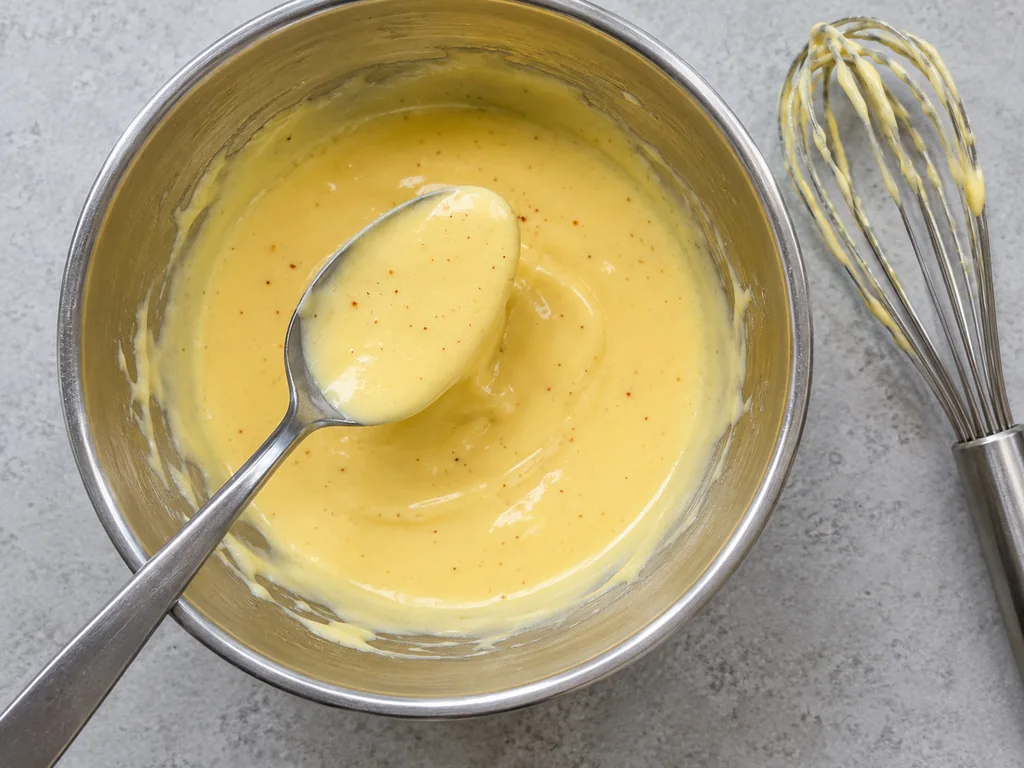
Pour the warm melted butter into the yolks in a thin stream, off the heat and whisking nonstop, until the sauce is smooth, glossy and coats a spoon like heavy cream, about 1 to 2 minutes. Whisk in 1/4 tsp kosher salt and cayenne pepper to taste.
Taste and hold the sauce
For each batch
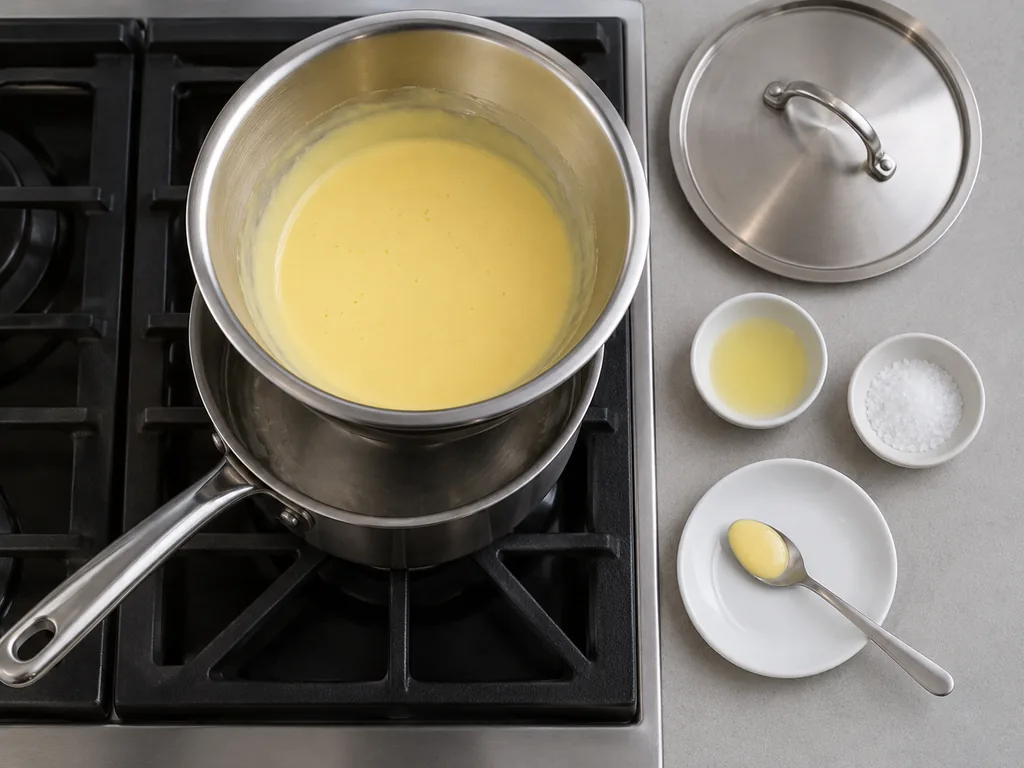
Taste the hollandaise. Aim for rich and buttery, with a clear lemon edge and enough salt. If it tastes flat, add kosher salt to taste; if it tastes heavy, add fresh lemon juice to taste. The sauce is pourable and well seasoned. Cover the bowl and hold it over the saucepan with the burner off, whisking every few minutes, until the eggs are ready.
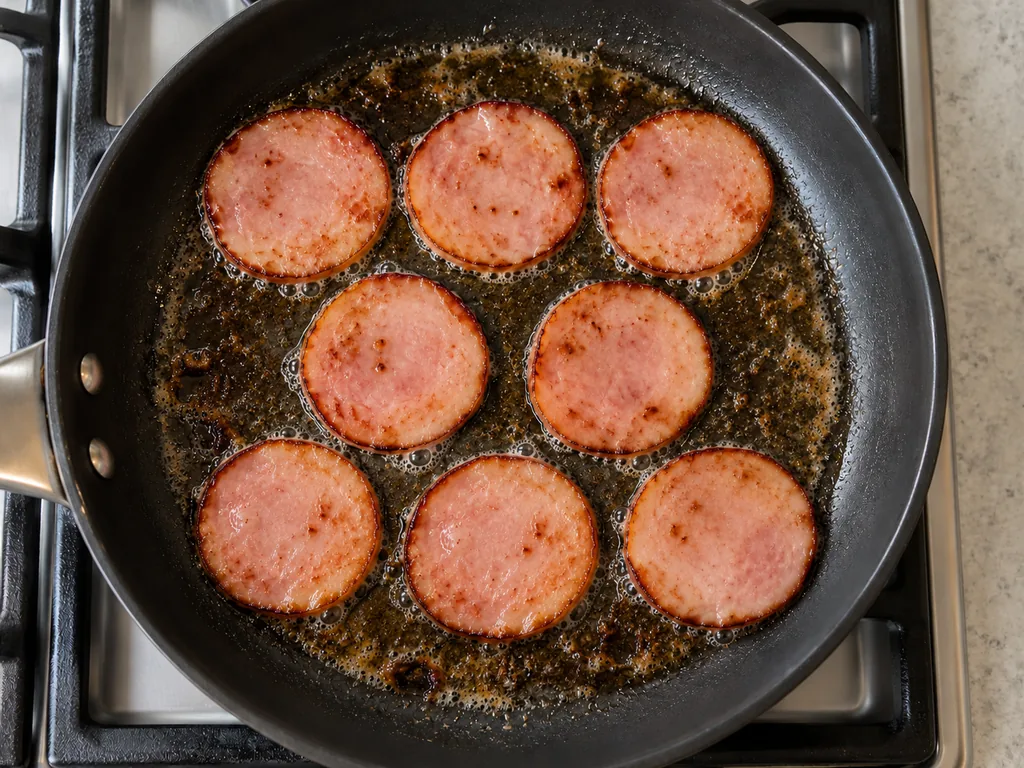
Melt the butter and brown the bacon
For each batch
Melt the butter for the skillet in the 10-inch skillet over medium heat. Brown the Canadian bacon in one layer until the edges are golden and the slices are hot through, about 1 to 2 minutes per side. Move the bacon to the baking sheet in the warm oven.
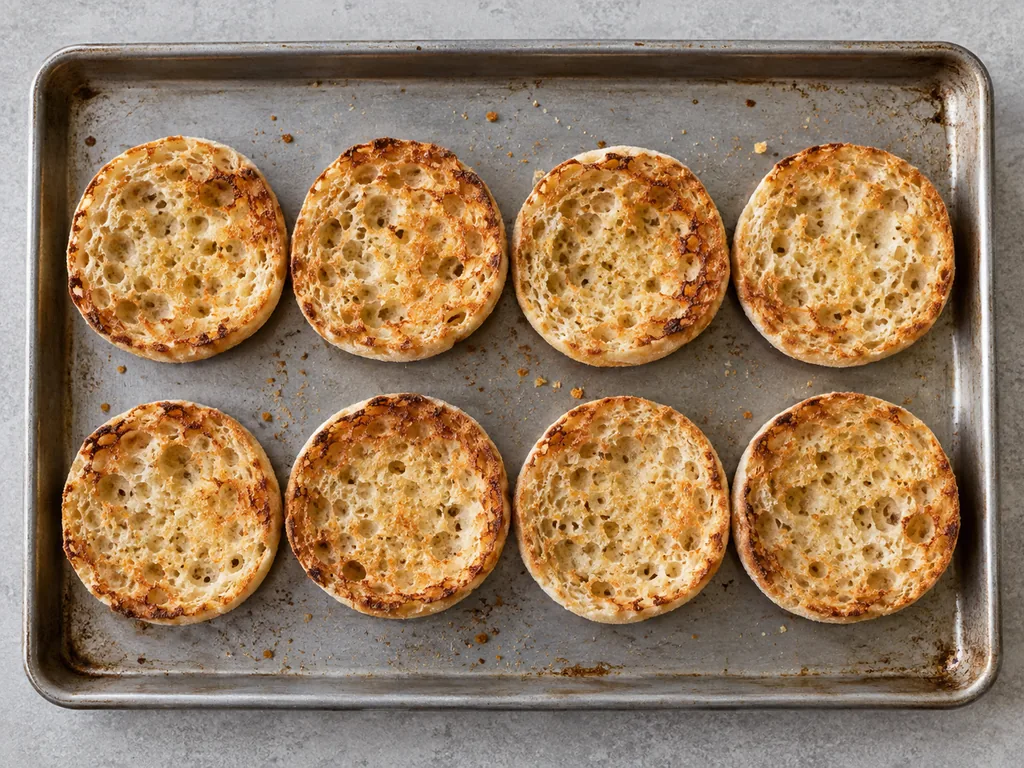
Toast the muffins
For each batch
Toast the English muffin halves in the toaster until golden and crisp at the edges, then move them to the baking sheet in the oven. The muffins are golden and crisp at the edges.
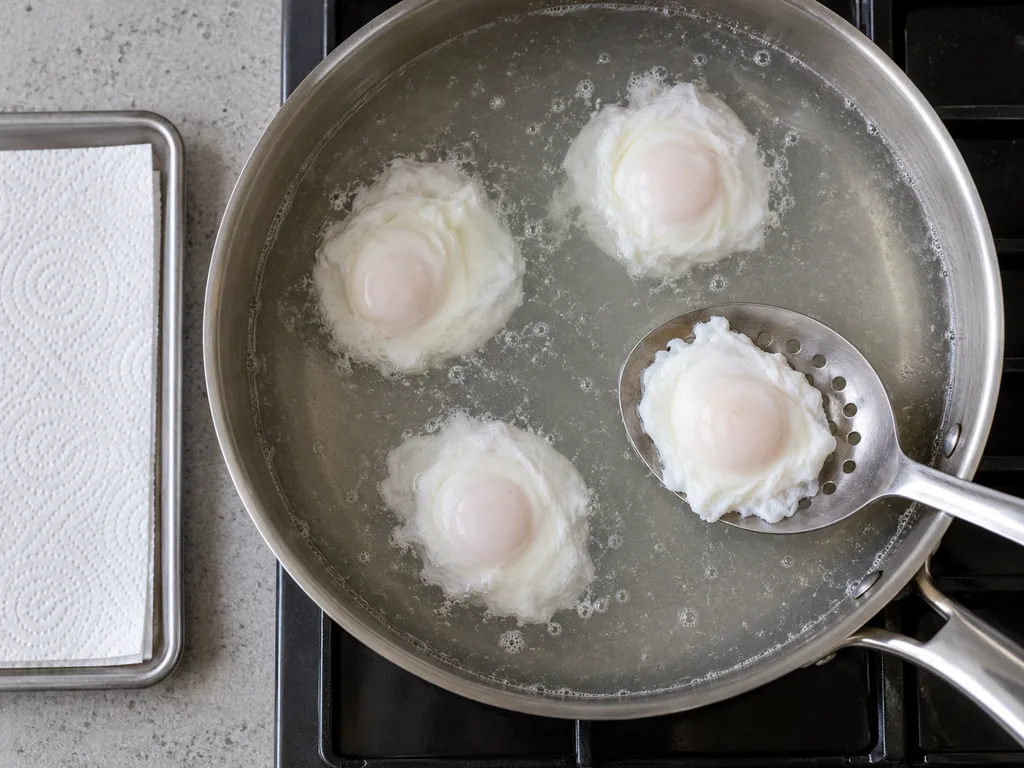
Check the water and poach the eggs
For each batch
Check that the skillet water is at a bare simmer, with small bubbles rising and the surface barely trembling, keeping the burner on low heat, and stir in the vinegar. Crack one egg at a time into the strainer set over the small bowl, swirl off the thin white, slide the egg into the small cup and ease it into the water at the surface. Poach the eggs in two rounds of 4, spaced apart, until the whites are opaque and the yolks are firm when pressed with the slotted spoon, about 5 to 7 minutes. Lift each round onto paper towels, then onto the baking sheet in the oven.
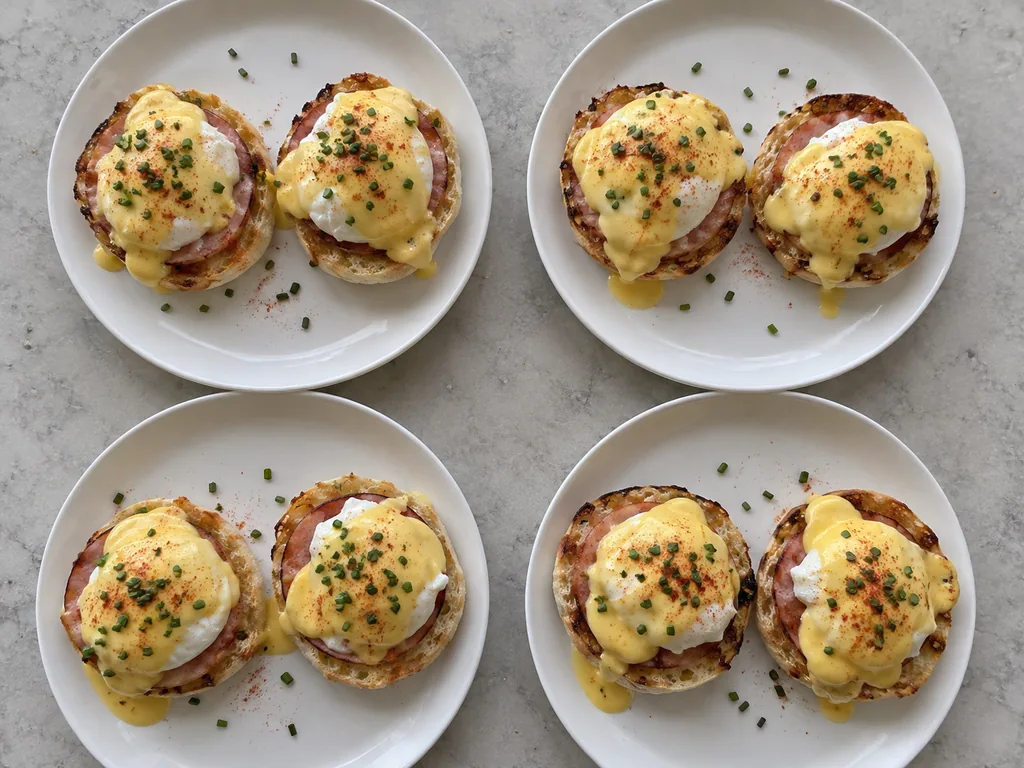
Divide and serve
For the whole recipe
Divide the toasted muffin halves among the warm plates, cut side up, to make 4 servings. Top each half with a slice of Canadian bacon and a poached egg, then divide the hollandaise evenly over the eggs. Finish with the chives and with sweet paprika to taste, if using. Each plate holds 2 topped halves.
About this recipe
Research preview: these details come from our sourced research and haven't been reviewed by our chef yet.
Why it works
Associated with
New York restaurant brunch (American), French sauce technique (hollandaise)
Origin is contested. Delmonico's menu says the dish was 'first created in our ovens in 1860', and its chef Charles Ranhofer published 'Eggs à la Benedick'. In a 1942 New Yorker interview Lemuel Benedict said he ordered buttered toast, poached eggs, crisp bacon and hollandaise at the Waldorf in 1894 to cure a hangover, and the maître d' Oscar Tschirky put a ham-and-English-muffin version on the menu. A 1967 letter credited Commodore E. C. Benedict. An egg-industry note dates the dish to the Waldorf in 1894.
Taste
- Sweet
- Sour
- Salty
- Bitter
- Savory
- Heat
tender poached egg with runny-looking but set yolk, silky sauce, crisp toasted muffin, chewy ham-like bacon · hot
Skill level
Some practice
Three burners plus an oven hold; the emulsion and egg timing are the hard parts.
Allergens
Diets
Vegetarian: Doesn't fit as written Vegan: Doesn't fit as written Pescatarian: Doesn't fit as written
Occasions
National Eggs Benedict Day (US/UK commercial food day), Easter brunch and birthdays (editorial), Catholic Lenten Fridays
Serving and keeping
Leftovers: to 165 F (74 C)
Food safety
- Hollandaise yolk base reaches 160 F (71 C) before the butter goes in, the federal minimum for egg dishes; poached eggs cook until yolk and white are firm. Canadian bacon sold fully cooked only needs heating; if labelled uncooked, cook to 145 F (63 C) and rest 3 minutes.
- FDA: for raw or undercooked egg uses, choose pasteurized shell eggs or egg products; the recipe avoids raw yolk by cooking to 160 F.
Nutrition notes
note: The yolk sauce is cooked to 160 F before the butter goes in, so it is not a raw-egg sauce.
For your food tracker
Fields for MyFitnessPal and other trackers
- Recipe url
- https://isthebestrecipe.com/brunch/eggs-benedict
- Name
- Eggs Benedict
- Servings
- 4
- Recipe yield
- 4 servings
- Recipe ingredient
- 4 oz unsalted butter for the hollandaise, 3 whole large eggs yolks only, whites saved for another use, 2 tbsp water, 1 tbsp fresh lemon juice, 1/4 tsp kosher salt, to taste cayenne pepper, 1 tbsp unsalted butter for the skillet, 8 slices fully cooked Canadian bacon, 4 whole English muffins split with a fork, 1 tbsp distilled white vinegar, 8 whole large eggs as fresh as you can get, 1 tbsp fresh chives finely chopped
- Copy action wording
- Copy recipe and estimated nutrition
Sources
- Eggs Benedict (Wikipedia (English), 2026-10-07)
- Hollandaise sauce (Wikipedia (English), 2026-09-27)
- Delmonico's (Wikipedia (English), 2026-10-08)
- 16 April is Eggs Benedict day! (British Lion Eggs (British Egg Information Service, egginfo.co.uk), 2015-04-15)
- Food Allergies: What You Need to Know (major food allergens under FALCPA and the FASTER Act) (U.S. Food and Drug Administration, 2026-03-11)
- FASTER Act: Sesame Is the Ninth Major Food Allergen (U.S. Food and Drug Administration, 2024-04-12)
- Regulation (EU) No 1169/2011, Annex II: Substances or products causing allergies or intolerances (The National Archives (legislation.gov.uk), reproducing the EU Official Journal text, 2014-02-19)
- Leftovers and Food Safety (USDA Food Safety and Inspection Service, 2020-07-31)
- Four Steps to Food Safety (U.S. Centers for Disease Control and Prevention, 2025-11-24)
- What You Need to Know About Egg Safety (U.S. Food and Drug Administration, 2024-03-05)
- Safe Minimum Internal Temperature Chart (FoodSafety.gov (U.S. HHS/USDA/FDA), 2024-11-21)
- FoodData Central 173430: Butter, without salt (USDA Agricultural Research Service, FoodData Central, 2019-04-01)
- FoodData Central 172184: Egg, yolk, raw, fresh (USDA Agricultural Research Service, FoodData Central, 2019-04-01)
- FoodData Central 167747: Lemon juice, raw (USDA Agricultural Research Service, FoodData Central, 2019-04-01)
- FoodData Central 173468: Salt, table (USDA Agricultural Research Service, FoodData Central, 2019-04-01)
- FoodData Central 167869: Canadian bacon, unprepared (USDA Agricultural Research Service, FoodData Central, 2019-04-01)
- FoodData Central 174994: Muffins, English, plain, enriched, with ca prop (includes sourdough) (USDA Agricultural Research Service, FoodData Central, 2019-04-01)
- FoodData Central 171287: Egg, whole, raw, fresh (USDA Agricultural Research Service, FoodData Central, 2019-04-01)
- FoodData Central 169994: Chives, raw (USDA Agricultural Research Service, FoodData Central, 2019-04-01)
- Daily Value on the Nutrition and Supplement Facts Labels (U.S. Food and Drug Administration)
- 21 CFR 101.54 Nutrient content claims for 'good source,' 'high,' 'more' (Legal Information Institute, Cornell Law School (eCFR text))
Make it the best
Copy this recipe and make it your own. Change amounts, swap ingredients, rewrite steps. The original stays as it is.
Nutrition Values
Nutrition estimates aren’t available for this recipe yet.
Your notes
Kept on this device.Return: https://isthebestrecipe.com/brunch/eggs-benedict