
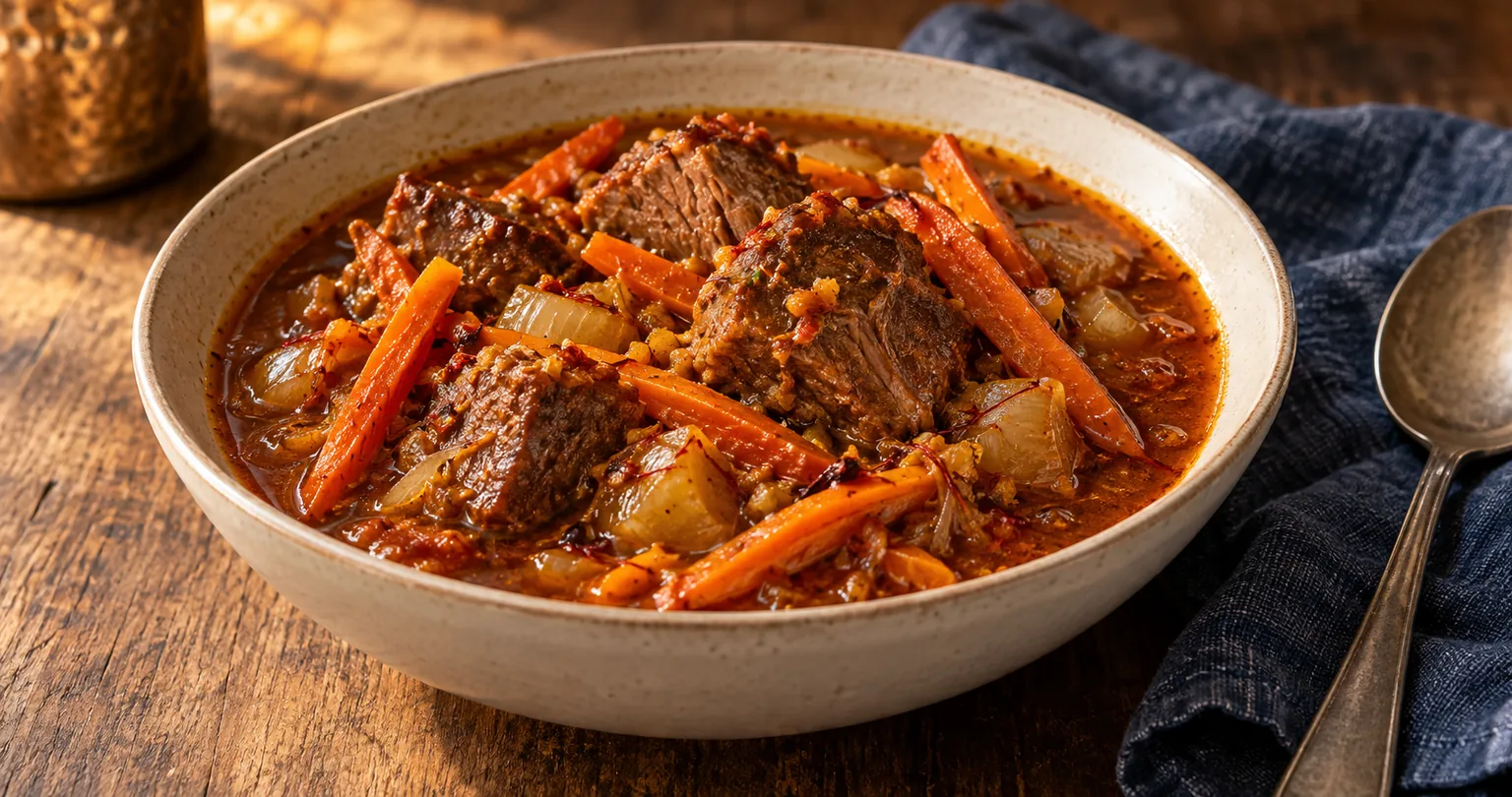
Lamb Tagine with Honey-Roasted Carrots and Preserved Lemon
- Yield
- 4 servings
Most lamb stews braise the carrots for hours until they're soft and taste of nothing. We take them out of the pot: they roast on their own with honey and cumin and get folded in at the end, so every bowl has something firm and sweet against the soft lamb. Ras el hanout and cinnamon bloom in the lamb fat before unsalted chicken stock goes in, and preserved lemon and green olives join for the last stretch. Lamb brings the richness, lemon and olives the salt and sour, carrots the sweetness, chickpeas the crunch, and herbs and harissa yogurt a cool, fresh heat.
IngredientsTips are one tap away.
Ingredients
Batches and reset
4 servings · US measures · 1 batch
Batching
Make one base batch per large pot, with its own sheet pan of carrots and skillet of chickpeas. For a larger yield, use a second pot and pan. Browning batches, braising and roasting times do not multiply with the amount.
Original recipe: 4 servings.
Optional saffron and extra salt added to taste are left out of the base nutrition scenario. Unsalted chicken stock is the selected stock. Nutrition is incomplete: the stock, ras el hanout, preserved lemon, olives, chickpeas, harissa and mint have no matched record yet.
Before you start
- Read through the recipe before you start; you can salt the lamb the day before. Gather the bowls, a large heavy pot with a lid, the sheet pan, the skillet, tongs, a wooden spoon, a plate, paper towels, the thermometer and the measured ingredients. If your kosher salt is the dense, fine-grained kind, use about half as much.
Directions
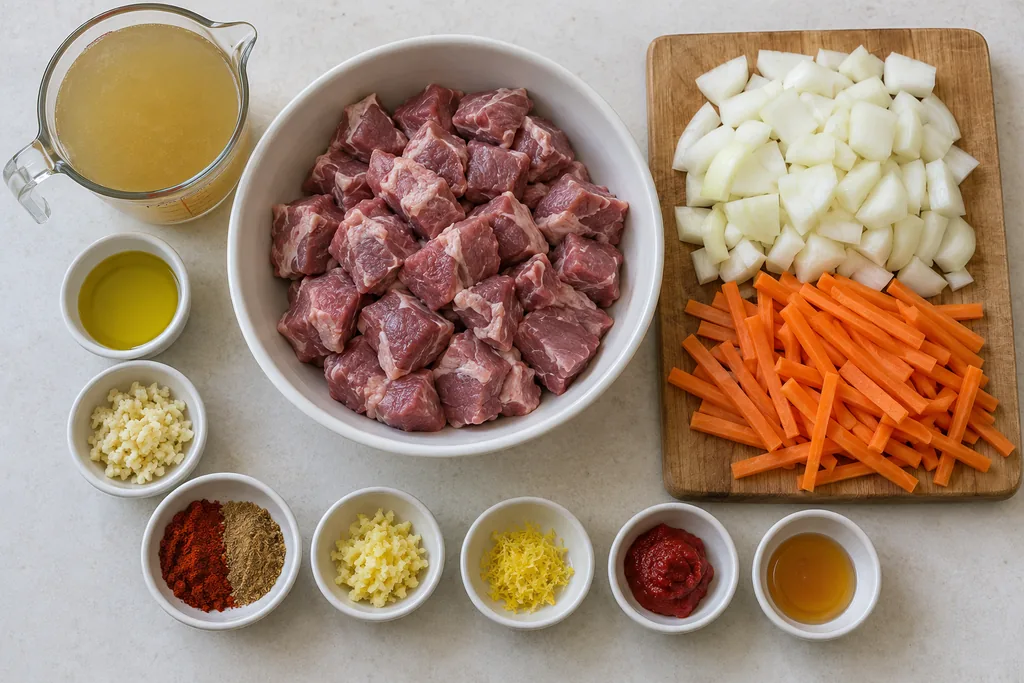
Gather everything, salt ahead if you can
For the whole recipe
Read through the recipe and gather the equipment. Use the ingredient lines to prepare and measure everything; you can salt the lamb the day before and let it chill overnight. Everything is measured and the lamb is cubed.
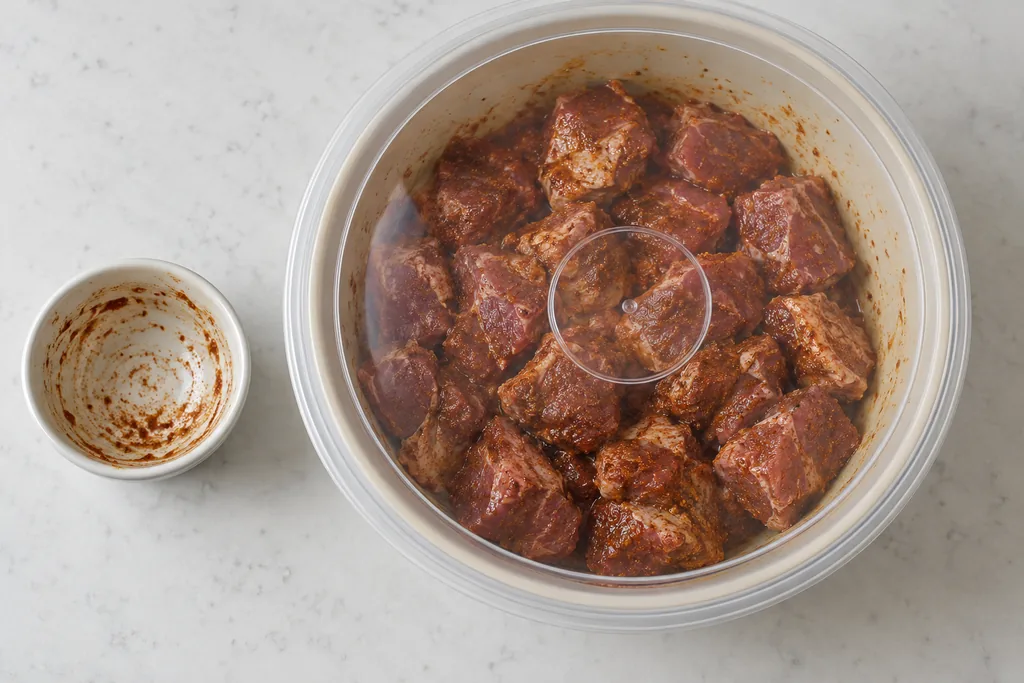
Salt the lamb
For each pot of stew
Toss the lamb with 1 tsp flaky kosher salt in the large bowl until every piece is seasoned. Wash your hands after handling the raw lamb. Cover and refrigerate it while you prepare everything else, or up to overnight. The lamb is evenly salted.
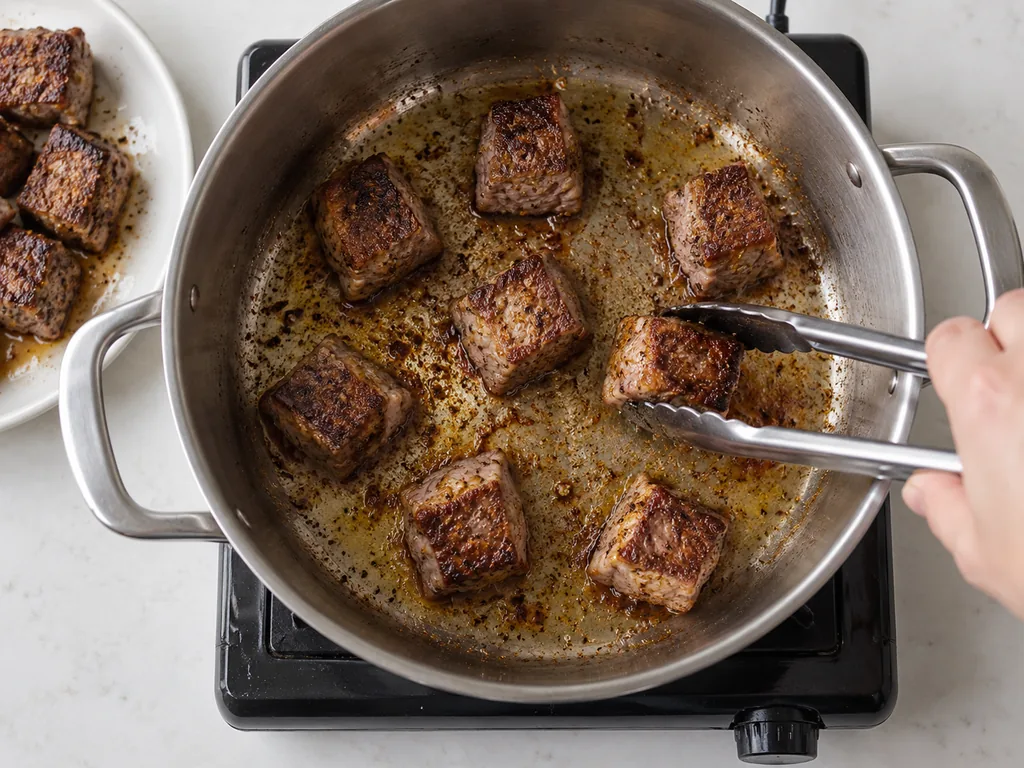
Brown the lamb hard, in batches
For each pot of stew
Heat 2 tbsp olive oil in a large, heavy pot over medium-high heat until it shimmers. Pat the lamb dry and brown it in three batches without crowding, turning the pieces with tongs until they are browned on several sides, about 5 to 7 minutes per batch. Move each batch to the plate.
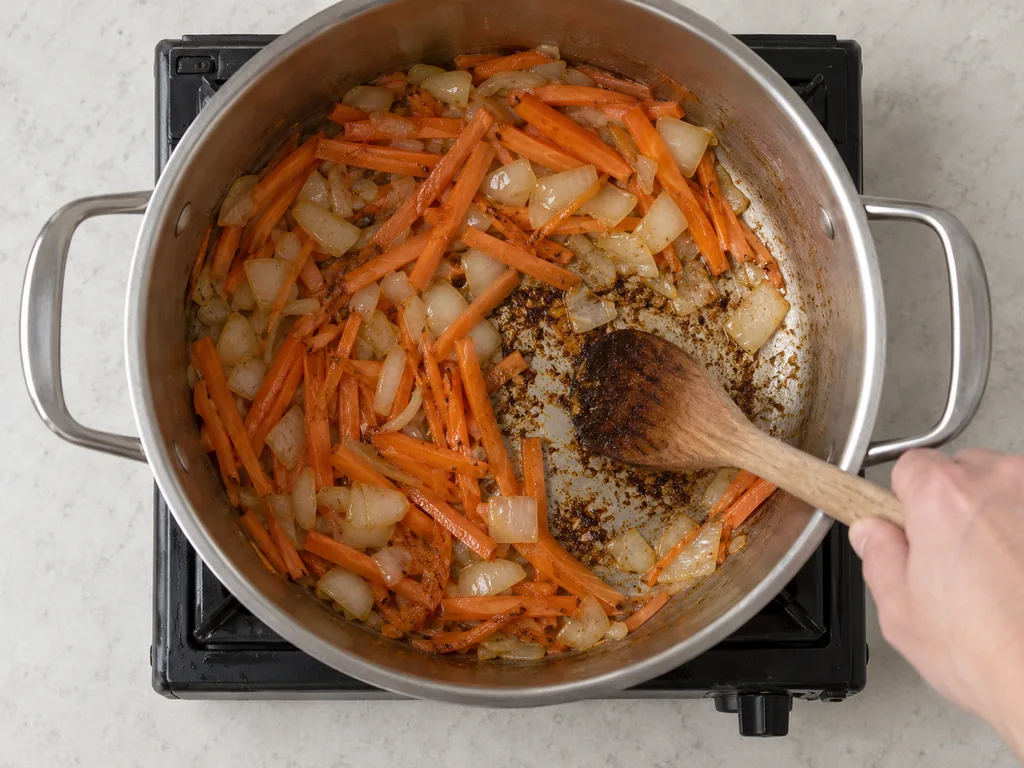
Soften the onions in the lamb fat
For each pot of stew
Add the onions to the pot and cook over medium heat, stirring and scraping up the browned bits, until they begin to soften, about 5 minutes.
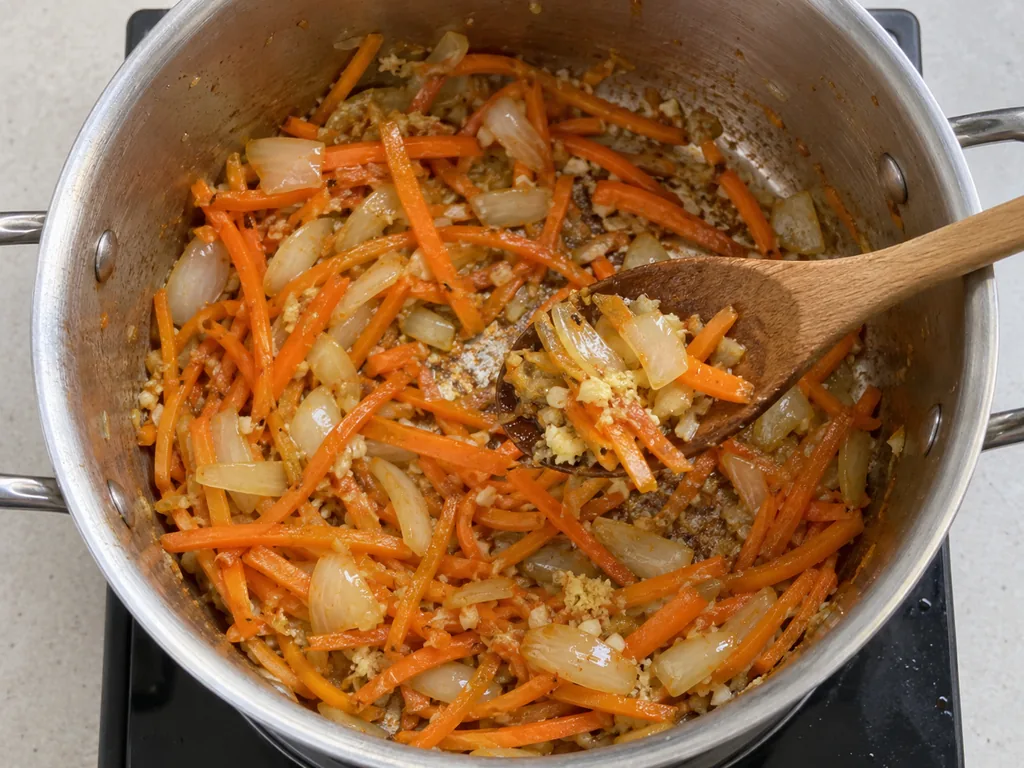
Bloom the ras el hanout
For each pot of stew
Stir in the garlic and fresh ginger over medium heat until fragrant. Add 1 tbsp ras el hanout, 1/2 tsp ground cinnamon and 1 tbsp tomato paste and stir constantly in the lamb fat until the spices darken a shade and smell toasty and the paste turns brick red, about 1 to 2 minutes. If they smell sharp or burnt, add the stock at once.
Why it works: spices in fat, not water
Many of the flavors in ground spices dissolve in fat, not water. A short fry in the lamb fat wakes the ras el hanout and cinnamon up, so the whole pot tastes deeper than spices stirred into broth.
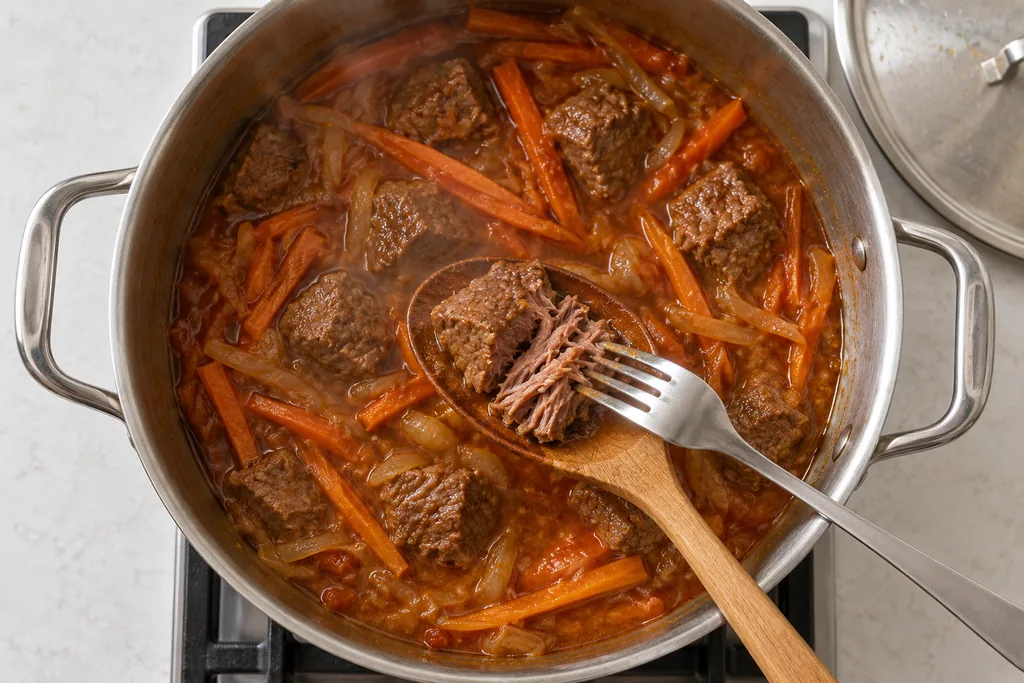
Braise low and covered
For each pot of stew
Return the lamb and any juices to the pot. Stir in 2 cups unsalted chicken stock and the saffron, if using, scraping the bottom clean. Bring to a boil over high heat, then turn to low heat, cover and simmer, stirring now and then, until a fork slides into the lamb with only slight resistance, about 1 hour to 1 hour 30 minutes.
House call: unsalted roasted chicken stock
Roasted chicken stock with no salt added gives the braise body and a rich, roasty depth while leaving the seasoning to you. Boxed broth starts salty, and a long braise only concentrates it.
Heat the oven for the carrots
For each pot of stew
Meanwhile, heat the oven to 400°F (200°C; 180°C fan) with a rack in the middle position. Roast only after the oven reaches 400°F.
Add the preserved lemon and olives
For each pot of stew
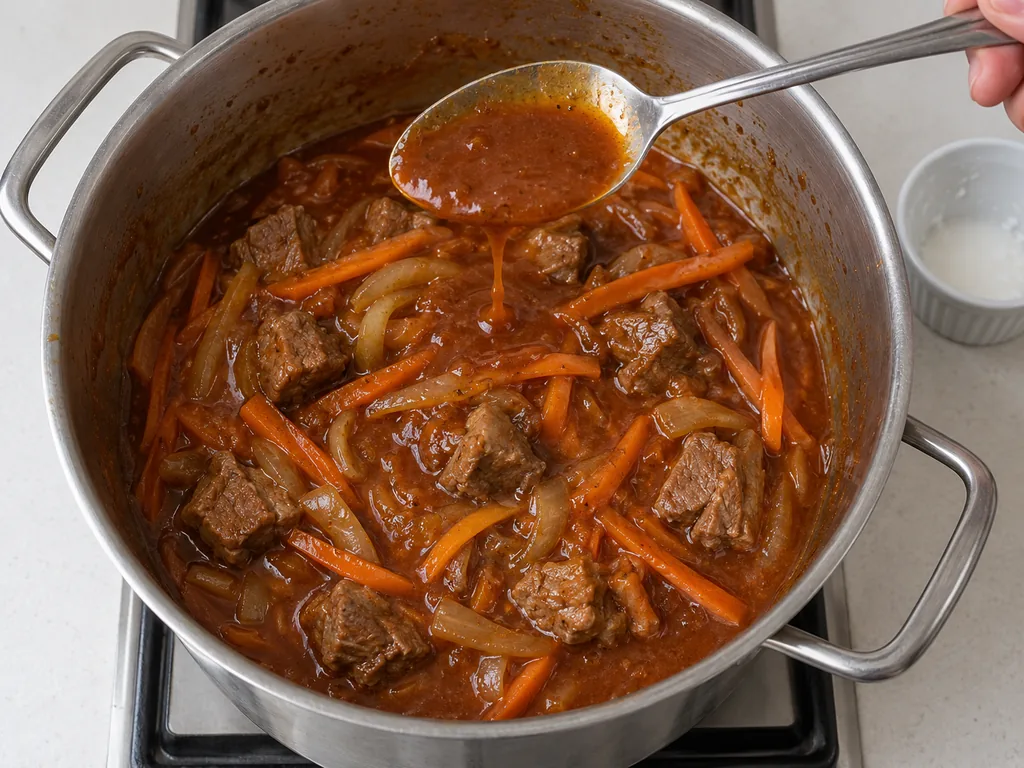
Stir 2 tbsp preserved lemon rind and 1/2 cup green olives into the stew, cover and keep simmering over low heat until the lamb is fork-tender, about 30 minutes.
House call: preserved lemon and olives go in late
Added for the last stretch, preserved lemon and green olives keep their salty, floral punch instead of stewing flat. The pairing is associated with Moroccan tagines, and here it cuts straight through the richness of the lamb.
Swap: fresh lemon zest for preserved lemon
Preserved lemon's job is salty, floral sour. If you can't find it, finely grated fresh lemon zest stirred in at the end brings the brightness without the cure; the stew is less salty and less funky.
If it goes wrong: the lamb is still chewy
It needs more time, not more heat. Keep the lid on, keep the bubbles lazy and check again; shoulder in particular takes its time before it gives.
Honey-roast the carrots
For each pot of stew
Meanwhile, toss the carrots with 1 tbsp olive oil, 1 tbsp honey, 1/2 tsp ground cumin and 1/2 tsp flaky kosher salt on the 18-by-13-inch rimmed sheet pan and spread them in one layer. Roast on the middle rack at 400°F, stirring once, until the carrots are browned at the edges and tender but still firm in the middle, about 25 to 30 minutes.
Why it works: carrots on their own pan
Carrots braised for hours give up their flavor to the sauce and go soft. Roasted hot with honey and cumin they brown at the edges, stay firm in the middle and bring a sweet bite against the soft lamb.
If it goes wrong: the honey is blackening
Stir the carrots, add a splash of water to the pan and keep roasting. Blackened honey turns bitter, so catch it early.
Crisp the chickpeas
For each pot of stew
Meanwhile, heat 2 tbsp olive oil in a 10-inch skillet over medium-high heat. Add the chickpeas, partly cover the skillet because they pop, and cook, shaking the pan now and then, until they are golden and crisp, about 8 to 10 minutes. Lift them onto paper towels and toss with 1/4 tsp flaky kosher salt.
Fold in the carrots, taste, fix
For each pot of stew
Fold the roasted carrots into the stew over low heat until they are warmed through. Taste the stew with a piece of lamb, a carrot and an olive. Aim for warm spice, salty-sour lemon and briny olives against sweet carrots and rich lamb. If it tastes flat, stir in flaky kosher salt to taste. The stew is seasoned and the carrots are warm.
Swirl the yogurt, toss the herbs
For each pot of stew
Stir 1 tbsp harissa through 6 oz plain whole-milk Greek yogurt in a small bowl with just a few strokes, so it stays streaky. Toss 1/2 cup fresh cilantro, 1/4 cup fresh mint and 1/2 cup fresh flat-leaf parsley together in another small bowl. The yogurt is swirled and the herbs are mixed.
Pile it up and serve
For the whole recipe
Divide the stew into 4 servings and top each with the crispy chickpeas, the herb salad and a spoonful of the harissa yogurt. Refrigerate leftovers within two hours and reheat them to 165°F (74°C), checked with an instant-read thermometer. The stew is portioned and ready to serve.
Make ahead: better on Sunday
The braise tastes even better the next day. Keep the carrots, chickpeas, herbs and harissa yogurt separate and add them after reheating, so the carrots stay firm and the chickpeas stay crisp.
Make it yours: from safe to wild
Safe: stir dried apricots in with the olives and finish with toasted almonds. Bolder: make it with chicken thighs instead of lamb for a quicker, lighter braise. Wild: swap the harissa yogurt for labneh with chile crisp, and the chickpeas for pistachios fried in brown butter.
About this recipe
Allergens / Diets
Rebuilt recipe in review. Allergen and diet details are being re-checked.
Research preview: these details come from our sourced research and haven't been reviewed by our chef yet.
Why it works
A dry spice rub left overnight seasons the lamb through, and browning it in uncrowded batches builds flavor in the pot. A long, gentle covered simmer turns the cubes fork-tender, and honey and lemon zest round out the spices.
Associated with
Moroccan and Maghrebi (Amazigh, Arab and Maghrebi Jewish)
The name tagine comes from the Arabic for a shallow earthen pot, and the dish is named for the cone-lidded vessel it cooks in. Its origin is debated between Amazigh roots and Abbasid-era Arab cookery, and it is also a staple of Maghrebi Jewish cooking.
Taste
- Sweet
- Sour
- Salty
- Bitter
- Savory
- Heat
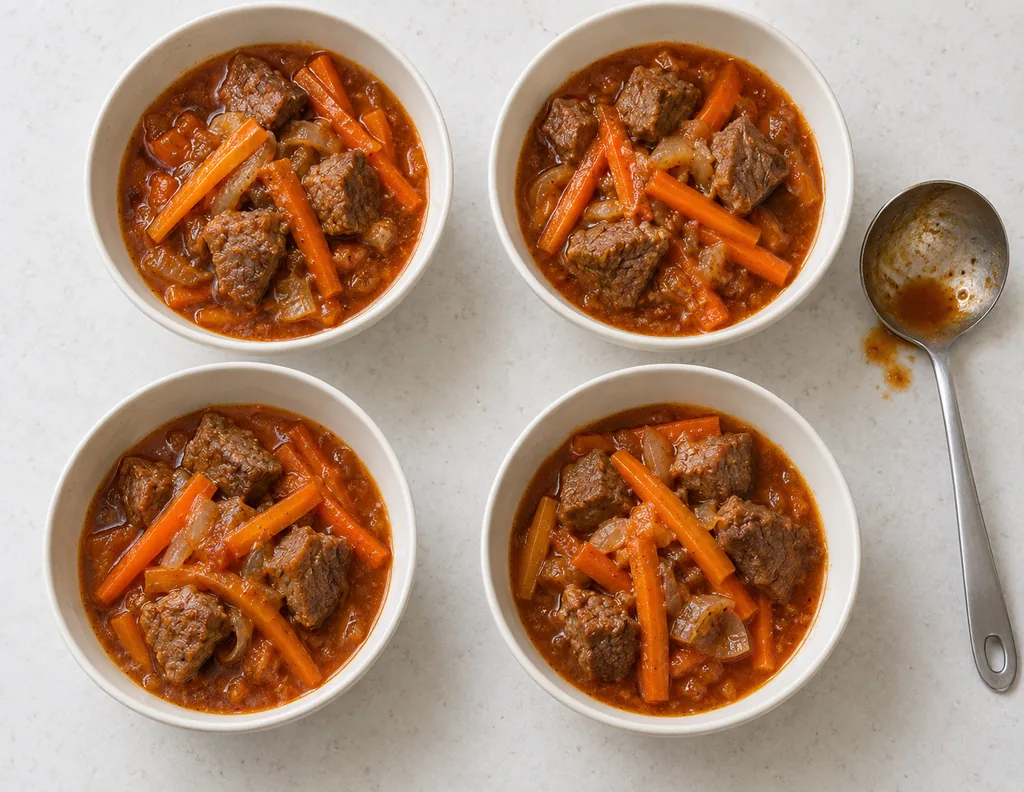
Warm spices: cinnamon, cumin, coriander, cardamom, ginger, cloves, turmeric and a pinch of saffron., A little honey and lemon zest balance the browned lamb. · fork-tender braised lamb in a spiced, glossy sauce, soft carrot strips · hot
Skill level
Some practice
The overnight rub and batch browning add steps but no special skill; most of the long cooking time is unattended.
Occasions
Eid al-Adha
Sheep are the common sacrifice, and in Morocco the meat goes into lamb tagines in the days after; this stew uses the same lamb-and-spice braise. Halal lamb and broth are needed.
Shabbat dinner in Maghrebi Jewish homes
Tagine with couscous is a common Shabbat dinner; a kosher version needs kosher lamb and certified broth, spices and paste.
Serving and keeping
Best served: Hot, once the lamb is fork-tender and the sauce has thickened Over couscous, or with bread for the sauce; rice or quinoa also work
Make ahead: Keep the rubbed raw lamb in the refrigerator, never on the counter.
Storage: Refrigerate within 2 hours (1 hour above 90 °F / 32 °C), in shallow containers. Frozen, it keeps best for about 2 to 3 months.
Leftovers: The flavor holds well; reheat gently and loosen with a little water if thick.
Food safety
- Rub and rest the raw lamb in the refrigerator, not on the counter, and cook it within 1 to 2 days.
- Wash hands, board and tools after handling the raw lamb, and discard any container used for the rub.
- General advice is not to give honey to children under 1 year.
- Lamb is mammalian meat; people with alpha-gal syndrome can react to it hours after eating.
- Refrigerate leftovers within 2 hours (1 hour above 90 °F / 32 °C) and reheat to 165 °F (74 °C).
We make no statement about cross-contact in your kitchen or in packaged ingredients. Check the broth, tomato paste and spice labels.
Nutrition notes
The lamb supplies most of the protein.
The salt and the broth carry most of the sodium; low-sodium broth and less salt keep it lower.
The honey is the only added sugar; leaving it out removes it.
For your food tracker
Fields for MyFitnessPal and other trackers
- Recipe url
- https://isthebestrecipe.com/lamb/spiced-lamb-and-carrot-stew
- Name
- Lamb Tagine with Honey-Roasted Carrots and Preserved Lemon
- Servings
- 4
- Recipe yield
- 4 servings
- Recipe ingredient
- 2 lb boneless lamb stew meat (leg or shoulder) trimmed of excess fat and cut into 1 1/2-inch (4 cm) cubes, 1 3/4 tsp flaky kosher salt divided, 5 tbsp olive oil divided, 2 whole medium yellow onions cut into 1-inch (2.5 cm) pieces, 3 cloves garlic minced, 1 tbsp fresh ginger peeled and finely grated, 1 tbsp ras el hanout the warm North African spice blend, 1/2 tsp ground cinnamon, 1 tbsp tomato paste, 2 cups unsalted chicken stock preferably roasted, homemade or store-bought with no salt added, 2 tbsp preserved lemon rind pulp discarded, rind rinsed and finely chopped, 1/2 cup green olives pitted and halved, 5 whole medium carrots peeled and cut on an angle into 1 1/2-inch (4 cm) chunks, 1 tbsp honey, 1/2 tsp ground cumin, 1 1/2 cups canned chickpeas drained, rinsed and patted very dry, 1 tbsp harissa, 6 oz plain whole-milk Greek yogurt, 1/2 cup fresh cilantro leaves, 1/4 cup fresh mint leaves, 1/2 cup fresh flat-leaf parsley leaves, roughly chopped
- Copy action wording
- Copy recipe and estimated nutrition
Make it the best
Copy this recipe and make it your own. Change amounts, swap ingredients, rewrite steps. The original stays as it is.
Nutrition Values
Nutrition estimates aren’t available for this recipe yet.
Your notes
Kept on this device.Return: https://isthebestrecipe.com/lamb/spiced-lamb-and-carrot-stew