
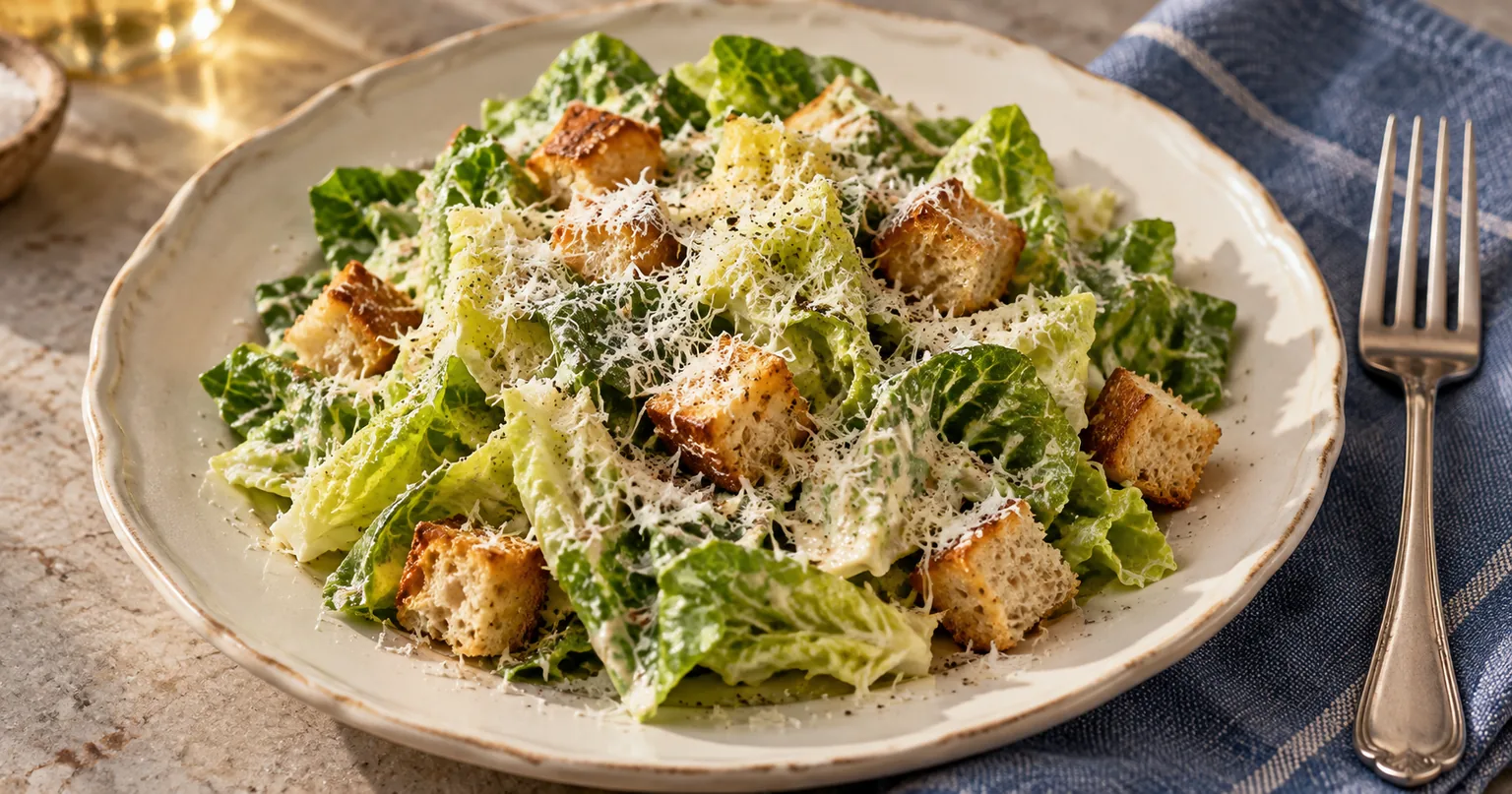
Charred Caesar with Anchovy Breadcrumbs
- Yield
- 4 servings
A Caesar is salt, fat, sour and crunch fighting over a cold leaf, and most versions let the crunch lose. Here half the romaine gets charred hard in a screaming-hot skillet for smoky bitterness, and the croutons become anchovy breadcrumbs so every bite crackles. The dressing skips the raw yolk for mayonnaise, mashed anchovy, lemon and a rude amount of black pepper. Anchovy and Parmigiano bring the salt, lemon the sour, mayonnaise the richness, the char a bitter edge and the crumbs the noise. The cheese goes on last, grated over the top like fresh snow.
IngredientsTips are one tap away.
Ingredients
Batches and reset
4 servings · US measures · 1 batch
Batching
Make the crumbs and char the romaine one skillet at a time. For 8 servings, toast a second batch of crumbs and char the second set of romaine halves in their own rounds, so they char instead of steaming; whisk a second bowl of dressing. Toasting and charring times do not multiply with the ingredient amounts.
Original recipe: 4 servings.
The optional Dijon mustard, the to-taste salt and lemon juice and the extra black pepper at the table are left out of the base nutrition scenario. All of the crumb and charring oil is counted, though a little stays in the skillet.
Before you start
- Read through the recipe before you start. Gather the skillet, plate, bowl, whisk, cup, knife, rasp grater, food processor, salad spinner, towels and the measured ingredients, and make sure the romaine is completely dry.
Directions
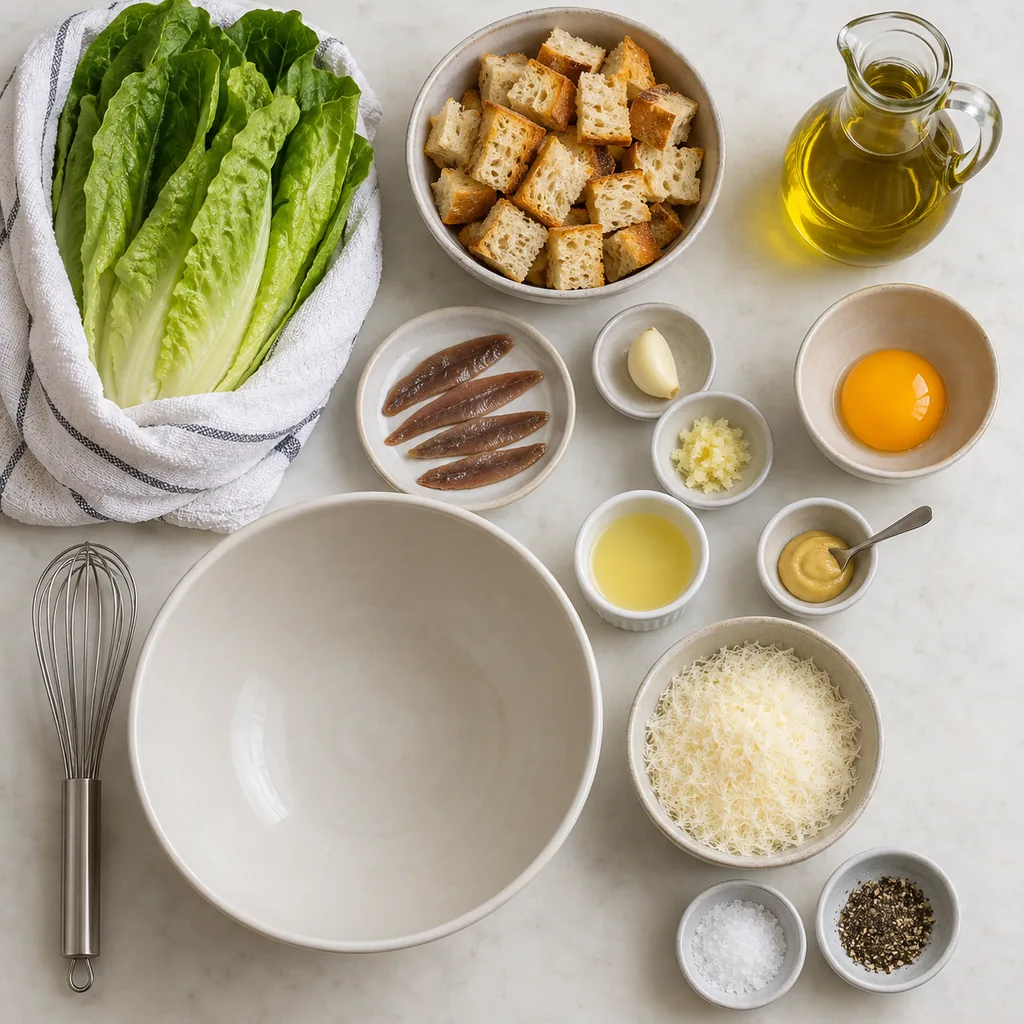
Dry the romaine and gather everything
For the whole recipe
Read through the recipe and gather the equipment. Use the ingredient lines to prepare and measure everything. Wrap the dried romaine hearts loosely in a clean towel and refrigerate them, since wet leaves thin the dressing and will not char. If you are cooking for young children, older adults, pregnant people or anyone with a weakened immune system, choose a grating cheese made from pasteurized milk. Everything is measured and the romaine is dry and chilling.
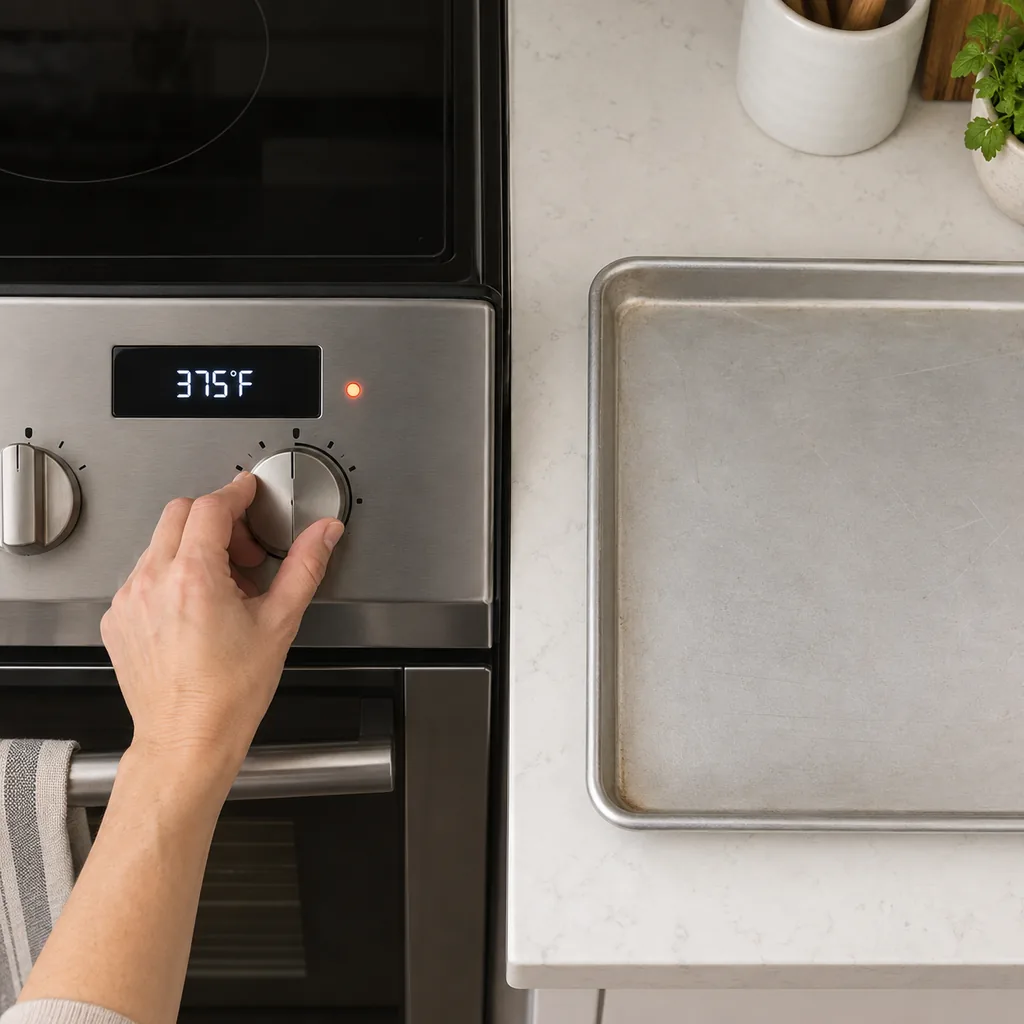
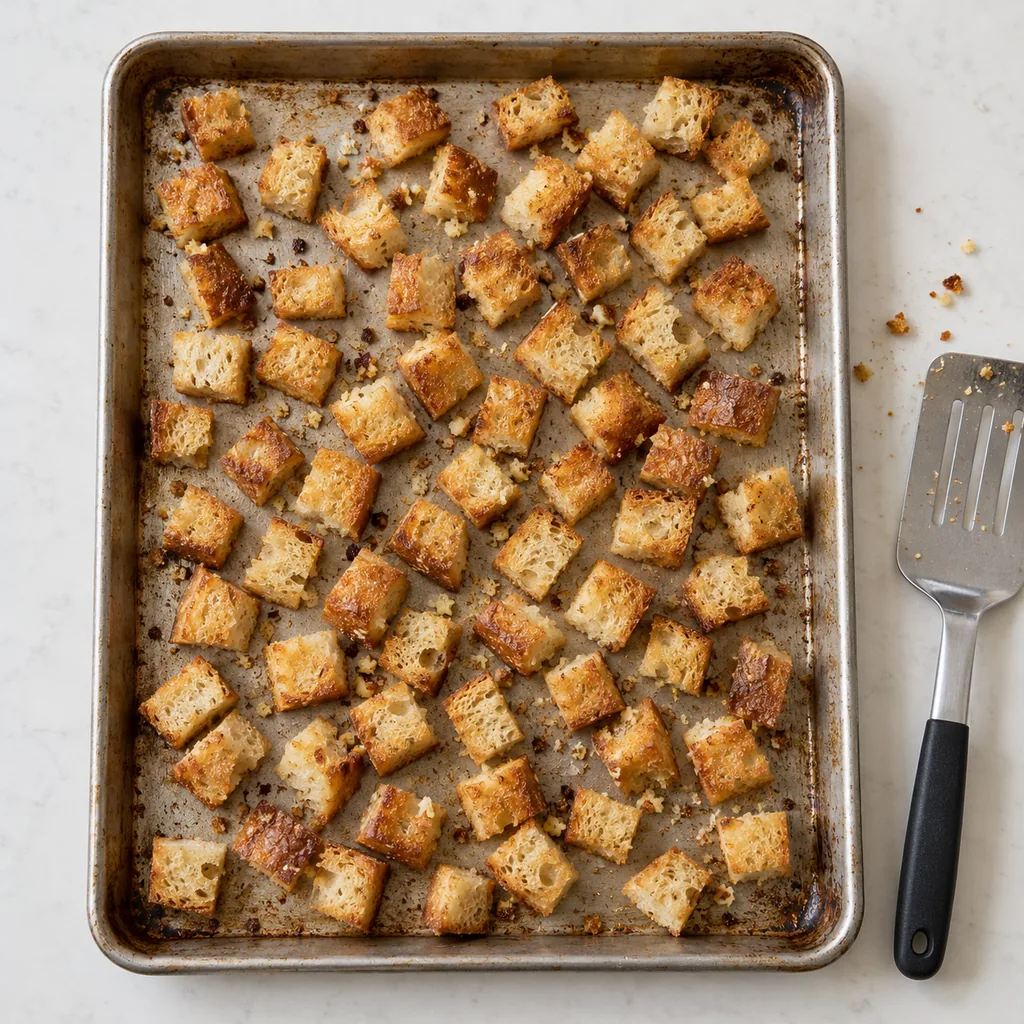
Toast the anchovy breadcrumbs
For each batch of salad
Heat 3 tbsp extra-virgin olive oil in a 12-inch cast-iron skillet over medium heat. Add 2 whole oil-packed anchovy fillets and the grated garlic and stir, mashing the anchovies with the spoon, until they melt into the oil. Add 5 oz day-old crusty bread and stir often until the crumbs are deep golden and crisp, about 6 to 8 minutes. Spread them on a plate to cool and crisp further.
Why it works: crumbs, not croutons
Croutons give you crunch in a few bites and a sore jaw in the rest. Crumbs get into every forkful, and toasting them in oil with melted anchovy seasons each one with savory depth, not fishiness.
If it goes wrong: the crumbs are darkening in spots
Pull the skillet off the heat and keep stirring; the hot pan will finish the pale ones. Pick out any black crumbs, because they taste bitter.
Char half the romaine hard
For each batch of salad
Wipe out the skillet, add 1 tbsp extra-virgin olive oil and heat it over high heat until it shimmers. Halve half the romaine hearts lengthwise, sprinkle the cut sides with 1/8 tsp fine salt and set them cut side down in the skillet. Press them flat and cook without moving until the cut sides are deeply charred in spots but the cores are still crisp, about 2 to 3 minutes. Move them to a cutting board, charred side up.
Why it works: char half, keep half raw
A short, brutal sear blackens the cut face for a smoky bitterness while the core stays cold and crisp. Next to the raw leaves you get two temperatures and two textures in one salad.
If it goes wrong: the romaine wilted instead of charring
The skillet was not hot enough or the leaves were wet. Heat the pan longer before the next batch and serve the soft halves anyway; they still taste smoky.
Swap: little gems for romaine hearts
Little gems do the same job: crisp, sweet and sturdy enough to char. Halve them the same way; they are a little sweeter and more tender.
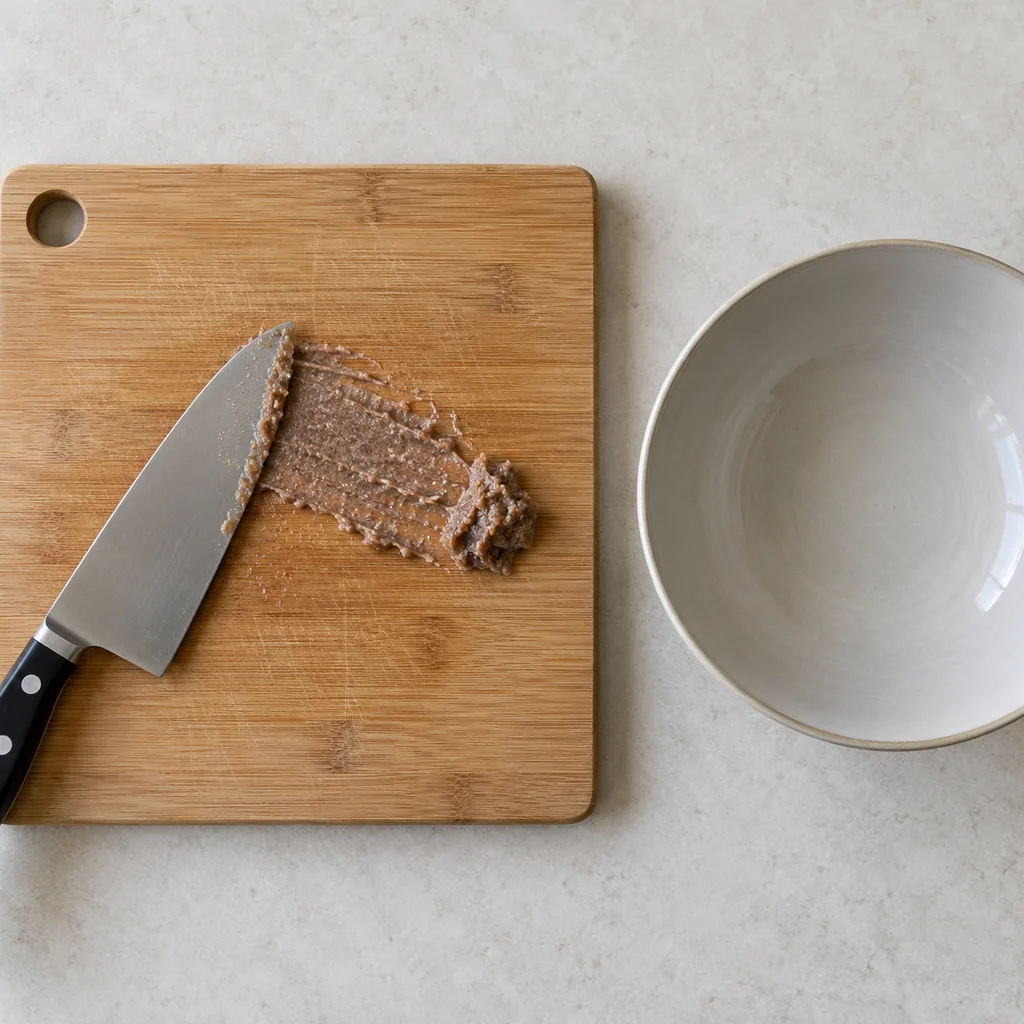
Mash the anchovy-garlic paste
For each batch of salad
Mince the garlic for the dressing with 4 whole oil-packed anchovy fillets on the cutting board, then sprinkle them with 1/8 tsp fine salt. Press and drag the flat of the knife across the pile, scraping it back together, until it turns into a smooth paste, about 2 minutes. Scrape the paste into the large bowl.
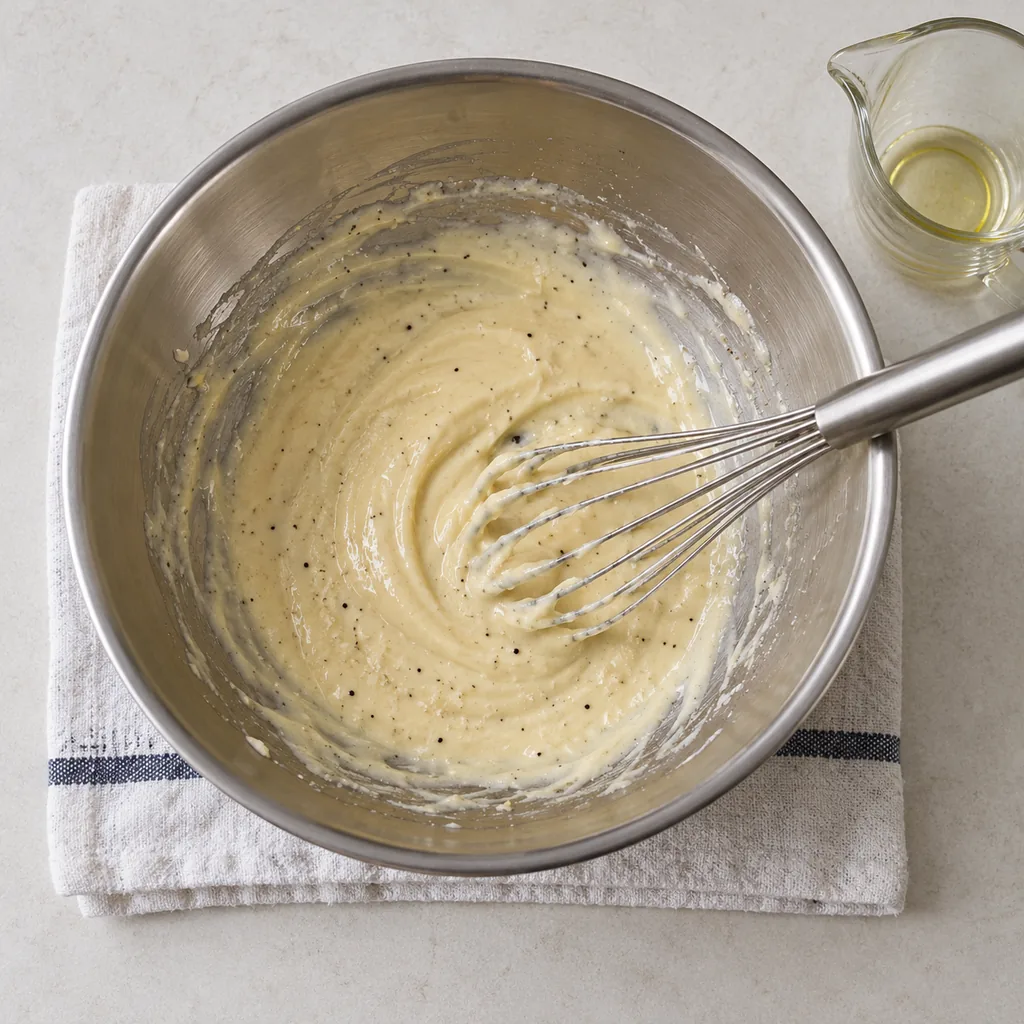
Whisk the peppery dressing
For each batch of salad
Whisk 1/2 cup mayonnaise, 2 tbsp fresh lemon juice, 1 tsp Dijon mustard, if using, 2 tbsp mild extra-virgin olive oil and 1 tsp black pepper into the paste until the dressing is smooth and thick enough to coat a spoon. If you make your own mayonnaise for this, use a pasteurized-in-shell egg, because the yolk is never cooked.
House call: mayonnaise, not a raw yolk
Store-bought mayonnaise is already a stable emulsion, so the dressing turns creamy in seconds with no drip-by-drip whisking. If you make your own mayonnaise, use a pasteurized-in-shell egg, as the step says.
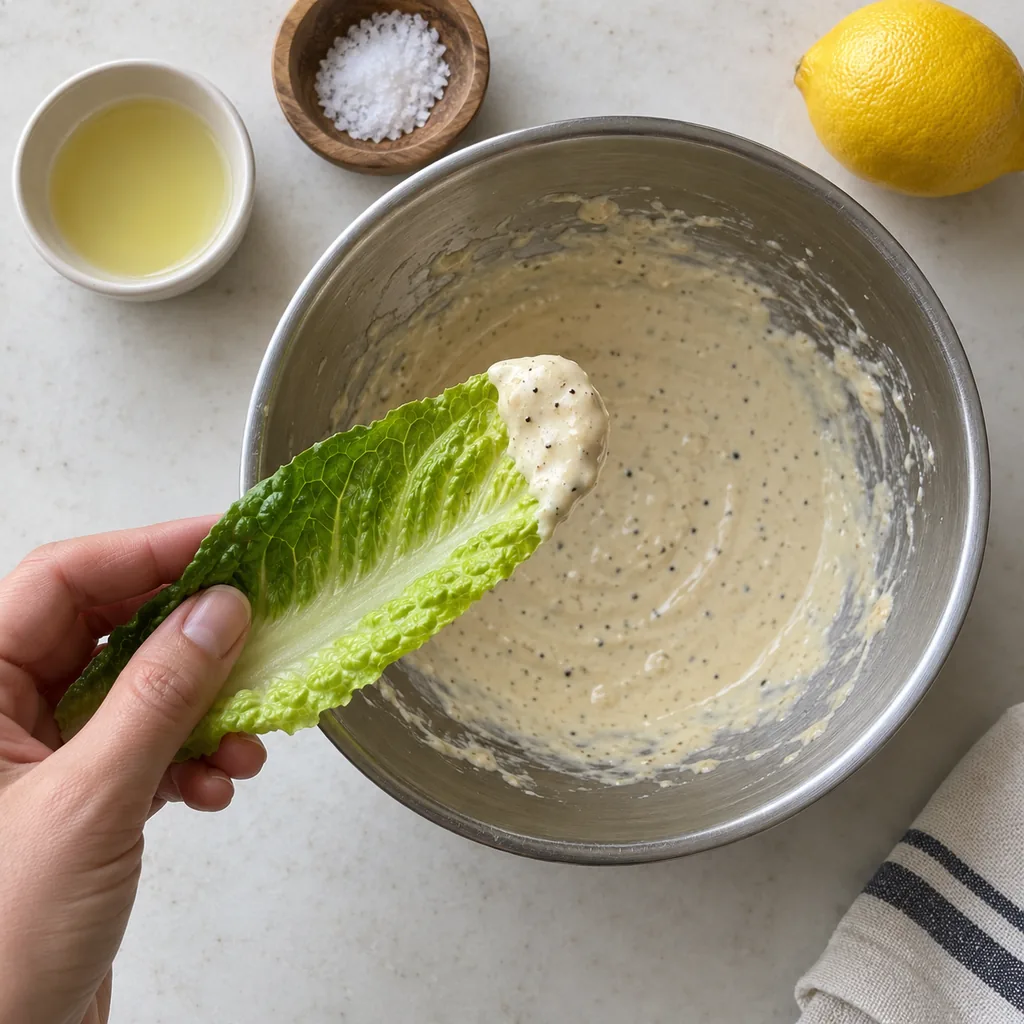
Taste, then fix
For each batch of salad
Taste the dressing on a romaine leaf. Aim for bold and savory, bright with lemon, sharp with garlic, loud with pepper and a little too strong on its own. If it tastes flat, add fine salt to taste. If it still tastes dull, add fresh lemon juice to taste. The dressing tastes bold and bright.
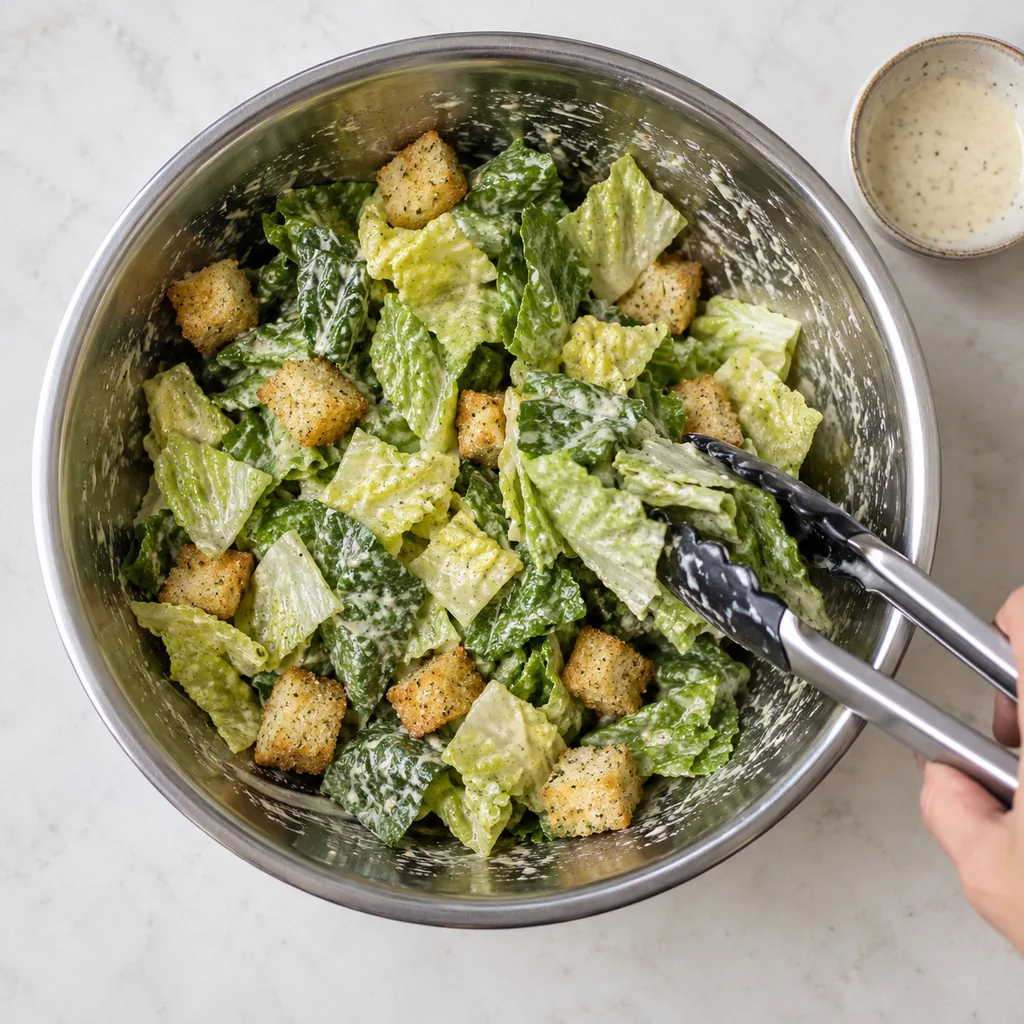
Toss the raw leaves
For each batch of salad
Spoon about a quarter of the dressing into the cup for the charred halves. Tear half the romaine hearts into 2-inch (5 cm) pieces and toss them with the dressing in the bowl, lifting from the bottom with your hands or tongs, until the leaves look lightly glossy with nothing pooling.
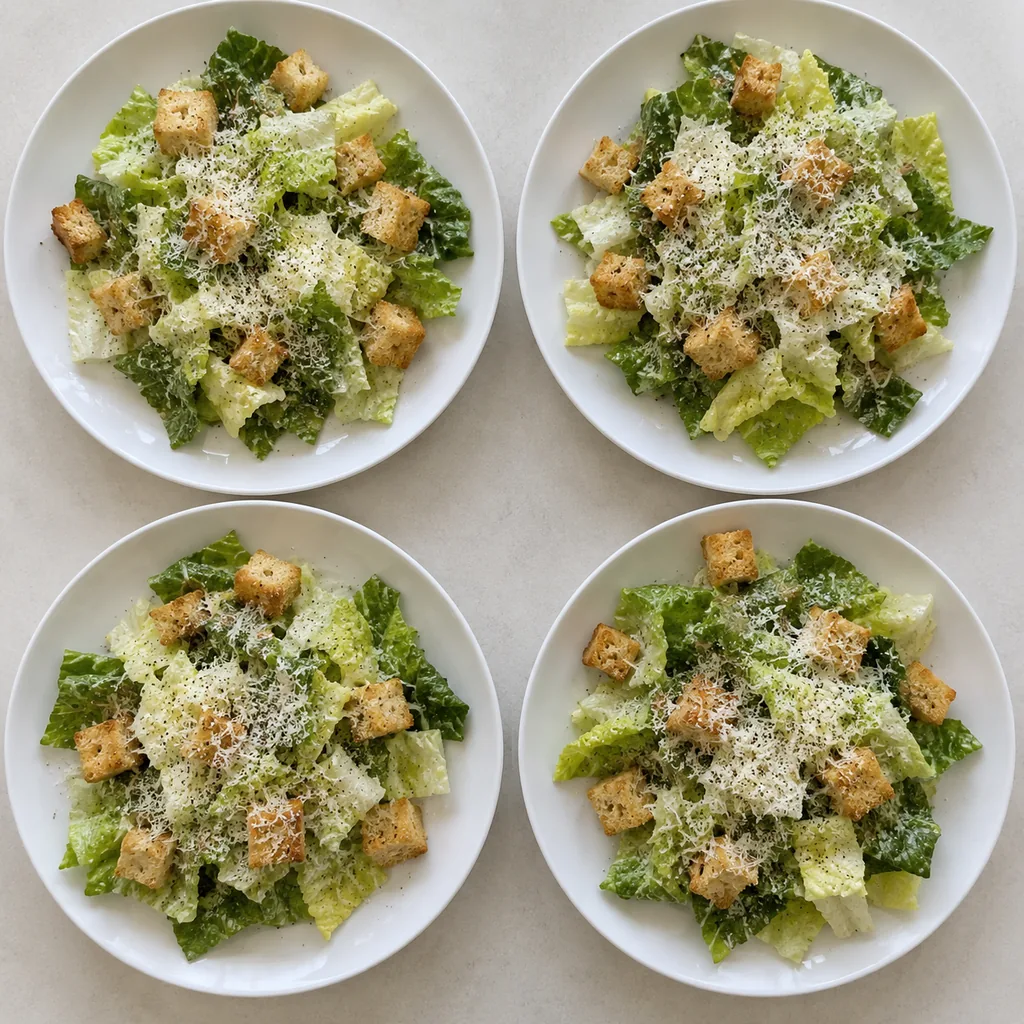
Plate, snow on the cheese, serve
For the whole recipe
Divide the dressed leaves and the charred halves among plates to make 4 servings, and spoon the dressing in the cup over the charred halves. Grate 2 oz Parmigiano-Reggiano over the plates on the rasp so it lands like a snowdrift, then top with half the crumbs, 2 tsp finely grated lemon zest and black pepper to taste. Serve right away with the other half of the crumbs in a bowl at the table. Refrigerate any leftover dressing in a covered jar and use it within a few days. The salad is plated and topped.
Technique: the Parmigiano snowdrift
Grate the cheese on a rasp held high over the plate so it falls light and fluffy. Fine, airy shreds melt on your tongue instead of clumping into the dressing.
Make ahead: crumbs and dressing first
Toast the crumbs and whisk the dressing ahead; keep the crumbs airtight at room temperature and the dressing covered in the refrigerator. Char and toss only right before you eat.
Make it yours: from safe to wild
Safe: add sliced grilled chicken thighs. Bolder: go elote, with charred corn, crumbled cotija and chile-lime in place of the lemon zest. Wild: whisk a spoonful of white miso into the dressing and fold furikake into the crumbs.
About this recipe
Allergens / Diets
Rebuilt recipe in review. Allergen and diet details are being re-checked.
Research preview: these details come from our sourced research and haven't been reviewed by our chef yet.
Why it works
Mashing the garlic and anchovy into a smooth paste spreads their savor through the dressing, adding the oil drop by drop builds a thick emulsion around a pasteurized yolk, and well-dried leaves let the dressing cling.
Associated with
Mexican border restaurant cooking, later American
Caesar salad is generally credited to an Italian-born restaurateur in Tijuana and traditionally dated to 1924, during Prohibition-era cross-border tourism; the account comes from family tradition rather than a verified record. Early versions used whole romaine leaves, coddled egg and Worcestershire sauce, and versions with anchovy fillets are documented by the 1940s.
Taste
- Sweet
- Sour
- Salty
- Bitter
- Savory
- Heat
Bold and savory from anchovy and Parmigiano., Bright with lemon and sharp with raw garlic and black pepper. · crisp leaves, crunchy croutons, creamy emulsified dressing, granular grated cheese · cold
Skill level
Some practice
The hand-whisked dressing is the skill: adding the oil too fast can break the emulsion. The rest is simple prep.
Occasions
Lenten Fridays (Catholic)
No meat is listed; fish, eggs and cheese are allowed on days of abstinence. It is suitable, not a traditional Lenten dish.
July 4 (traditional origin date)
Family tradition dates the salad to July 4, 1924, and its centenary was marked in the press in 2024; the date is a tradition, not a verified record.
Serving and keeping
Best served: Right after tossing On plates, topped with the rest of the Parmigiano and a grind of black pepper
Make ahead: Toss just before serving; dressed leaves wilt.
Storage: Refrigerate the dressing within 2 hours. No federal chart lists Caesar dressing; this time follows the federal row for egg-based salads. Dressed salad does not keep. Freezing is not recommended.
Leftovers: Dressed salad is best eaten right away. Keep extra dressing, croutons and leaves separate, and discard the dressing if it sits out more than 2 hours (1 hour above 90 °F).
Food safety
- The yolk is never cooked, so use a pasteurized-in-shell egg or pasteurized egg product, as the recipe does.
- Parmigiano-Reggiano is made from raw milk and is not heated here. Young children, older adults, pregnant people and anyone with a weakened immune system should choose a pasteurized-milk grating cheese.
- Keep the dressing cold, refrigerate leftovers in a covered jar, and do not leave it out more than 2 hours, or 1 hour above 90 °F.
- Wash the board and knife after the anchovy paste before cutting other foods.
We make no statement about cross-contact in your kitchen or in packaged ingredients. Anchovy, egg, cheese, wheat and mustard all share the bowl; check the bread label for sesame.
Nutrition notes
Anchovies and Parmigiano supply most of the sodium, even before any added salt. Using fewer anchovies, less cheese and no added salt lowers it.
Most of the fat comes from the olive oil in the dressing and croutons.
For your food tracker
Fields for MyFitnessPal and other trackers
- Recipe url
- https://isthebestrecipe.com/salads/caesar-salad
- Name
- Charred Caesar with Anchovy Breadcrumbs
- Servings
- 4
- Recipe yield
- 4 servings
- Recipe ingredient
- 4 tbsp extra-virgin olive oil divided, 6 whole oil-packed anchovy fillets patted dry, divided, 1 clove garlic small, finely grated, for the crumbs, 5 oz day-old crusty bread such as a country loaf or ciabatta, torn and pulsed into coarse crumbs, 4 whole romaine hearts rinsed and dried well, divided, 1/4 tsp fine salt, 1 clove garlic peeled, for the dressing, 1/2 cup mayonnaise, 2 tbsp fresh lemon juice, 2 tbsp mild extra-virgin olive oil for the dressing, 1 tsp black pepper freshly ground, 2 oz Parmigiano-Reggiano in one piece, for grating at the table, 2 tsp finely grated lemon zest
- Nutrition information
- Nutrient 1008
- 564.08
- Nutrient 1003
- 12.96
- Nutrient 1004
- 46.55
- Nutrient 1005
- 25.46
- Nutrient 1079
- 5.04
- Nutrient 2000
- 4.35
- Nutrient 1093
- 941.72
- Nutrient 1258
- 8.53
- Nutrient 1253
- 26.29
- Nutrient 1087
- 291.21
- Nutrient 1089
- 3.73
- Nutrient 1092
- 587.77
- Nutrient 1114
- 0.23
- Nutrient 1261
- 0.04
- Nutrient 1263
- 0.13
- Nutrient 1264
- 0.46
- Nutrient 1275
- 0.38
- Nutrient 1278
- 0.05
- Nutrient 1007
- 4.37
- Nutrient 1018
- 0.00
- Nutrient 1062
- 2361.38
- Nutrient 1090
- 48.44
- Nutrient 1091
- 213.87
- Nutrient 1098
- 0.18
- Nutrient 1162
- 12.31
- Nutrient 1165
- 0.36
- Nutrient 1166
- 0.32
- Nutrient 1177
- 299.49
- Nutrient 1178
- 0.26
- Nutrient 1185
- 254.76
- Nutrient 1187
- 299.49
- Nutrient 1186
- 6.38
- Nutrient 1190
- 310.12
- Nutrient 1259
- 0.19
- Nutrient 1167
- 3.46
- Nutrient 1170
- 0.60
- Nutrient 1175
- 0.23
- Nutrient 1262
- 0.09
- Nutrient 1265
- 5.72
- Nutrient 1266
- 1.67
- Nutrient 1051
- 215.09
- Nutrient 1095
- 1.33
- Nutrient 1103
- 15.02
- Nutrient 1277
- 0.13
- Nutrient 1292
- 20.90
- Nutrient 1293
- 15.44
- Nutrient 1268
- 20.27
- Nutrient 1269
- 13.32
- Nutrient 1270
- 1.96
- Nutrient 1057
- 0.00
- Nutrient 1058
- 0.00
- Nutrient 1123
- 4417.28
- Nutrient 1109
- 4.41
- Nutrient 1105
- 33.34
- Nutrient 1122
- 0.12
- Nutrient 1110
- 8.76
- Nutrient 1279
- 0.02
- Nutrient 1271
- 0.01
- Nutrient 1276
- <0.01
- Nutrient 1260
- 0.07
- Nutrient 1280
- <0.01
- Nutrient 1272
- 0.08
- Nutrient 1120
- 2.00
- Nutrient 1106
- 863.05
- Nutrient 1107
- 9942.41
- Nutrient 1108
- 0.08
- Nutrient 1104
- 16684.57
- Nutrient 1180
- 41.62
- Nutrient 1242
- 0.00
- Nutrient 1246
- 0.00
- Copy action wording
- Copy recipe and estimated nutrition
Make it the best
Copy this recipe and make it your own. Change amounts, swap ingredients, rewrite steps. The original stays as it is.
Nutrition Values
Estimated nutrition
Charred Caesar with Anchovy Breadcrumbs
4 servingsOne serving is one equal share of the selected recipe yield.
- Protein
- 13 g
- Carbohydrates
- 25 g
- Fiber
- 5 g
- Total sugars
- 4.5 g
- Total fat
- 47 g
- Saturated fat
- 9 g
- Sodium
- 940 mg
- Vitamin D
- 0.2 µg
- Calcium
- 291 mg
- Iron
- 3.7 mg
- Potassium
- 588 mg
Estimated · Per serving · 560 kcal
| Macro | Grams | Share |
|---|---|---|
| Carbohydrate | 25.46 g | 17.79% |
| Fat | 46.55 g | 73.16% |
| Protein | 12.96 g | 9.05% |
Charred and raw romaine, anchovy breadcrumbs toasted in olive oil, mayonnaise dressing and Parmigiano-Reggiano; optional Dijon mustard and to-taste salt, lemon juice and pepper excluded
Nutrition details
Charred and raw romaine, anchovy breadcrumbs toasted in olive oil, mayonnaise dressing and Parmigiano-Reggiano; optional Dijon mustard and to-taste salt, lemon juice and pepper excluded
- Dijon mustard: not included
Main nutrients
Per serving
- Calories
- 564.08 kcal
- Protein
- 12.96 g
- Carbohydrates
- 25.46 g
- Fiber
- 5.04 g
- Total sugars
- 4.35 g
- Total fat
- 46.55 g
- Saturated fat
- 8.53 g
- Sodium
- 941.72 mg
Vitamins and minerals
Per serving
- Calcium, Ca
- 291.21 mg
- Iron, Fe
- 3.73 mg
- Potassium, K
- 587.77 mg
- Vitamin D (D2 + D3)
- 0.23 µg
- Magnesium, Mg
- 48.44 mg
- Phosphorus, P
- 213.87 mg
- Copper, Cu
- 0.18 mg
- Vitamin C, total ascorbic acid
- 12.31 mg
- Thiamin
- 0.36 mg
- Riboflavin
- 0.32 mg
- Folate, total
- 299.49 µg
- Vitamin B-12
- 0.26 µg
- Vitamin K (phylloquinone)
- 254.76 µg
- Folate, food
- 299.49 µg
- Folic acid
- 6.38 µg
- Folate, DFE
- 310.12 µg
- Niacin
- 3.46 mg
- Pantothenic acid
- 0.60 mg
- Vitamin B-6
- 0.23 mg
- Zinc, Zn
- 1.33 mg
- Selenium, Se
- 15.02 µg
- Lutein + zeaxanthin
- 4417.28 µg
- Vitamin E (alpha-tocopherol)
- 4.41 mg
- Retinol
- 33.34 µg
- Lycopene
- 0.12 µg
- Vitamin D (D2 + D3), International Units
- 8.76 IU
- Cryptoxanthin, beta
- 2.00 µg
- Vitamin A, RAE
- 863.05 µg
- Carotene, beta
- 9942.41 µg
- Carotene, alpha
- 0.08 µg
- Vitamin A, IU
- 16684.57 IU
- Choline, total
- 41.62 mg
- Vitamin E, added
- 0.00 mg
- Vitamin B-12, added
- 0.00 µg
Other nutrients
Per serving
- Cholesterol
- 26.29 mg
- SFA 8:0
- 0.04 g
- SFA 12:0
- 0.13 g
- SFA 14:0
- 0.46 g
- MUFA 16:1
- 0.38 g
- PUFA 20:5 n-3 (EPA)
- 0.05 g
- Ash
- 4.37 g
- Alcohol, ethyl
- 0.00 g
- Energy
- 2361.38 kJ
- SFA 4:0
- 0.19 g
- SFA 10:0
- 0.09 g
- SFA 16:0
- 5.72 g
- SFA 18:0
- 1.67 g
- Water
- 215.09 g
- MUFA 20:1
- 0.13 g
- Fatty acids, total monounsaturated
- 20.90 g
- Fatty acids, total polyunsaturated
- 15.44 g
- MUFA 18:1
- 20.27 g
- PUFA 18:2
- 13.32 g
- PUFA 18:3
- 1.96 g
- Caffeine
- 0.00 mg
- Theobromine
- 0.00 mg
- MUFA 22:1
- 0.02 g
- PUFA 20:4
- 0.01 g
- PUFA 18:4
- <0.01 g
- SFA 6:0
- 0.07 g
- PUFA 22:5 n-3 (DPA)
- <0.01 g
- PUFA 22:6 n-3 (DHA)
- 0.08 g
Incomplete data
Unknown source coverage is not zero.
Calculation details
An estimate, not a laboratory analysis or regulatory nutrition label.
Calculated from retained ingredient source mappings; independent review pending.
Estimated from protein and carbohydrate at 4 kcal/g and fat at 9 kcal/g. This is not a breakdown of reported Calories; food-specific factors and carbohydrate composition can differ. Rounded percentages may not total exactly 100%; segments use exact shares.
Per serving: calculated macro energy 572.60 kcal; reported Calories 564.08 kcal. Difference: 8.52 kcal.
Use in MyFitnessPal
Use the selected recipe amounts and servings when creating your recipe in MyFitnessPal. Its ingredient matches may give different estimates.
Your notes
Kept on this device.Return: https://isthebestrecipe.com/salads/caesar-salad