
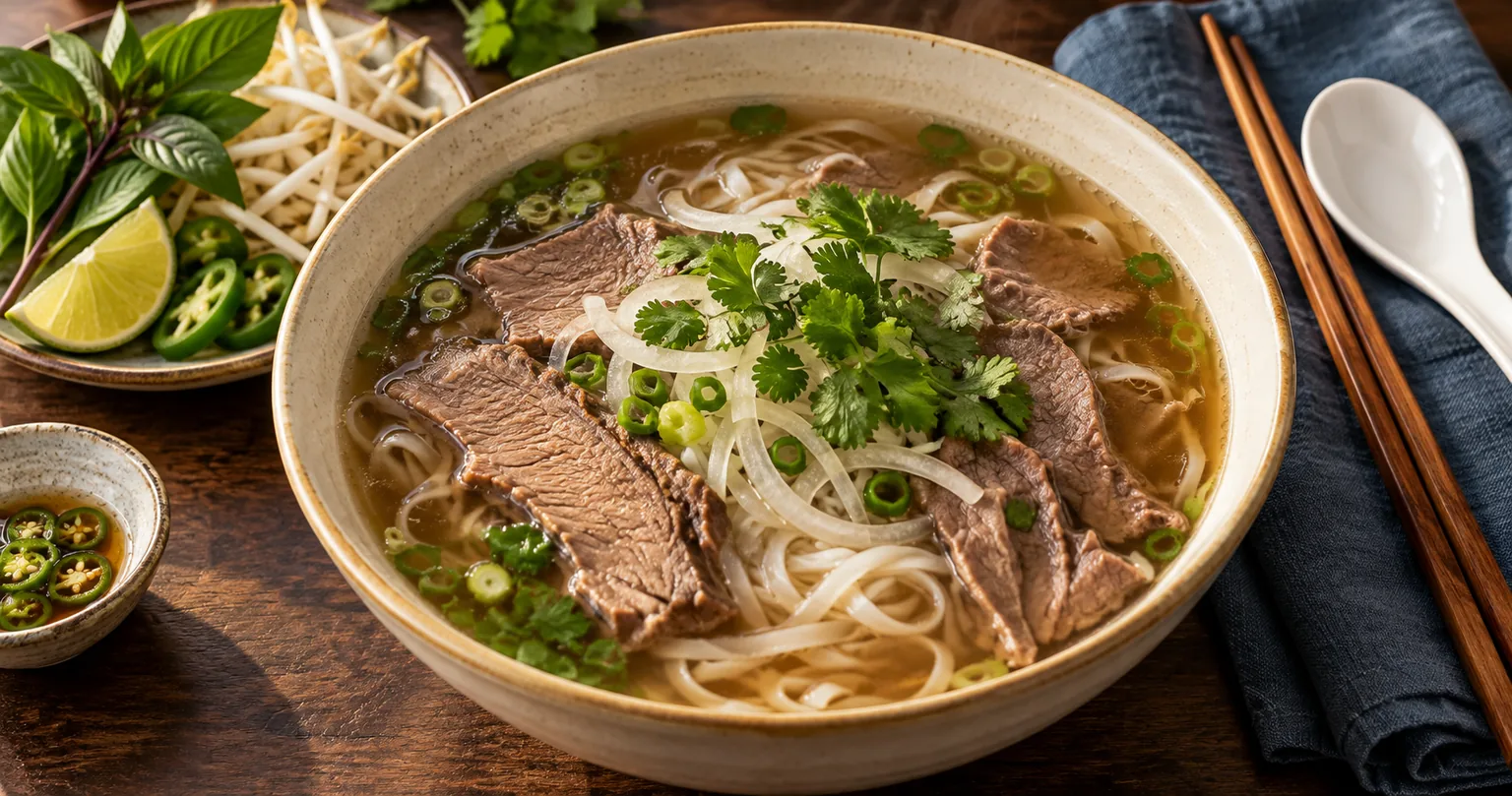
Weekend Pho with a Charred-Aromatic Broth
- Yield
- 4 servings
This is a Saturday project that pays you back all week. Pho is the broth, so we spend the effort there: onion and ginger charred until they're properly black, whole spices toasted until the kitchen smells like star anise, and a pot kept at lazy bubbles for hours, with fish sauce going in only at the end. Then set the table like a pho shop and let everyone build their own bowl. Bones and brisket bring the depth, char the smoky sweetness, spices the perfume, fish sauce the savory backbone, and a house chili-garlic vinegar, lime and fistfuls of herbs the bright, hot, crunchy finish.
IngredientsTips are one tap away.
Ingredients
Batches and reset
4 servings · US measures · 1 batch
Batching
Make one base batch of broth in each 10- to 12-quart pot; for a double yield, use a second pot or make a second batch. The long simmer, skimming and seasoning follow the same cues; cooking times do not multiply with ingredient quantities. This recipe is not halved, because a small amount of broth reduces too fast in a pot this size.
Original recipe: 4 servings.
The black cardamom, hoisin sauce, sriracha and extra salt are left out of the nutrition estimate. Nutrition is incomplete: the bones, charred onions, ginger, whole spices, rock sugar, Thai basil, lime wedges and rice vinegar have no established amount in the bowl. Table garnishes, including the garlic and chiles in the vinegar, are counted as eaten.
Before you start
- Read through the recipe before the pot goes on; the broth takes several hours and can be made a day ahead. Gather the soup pot, sheet pan, skillet, spice bag, colander, lined strainer, second pot, noodle pot, spider, small jar, thermometer and bowls. If your kosher salt is the dense, fine-grained kind, use about half as much.
Directions
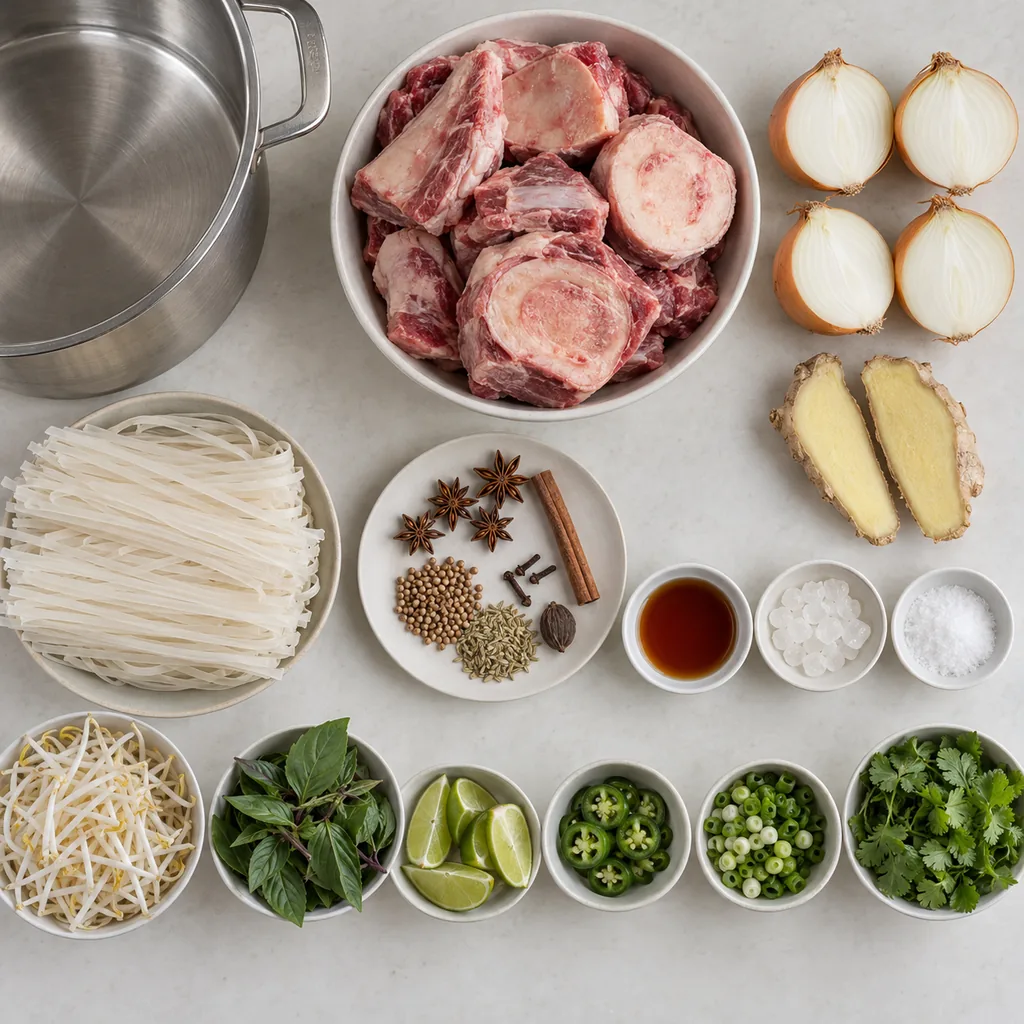
Prep everything before the long simmer
For the whole recipe
Read through the recipe, then gather the equipment and use the ingredient lines to prepare and measure everything. The broth needs several hours of gentle simmering and can be made a day ahead. Keep the brisket and sirloin refrigerated until each one goes in. Everything is prepared and measured before the pot goes on the heat.
Blanch the bones clean
For each pot of broth
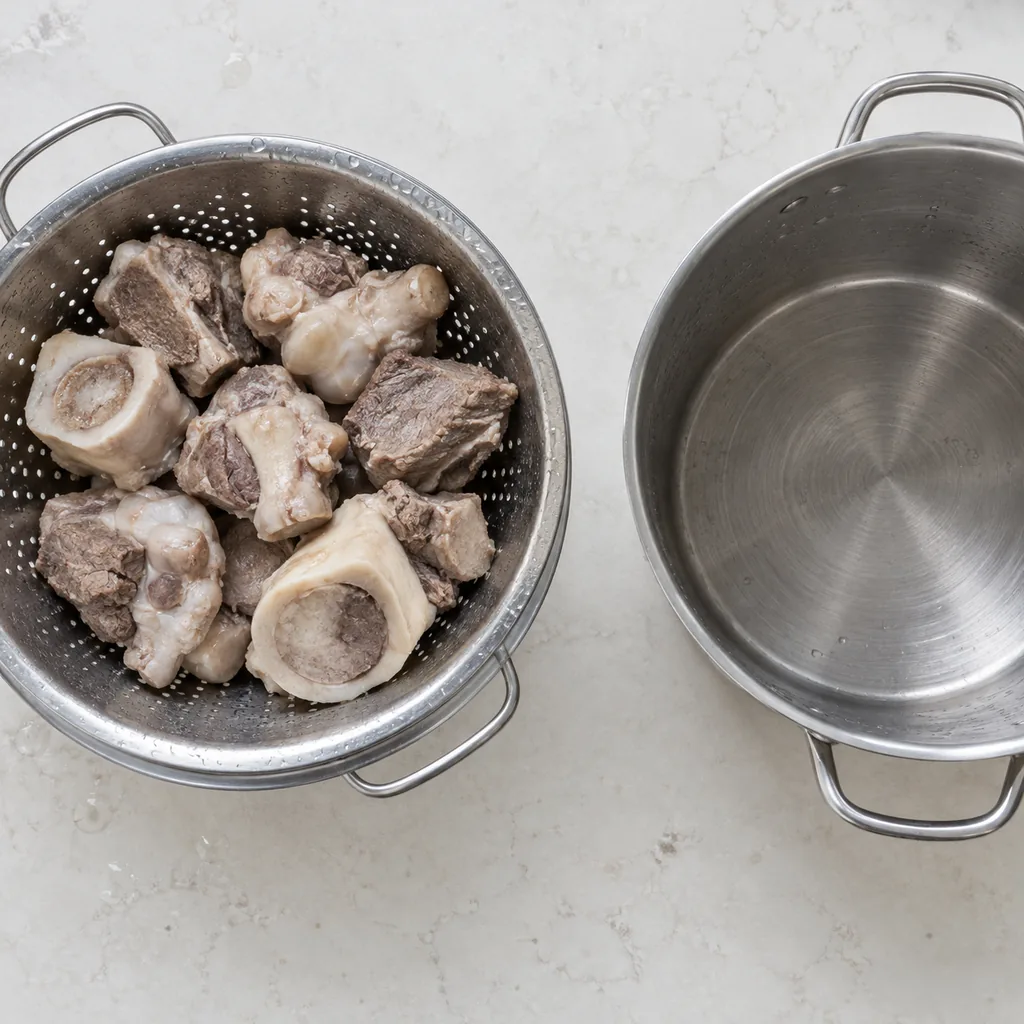
Blanch 3 lb beef bones in a 10- to 12-quart soup pot: cover them with cold water by about 1 inch and bring to a rolling boil over high heat. Boil hard until thick gray foam rises and stops building, about 10 minutes. Drain the bones in the colander, rinse each one under running water to rub off anything clinging to it, and scrub the pot clean.
Why it works: blanch, dump, rinse
The hard boil forces blood and loose proteins out of the bones as gray foam. Dump that water, rinse the bones and scrub the pot, and that scum never gets the chance to cloud the real broth.
Char the onions and ginger hard
For each pot of broth
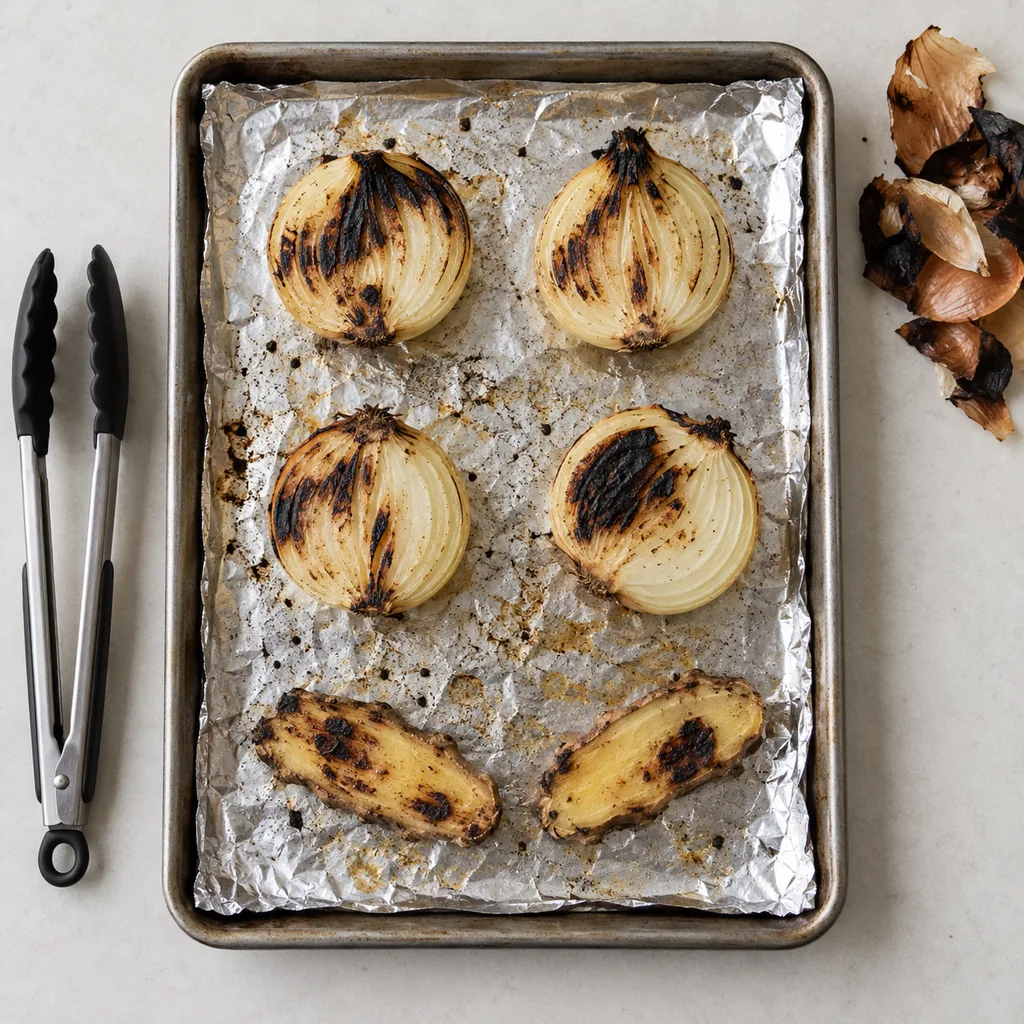
Heat the broiler on high with a rack about 4 inches below it. Set the onions and ginger cut side up on the foil-lined sheet pan and broil, turning once, until charred black over about half their surface and soft at the edges, about 15 to 20 minutes; push past golden, because the black is where the smoky sweetness comes from. Let them cool, then peel off the papery onion skins and any loose ash, keeping the charred flesh.
Why it works: char past golden
Golden onion tastes sweet; blackened onion tastes sweet and smoky, and that smoke is what makes a pho broth taste like more than beef soup. No broiler? Hold the onion halves and ginger over a gas flame with tongs, turning, until charred in patches.
If it goes wrong: the onion is ash all the way through
Spotty black is the goal; char that crumbles to ash is burnt. Trim the ash off before the onion and ginger go in, because fully burnt bits make the broth bitter.
Build the pot and skim it clear
For each pot of broth
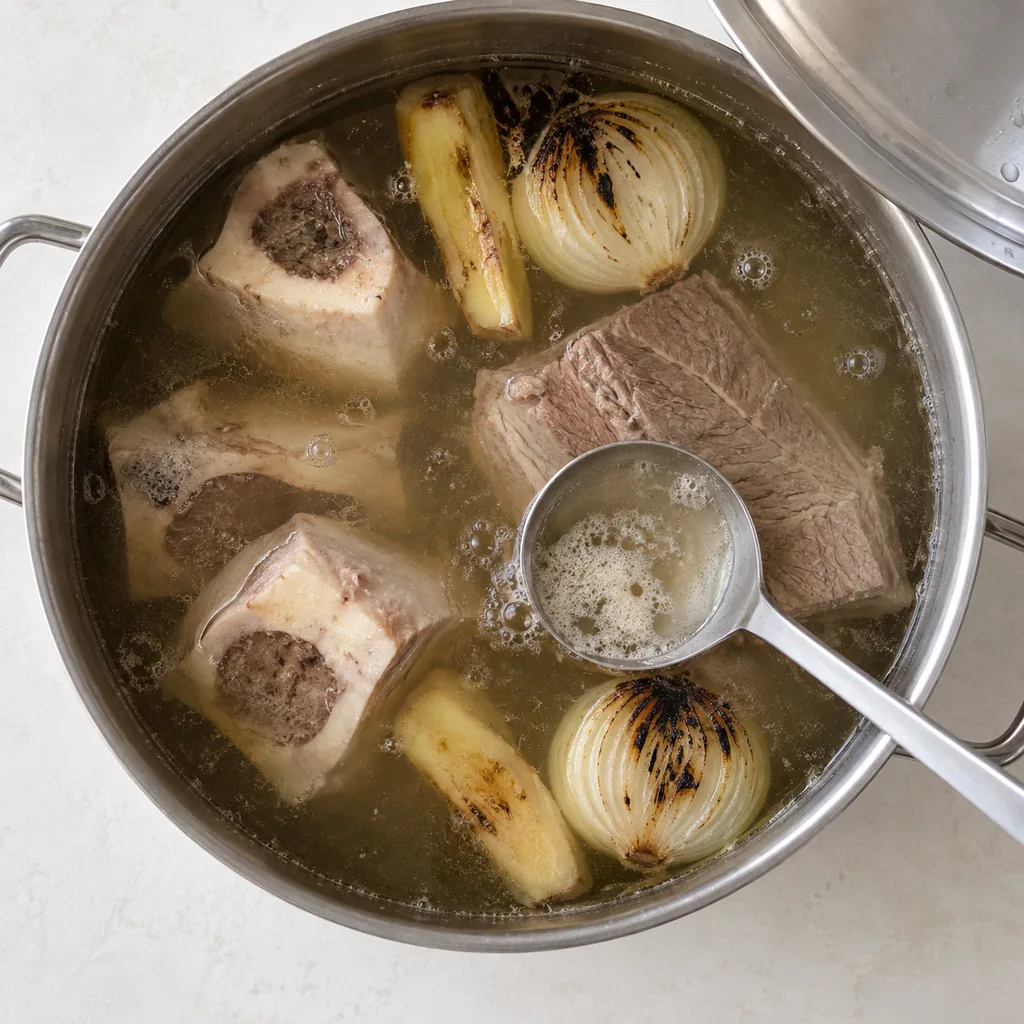
Put the rinsed bones, the charred onions and ginger, 1 lb beef brisket and 16 cups cold water in the clean pot. Bring to a simmer over medium-high heat, then turn to low heat so only lazy bubbles rise. Skim off the foam and fat with the ladle as they rise, until the surface stays mostly clear, about 20 minutes. Set the lid ajar.
Pull the brisket when it's tender
For each pot of broth
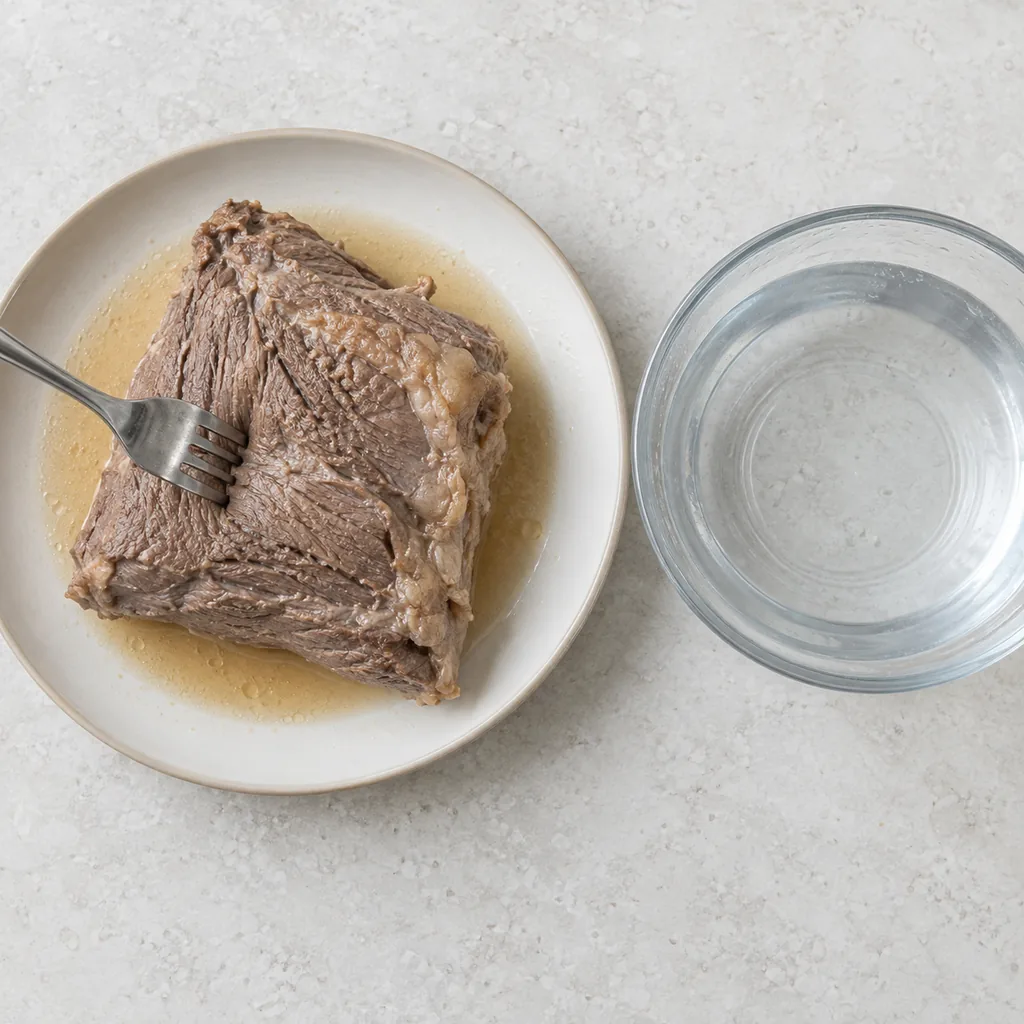
Simmer over low heat until a fork slides into the brisket with light resistance and its thickest part reads at least 145°F (63°C) on an instant-read thermometer, about 1 hour 30 minutes. Lift out the brisket and let it rest for three minutes, then cool it in a bowl of cold water until the outside feels cool, and refrigerate it.
Toast the spices and bag them
For each pot of broth
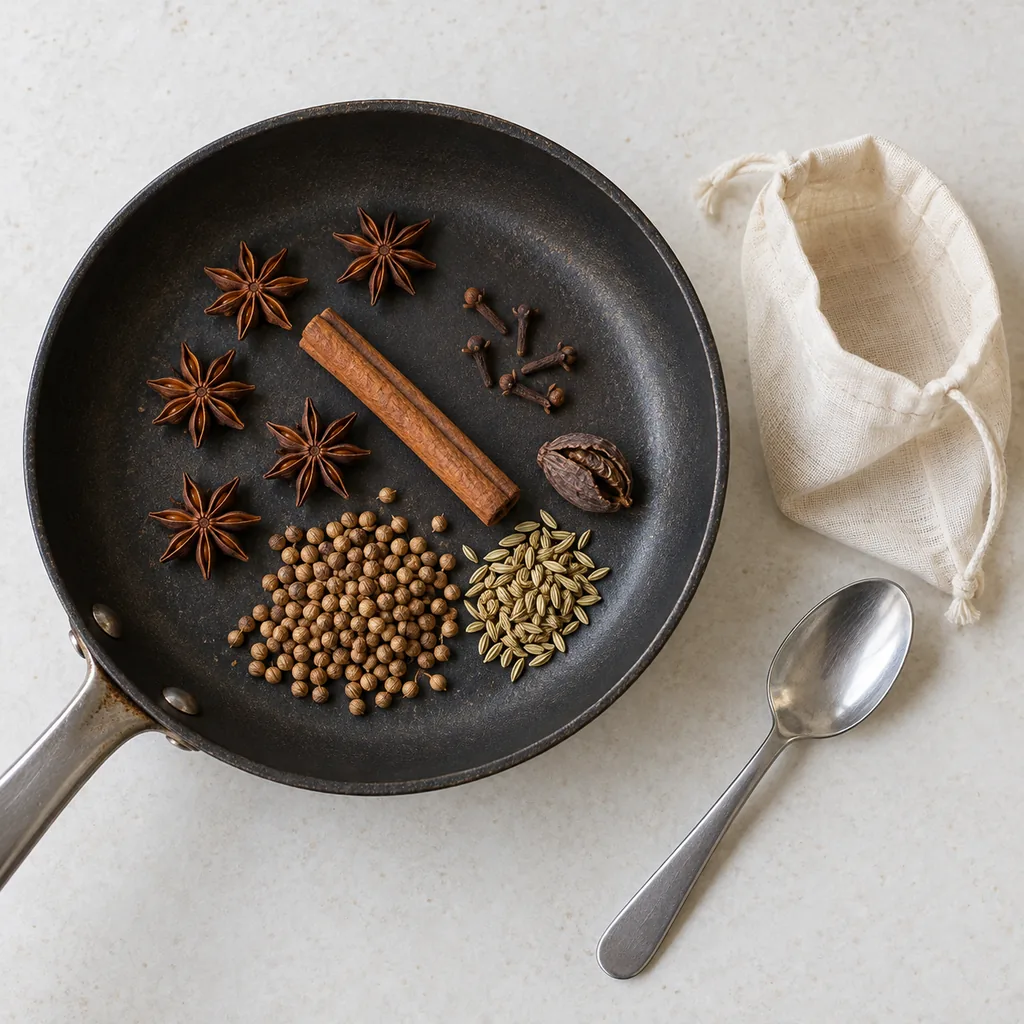
Toast 5 whole star anise, 1 whole cinnamon stick, 5 whole cloves, 1 tbsp coriander seeds, 1 tsp fennel seeds and the black cardamom pod, if using, in the small dry skillet over medium heat, shaking the pan, until fragrant and a shade darker, about 2 minutes. Tie them into the spice bag and drop it into the pot.
Technique: toasting whole spices
Dry heat wakes up the oils in whole spices so they perfume the broth instead of tasting dusty. Pull them when they smell fragrant and look a shade darker; past that they turn bitter.
Simmer low for the long haul
For each pot of broth
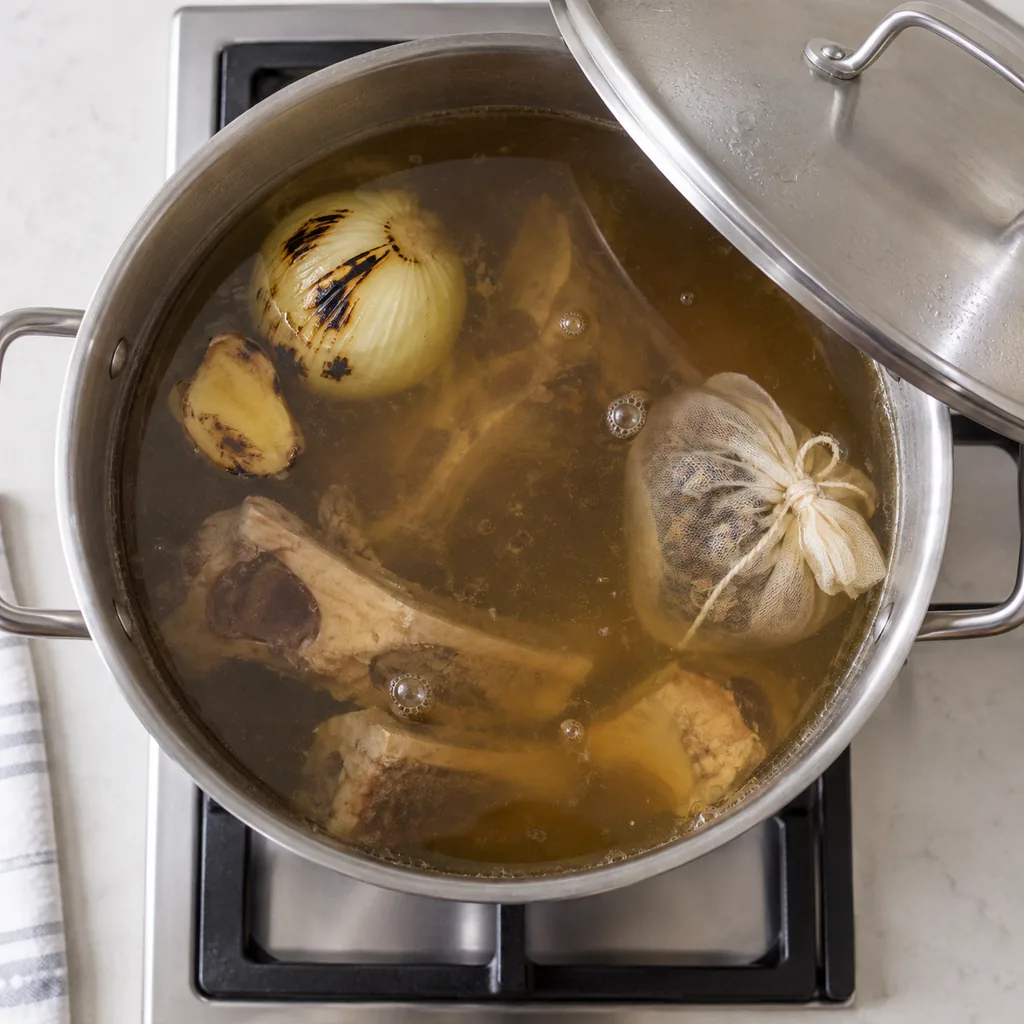
Simmer the broth over low heat with the lid ajar until it tastes rich and beefy, with a clear star anise and cinnamon aroma, about 3 hours. Keep the bubbles lazy; a hard boil makes the broth cloudy.
If it goes wrong: the broth went cloudy
A hard boil churns fat and proteins back into the liquid. Turn it straight back down to lazy bubbles; straining through the lined strainer helps, and a slightly hazy broth still tastes great.
Meanwhile, steep the chili-garlic vinegar
For the whole recipe
Meanwhile, make the chili-garlic vinegar: stir 1/2 cup unseasoned rice vinegar, 4 cloves garlic and 1/4 cup fresh red chiles together in the small jar and let it stand until the vinegar turns faintly pink and smells of garlic, about 30 minutes. Keep it on the table for serving.
House call: a chili-garlic vinegar on every table
Rich broth wants something sharp next to it. A splash of this vinegar cuts the fat and adds heat without touching the pot, so the spice-lovers and the spice-shy share one broth.
Strain and skim the broth
For each pot of broth
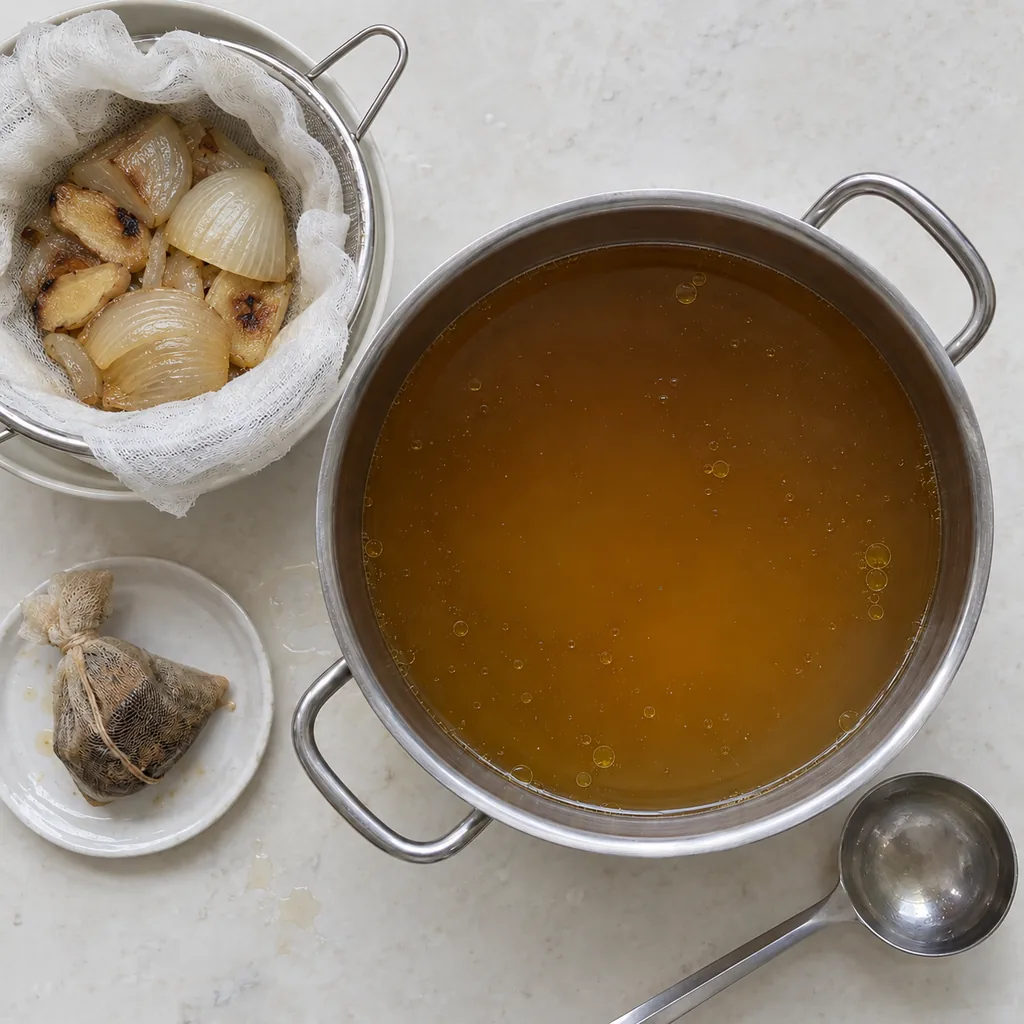
Strain the broth: lift out the spice bag and bones, then pour the broth through the lined strainer into the second pot. Skim off most of the fat, leaving a few golden spots. The broth is clear, with a few spots of fat.
Season with fish sauce at the end
For each pot of broth
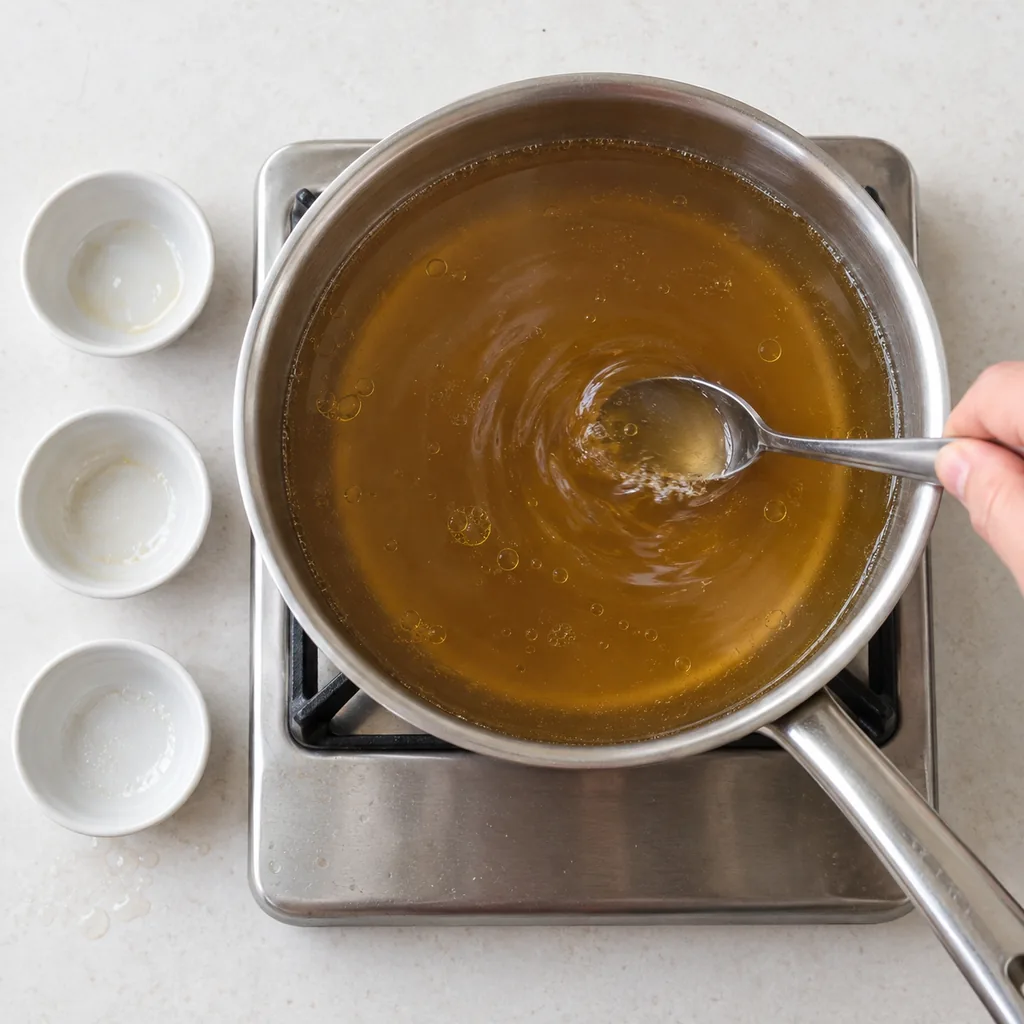
Stir 3 tbsp fish sauce, 1 tbsp crushed rock sugar and 2 tsp flaky kosher salt into the broth over low heat until the sugar dissolves. The sugar has dissolved.
Why it works: fish sauce goes in last
Fish sauce is salty and its aroma fades with long cooking. Added after straining, it seasons a broth you can actually taste, and you never end up with an over-salted pot after hours of reduction.
Taste, then fix
For each pot of broth
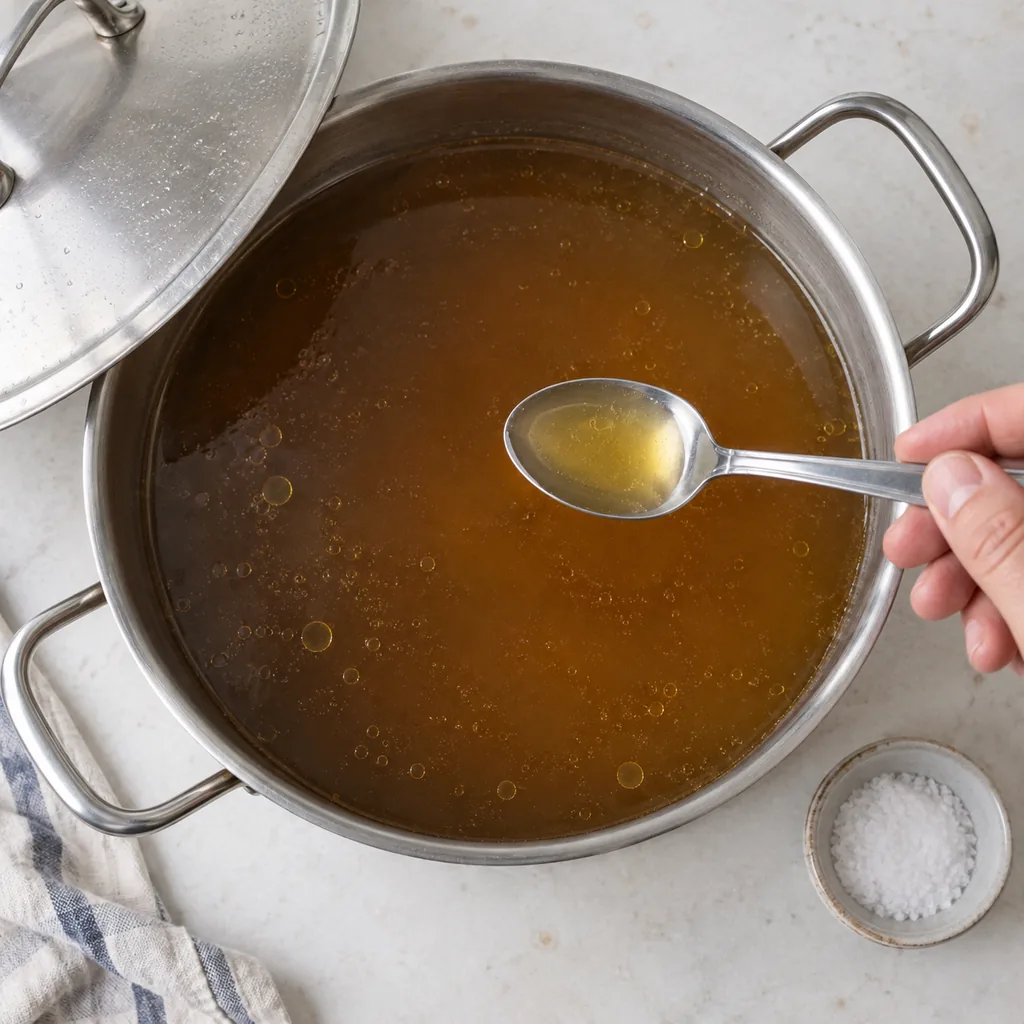
Taste the broth. Aim for beefy and round, fragrant with star anise and cinnamon, with sweetness only in the background. If it tastes flat, add flaky kosher salt to taste, a little at a time. Keep the broth covered at a bare simmer over low heat. The broth tastes savory and well seasoned.
Soak the noodles and slice the beef thin
For each pot of broth
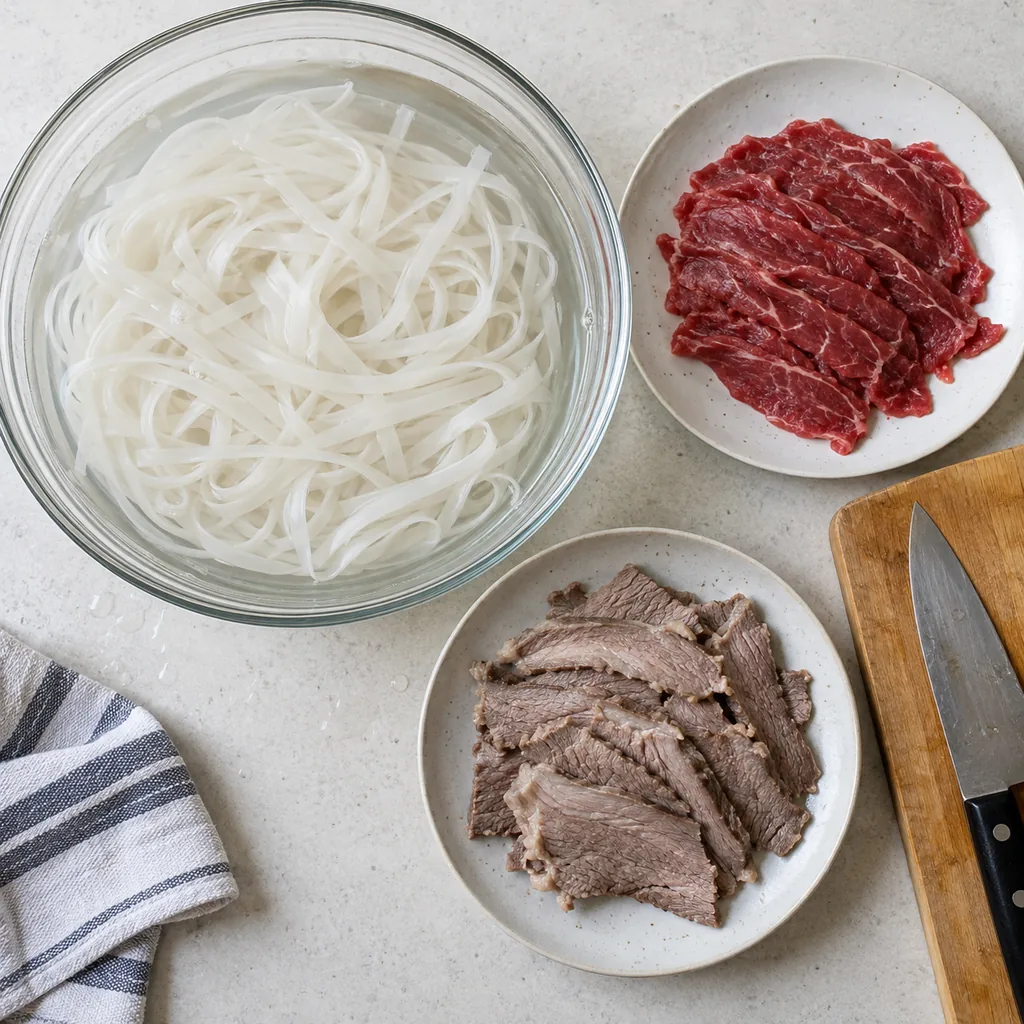
Soak 14 oz dried flat rice noodles (banh pho) in warm tap water until bendable and solid white, about 30 minutes. While they soak, freeze 8 oz beef sirloin until firm at the edges, then slice it paper-thin across the grain, and slice the chilled brisket thin across the grain.
Set the table plate and get both pots boiling
For each pot of broth
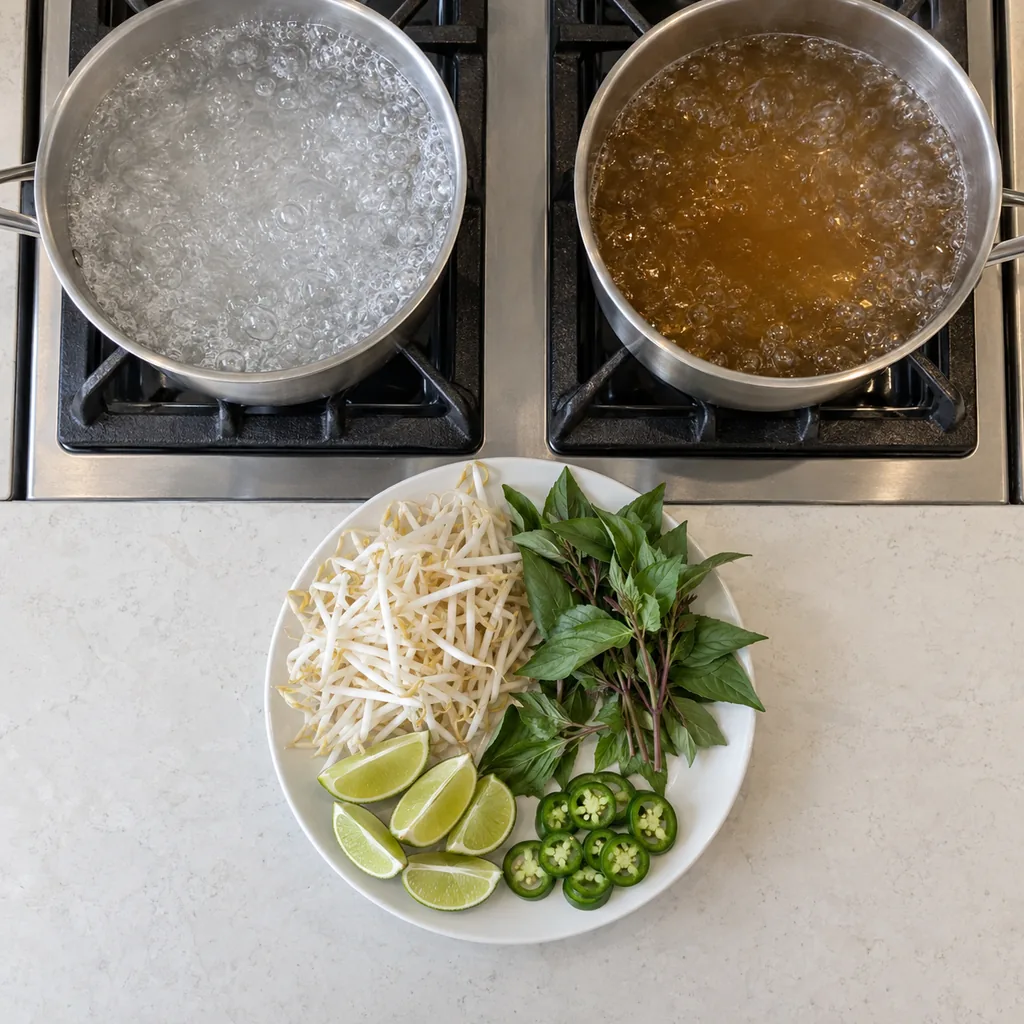
Set out the table plate with about 2 cups bean sprouts, the Thai basil, 1 cup cilantro, the lime wedges and the sliced jalapeños. Bring the pot of noodle water to a boil over high heat and turn the broth up to a rolling boil. The noodle water and the broth are both at a rolling boil.
Tradition: the herb plate came later
Pho is associated with northern Vietnam, where bowls lean on beef, broth and noodles. The bean sprouts, Thai basil, lime and hoisin are associated with southern cooks, and our table plate follows that southern and US style.
Cook the noodles in quick batches
For each pot of broth
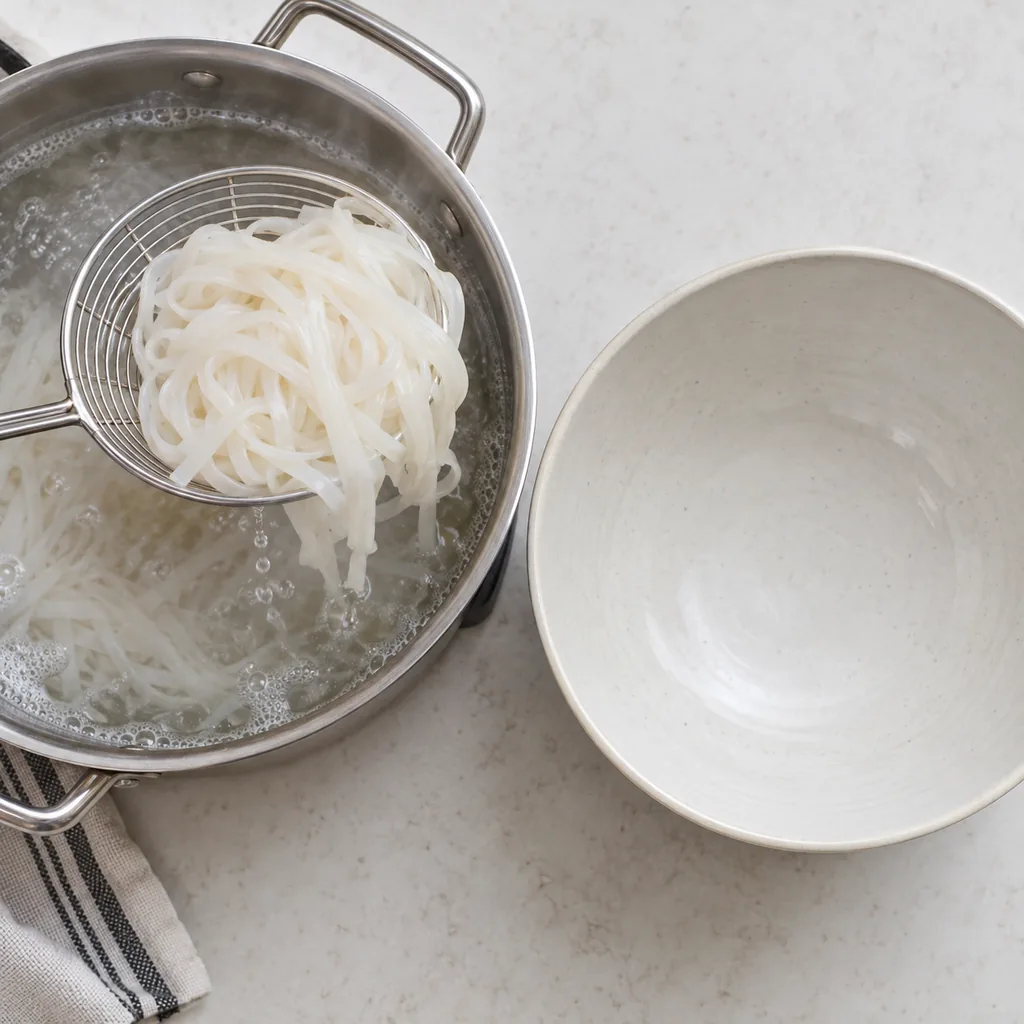
Cook the drained noodles in the boiling water over high heat a quarter at a time, stirring, until tender with a slight chew, about 10 to 30 seconds per batch. Lift each batch straight into a serving bowl with the spider. If they clump, rinse them briefly under hot water and shake them loose.
Swish the sirloin in the boiling broth
For each pot of broth
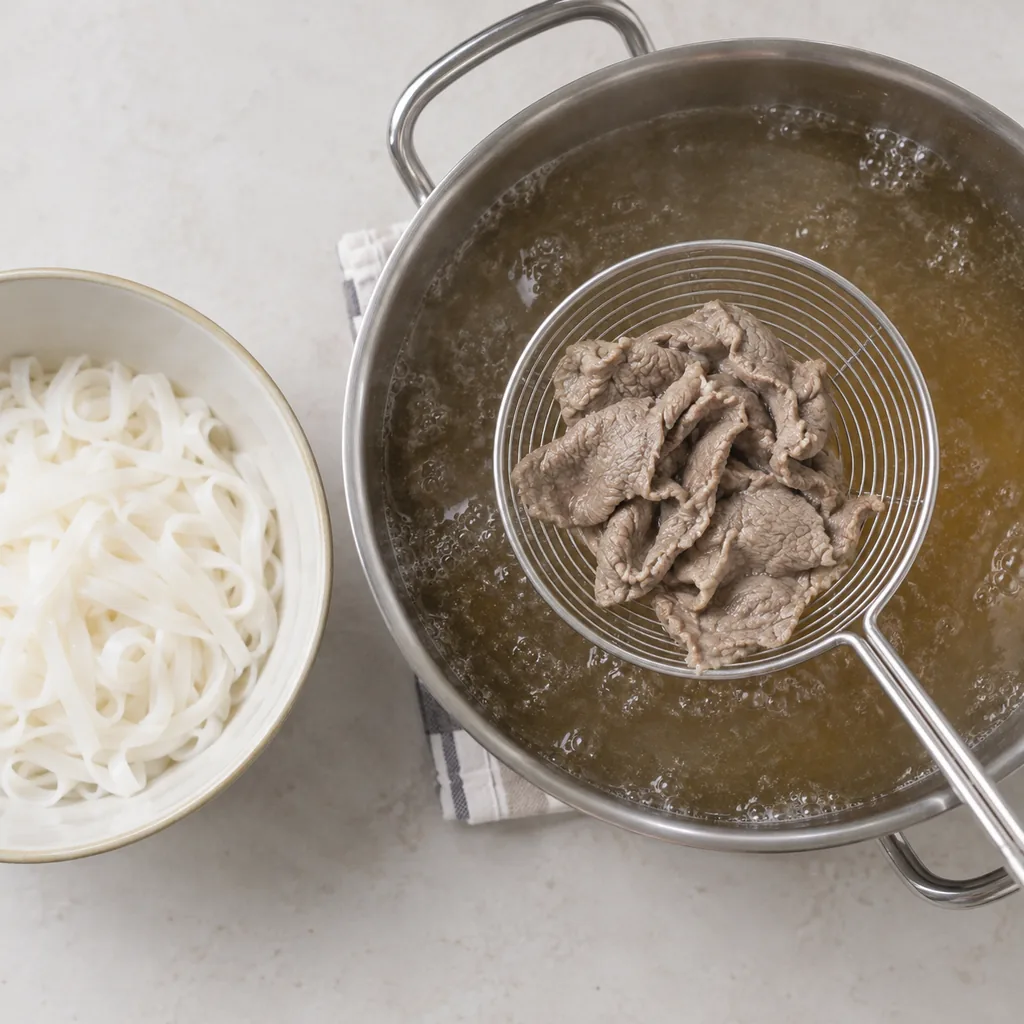
Cook the sirloin a quarter at a time: swish it in the spider in the broth at a rolling boil over high heat until brown with no red left and a few folded slices read 145°F (63°C) on an instant-read thermometer, about 20 to 40 seconds. Lay each portion on a bowl of noodles to rest for three minutes.
Build the bowls and serve
For the whole recipe
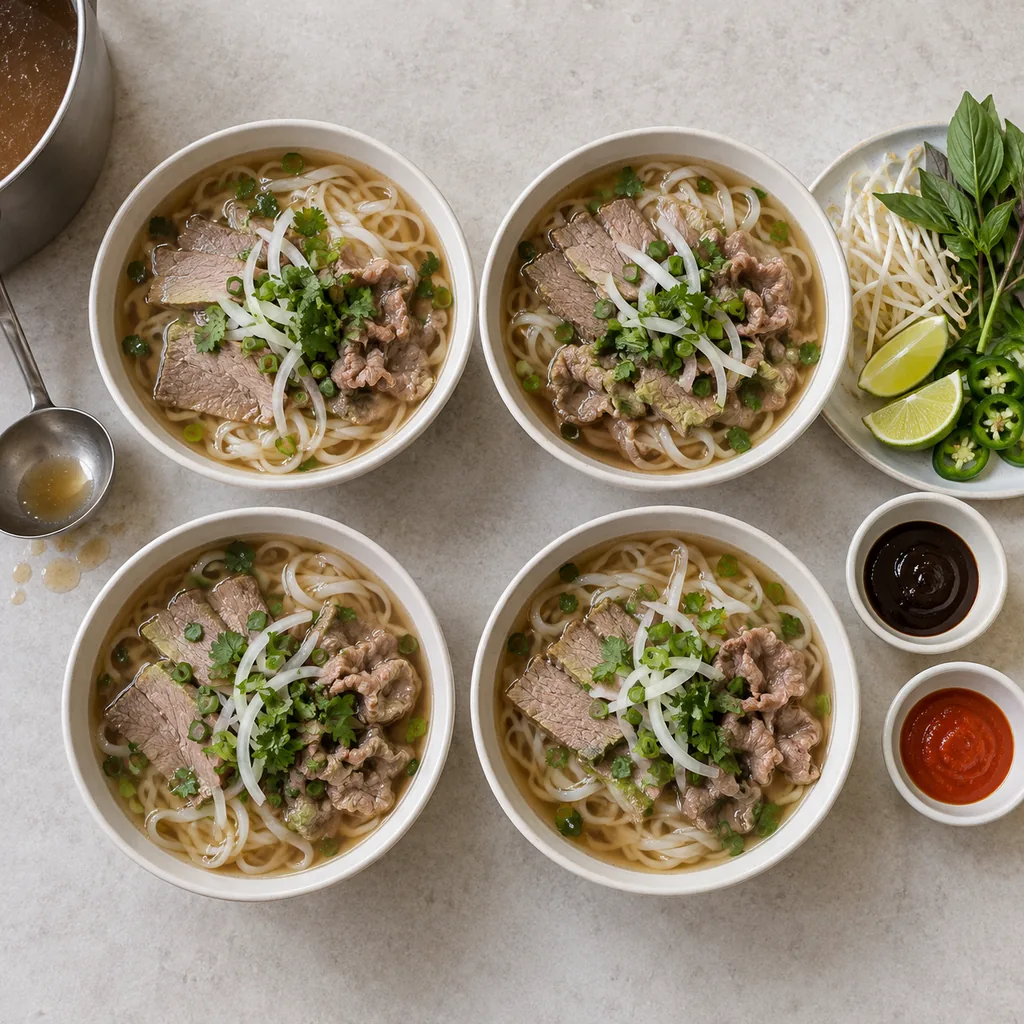
Dip the sliced brisket in the boiling broth in the spider and divide it among the bowls. Ladle boiling broth into each bowl to make 4 servings, and top them with the drained sliced onion and the green onions. Serve with the table plate and the chili-garlic vinegar, plus hoisin sauce and sriracha to taste, if you like. Refrigerate leftover broth promptly, or freeze it in portions, and bring it back to a boil, at least 165°F (74°C), before serving it again; refrigerate any leftover chili-garlic vinegar. The bowls are filled and topped.
Make ahead: pho on a Tuesday
Freeze leftover broth flat in portions. On a weeknight, bring a portion back to a boil, soak a handful of noodles and slice a little steak, and dinner is on the table in the time it takes the water to boil.
Make it yours: from safe to wild
Safe: add mint and Thai bird chilies to the plate. Bolder: make a chicken pho on unsalted roasted chicken stock with the same char and spices. Wild: pho French dip, with the brisket, herbs and chili-garlic vinegar piled into a toasted baguette and a cup of hot broth for dunking.
About this recipe
Allergens / Diets
Rebuilt recipe in review. Allergen and diet details are being re-checked.
Research preview: these details come from our sourced research and haven't been reviewed by our chef yet.
Why it works
Blanching and rinsing the bones keeps the broth clear, and charring the onion and ginger adds sweetness and a gentle smoke. A long, lazy simmer with skimming draws out body without clouding it, toasted whole spices go in late so they perfume rather than turn bitter, and the seasoning waits until the broth has reduced.
Associated with
Vietnamese
Modern pho emerged in the early 1900s in Nam Định Province, southeast of Hanoi, where beef bones met rice noodles. Chicken pho appeared in 1939, when beef was not sold on some days. After 1954, southern cooks added bean sprouts, Thai basil, lime and hoisin, and after 1975 the dish spread worldwide.
Taste
- Sweet
- Sour
- Salty
- Bitter
- Savory
- Heat
Beefy and round, fragrant with star anise and cinnamon., Sweet only in the background; lime and chili at the table add sour and heat. · clear, aromatic broth, soft, slippery rice noodles, tender brisket and just-cooked sirloin, crunchy raw herbs and sprouts · hot
Skill level
A project
About five hours over two pots with many stages; none is hard on its own, but the timing and the long simmer make it a project.
Occasions
Everyday breakfast or late-night bowl
Pho was first sold by street vendors at dawn and dusk. It is an everyday dish, not a traditional Lunar New Year (Tết) or religious-holiday dish.
Cold-weather comfort
A hot, spiced broth suits cold weather; this is an editorial tag, not a tradition.
Serving and keeping
Best served: As soon as the boiling broth is ladled over the noodles and beef In big bowls, with the herb plate, lime, chilies, hoisin and sriracha at the table so everyone finishes their own
Make ahead: Cool and refrigerate the broth covered, lift off the solid fat the next day, and bring it back to a boil. Keep noodles, meat and herbs separate.
Storage: Refrigerate the broth and meat within 2 hours (1 hour above 90 °F / 32 °C), in shallow containers, with noodles and herbs stored separately. The broth freezes for about 2 to 3 months for best quality.
Leftovers: Store noodles separately from the broth so they do not go soft.
Food safety
- Cook the thin sirloin in broth at a rolling boil and check folded slices with a thermometer; pouring hot broth over raw slices in the bowl may not reach a safe temperature.
- Raw or lightly cooked bean sprouts can carry harmful bacteria. For young children, older adults, pregnant people or anyone with a weakened immune system, cook the sprouts thoroughly in the boiling broth until steaming hot, or use thinly sliced cabbage instead.
- Keep the brisket and sirloin refrigerated until they go in, and chill the cooked brisket promptly.
- Refrigerate leftovers within 2 hours, or 1 hour above 90 °F (32 °C), and bring the broth back to a boil to reheat.
We make no statement about cross-contact in your kitchen or in packaged ingredients. Fish sauce is in the broth itself; check the fish sauce, hoisin and sriracha labels.
Nutrition notes
Fish sauce carries most of the salt, before any added salt, hoisin or sriracha. Starting with less fish sauce, salting only after tasting, and seasoning bowls with lime and fresh chili keep it lower.
The rice noodles supply most of the carbohydrate; a smaller noodle portion with more herbs and sprouts makes a lighter bowl.
For your food tracker
Fields for MyFitnessPal and other trackers
- Recipe url
- https://isthebestrecipe.com/soups/beef-pho
- Name
- Weekend Pho with a Charred-Aromatic Broth
- Servings
- 4
- Recipe yield
- 4 servings
- Recipe ingredient
- 3 lb beef bones a mix of knuckle, marrow and neck bones, or oxtail, 2 whole medium yellow onions unpeeled, halved through the root, 1 piece fresh ginger about 4 inches long, unpeeled and halved lengthwise, 1 lb beef brisket in one piece, 16 cups cold water, 5 whole star anise, 1 whole cinnamon stick about 3 inches long, 5 whole cloves, 1 tbsp coriander seeds, 1 tsp fennel seeds, 1/2 cup unseasoned rice vinegar, 4 cloves garlic thinly sliced, 1/4 cup fresh red chiles such as Thai bird or Fresno, thinly sliced, 3 tbsp fish sauce, 1 tbsp crushed rock sugar, 2 tsp flaky kosher salt, 14 oz dried flat rice noodles (banh pho) about 1/16 inch wide, 8 oz beef sirloin in one piece, about 2 cups bean sprouts, 1 bunch Thai basil, 1 cup cilantro leaves and tender stems, 2 whole limes cut into wedges, 2 whole jalapeños thinly sliced, 1/2 whole small yellow onion sliced paper-thin and soaked in cold water, 3 whole green onions thinly sliced
- Copy action wording
- Copy recipe and estimated nutrition
Make it the best
Copy this recipe and make it your own. Change amounts, swap ingredients, rewrite steps. The original stays as it is.
Nutrition Values
Nutrition estimates aren’t available for this recipe yet.
Your notes
Kept on this device.Return: https://isthebestrecipe.com/soups/beef-pho