
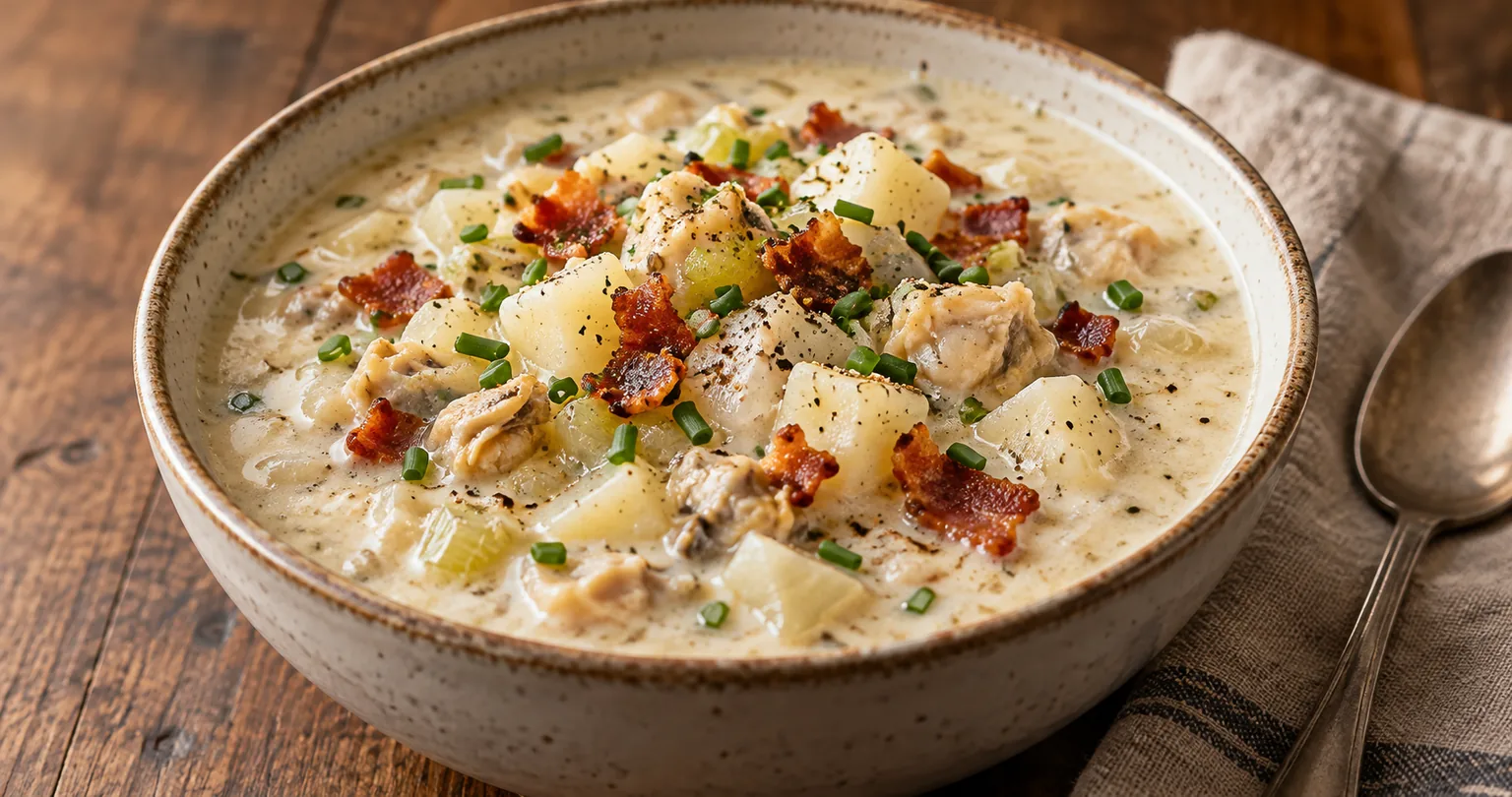
Smoky Clam Chowder with Charred Corn and Oyster-Cracker Crumbs
- Yield
- 4 servings
Late-summer coast food: cold beer, a big pot, newspaper on the table. Bottled clam juice tastes like the bottle, so we skip it. The clams steam open in white wine, and their liquor, topped up with plain water, becomes the whole base. Keep it spoonable, not gluey: a light flour roux and a pot that never boils once the dairy goes in. Clams and wine bring the brine, bacon and smoked paprika a campfire edge, potatoes and cream the comfort, charred corn the sweetness, and buttery cracker crumbs, chive oil and lemon the crunch and lift.
IngredientsTips are one tap away.
Ingredients
Batches and reset
4 servings · US measures · 1 batch
Batching
Cook one base batch in each 5- to 6-quart pot; for a larger yield, cook a second batch. Steaming, simmering and seasoning follow the same cues; cooking times do not multiply with ingredient quantities.
Original recipe: 4 servings.
The bay leaf, salt and black pepper are left out of the nutrition estimate. Nutrition is incomplete: the wine, the water top-up, the corn, the smoked paprika, the seafood seasoning and the lemon have no established values here, and the share of bacon fat that stays in the pot is not established.
Before you start
- Read through the recipe before heating the pot. Gather the pot, tongs, bowl, lined strainer, measuring cup, slotted spoon, skillet, small bowls and measured ingredients, and keep the clams cold until they go in.
Directions
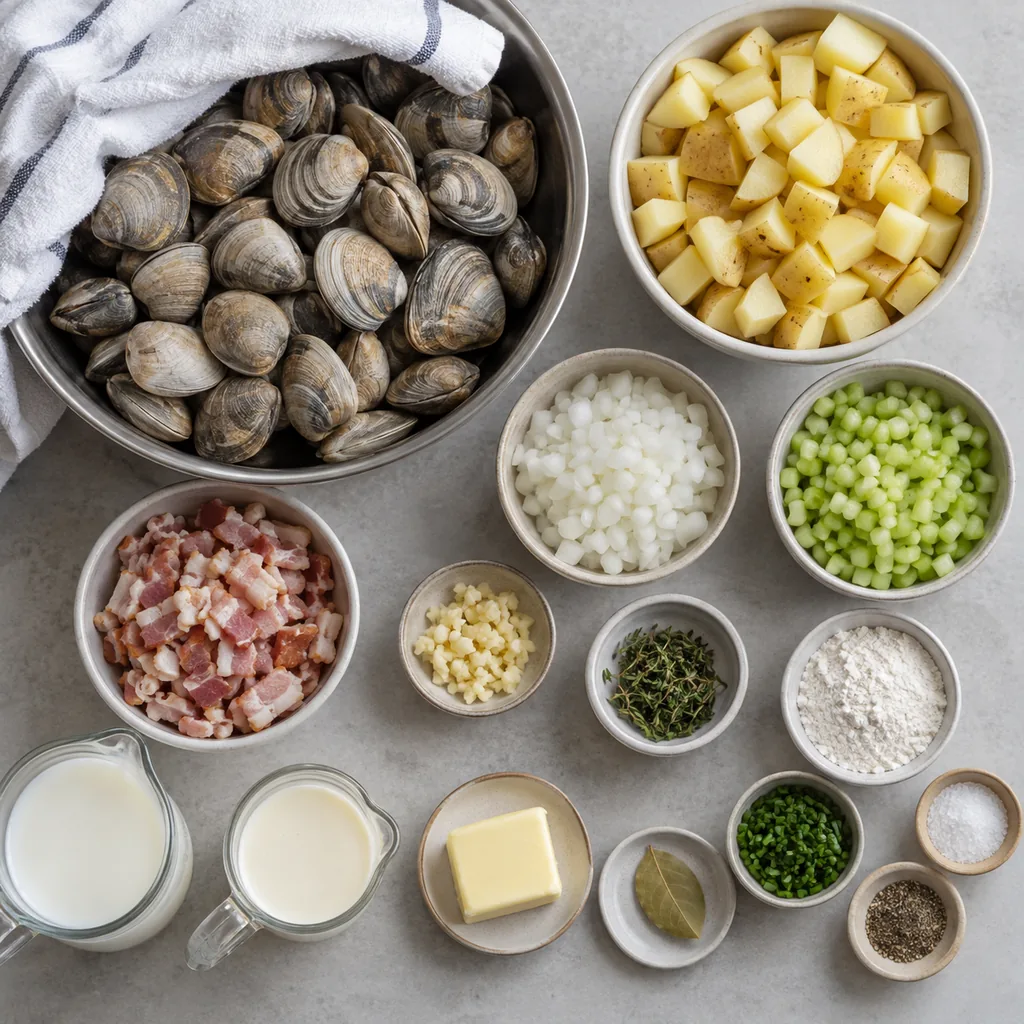
Prep everything and keep the clams cold
For the whole recipe
Read through the recipe, then gather the equipment and use the ingredient lines to prepare and measure everything. Keep the scrubbed clams in the refrigerator under a damp towel until they go in the pot. Everything is prepared and measured before the pot goes on the heat.
Steam the clams open in white wine
For each pot of chowder
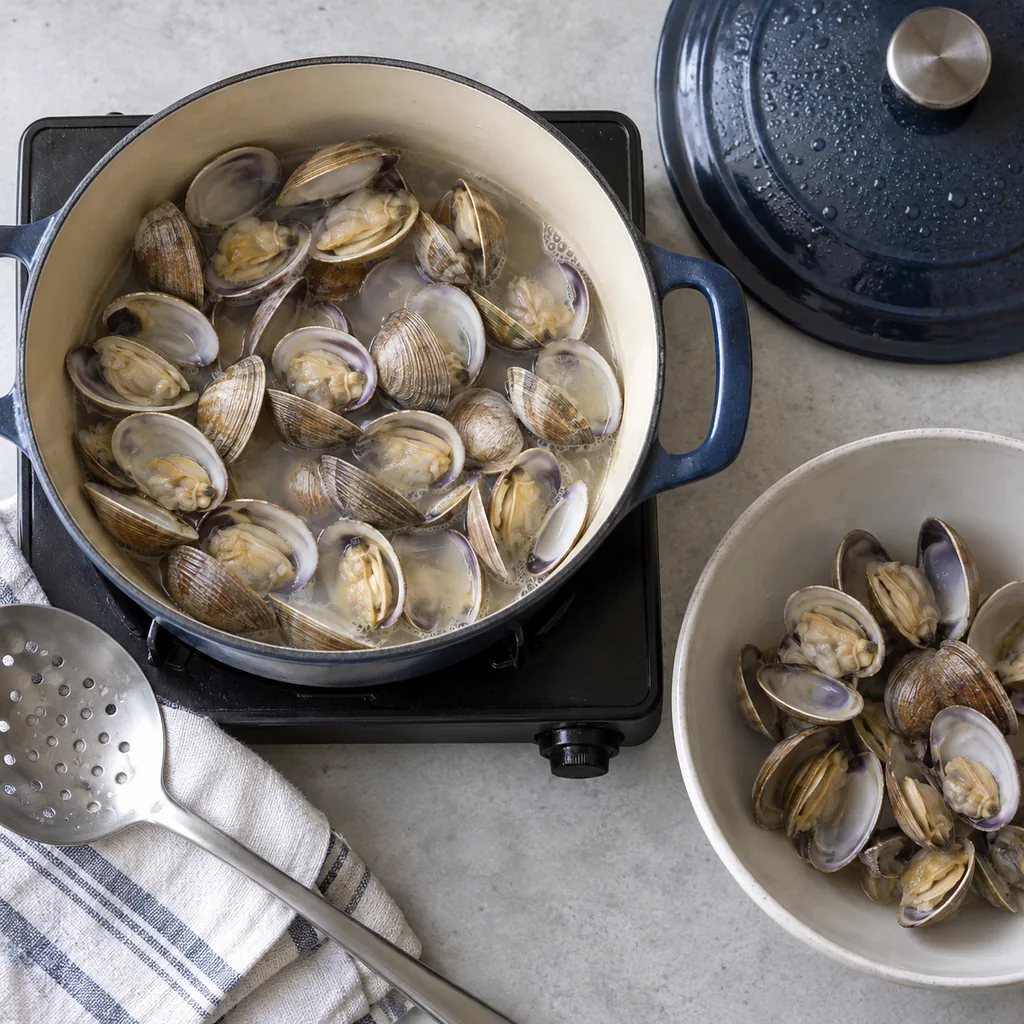
Steam 4 lb littleneck clams with 1 cup dry white wine in a covered 5- to 6-quart Dutch oven or soup pot over high heat. As the clams open, lift them into the large bowl with tongs and cover the pot again each time. Keep going until every clam that will open has opened, about 8 to 10 minutes. Throw away any clams that stay shut.
Why it works: wine instead of the bottle
Bottled clam juice is salty and tastes cooked. Steaming in wine gives the liquor a bright, fruity acidity, and the clams' own juice supplies the brine, so the base tastes like fresh clams instead of a can.
If it goes wrong: a few clams stay shut
Once the rest have opened, give the stragglers a couple more minutes under the lid. Any that still won't open go in the trash, not the chowder.
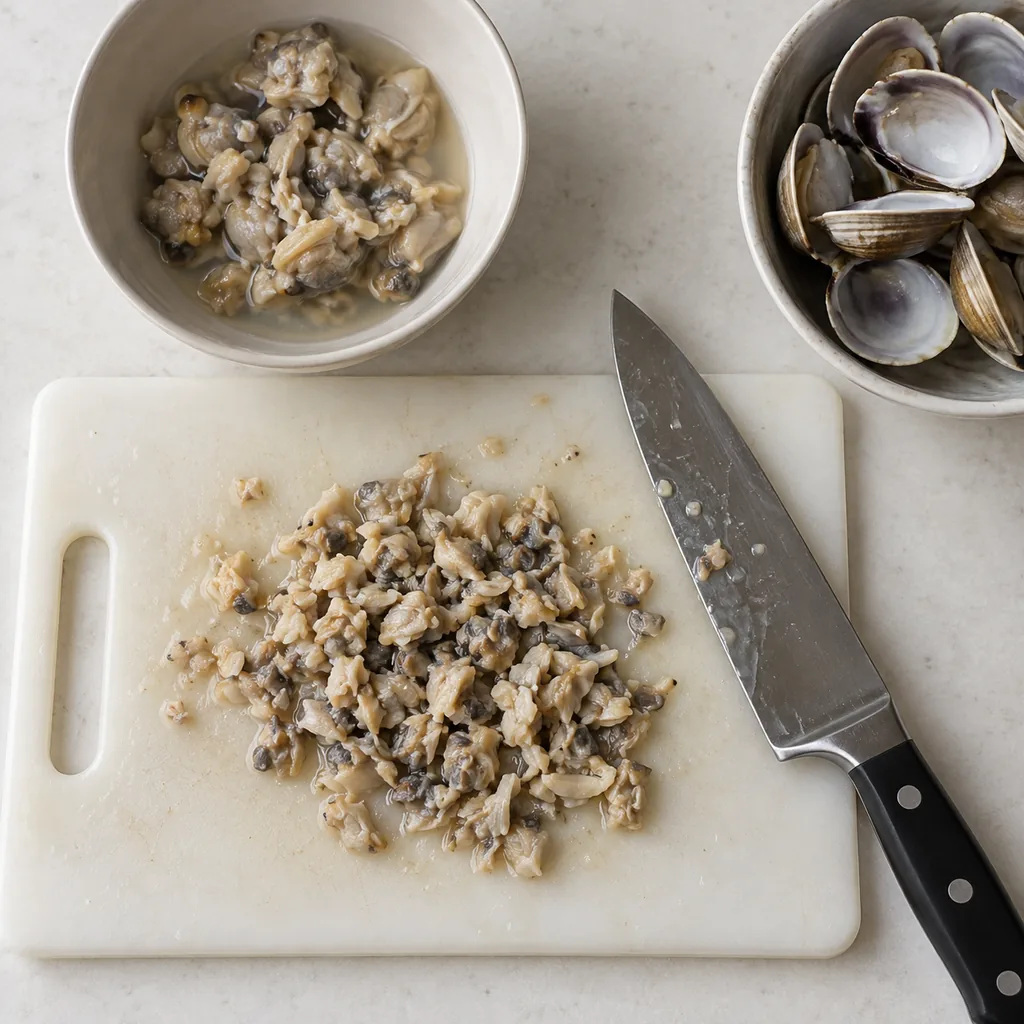
Shell and chop the clams
For each pot of chowder
Shell the clams over the bowl so their juice collects, then chop the meat into bite-size pieces. Cover the meat and refrigerate it until the chowder is nearly done. All the clam meat is chopped and chilled.
Strain the liquor and top it up with water
For each pot of chowder
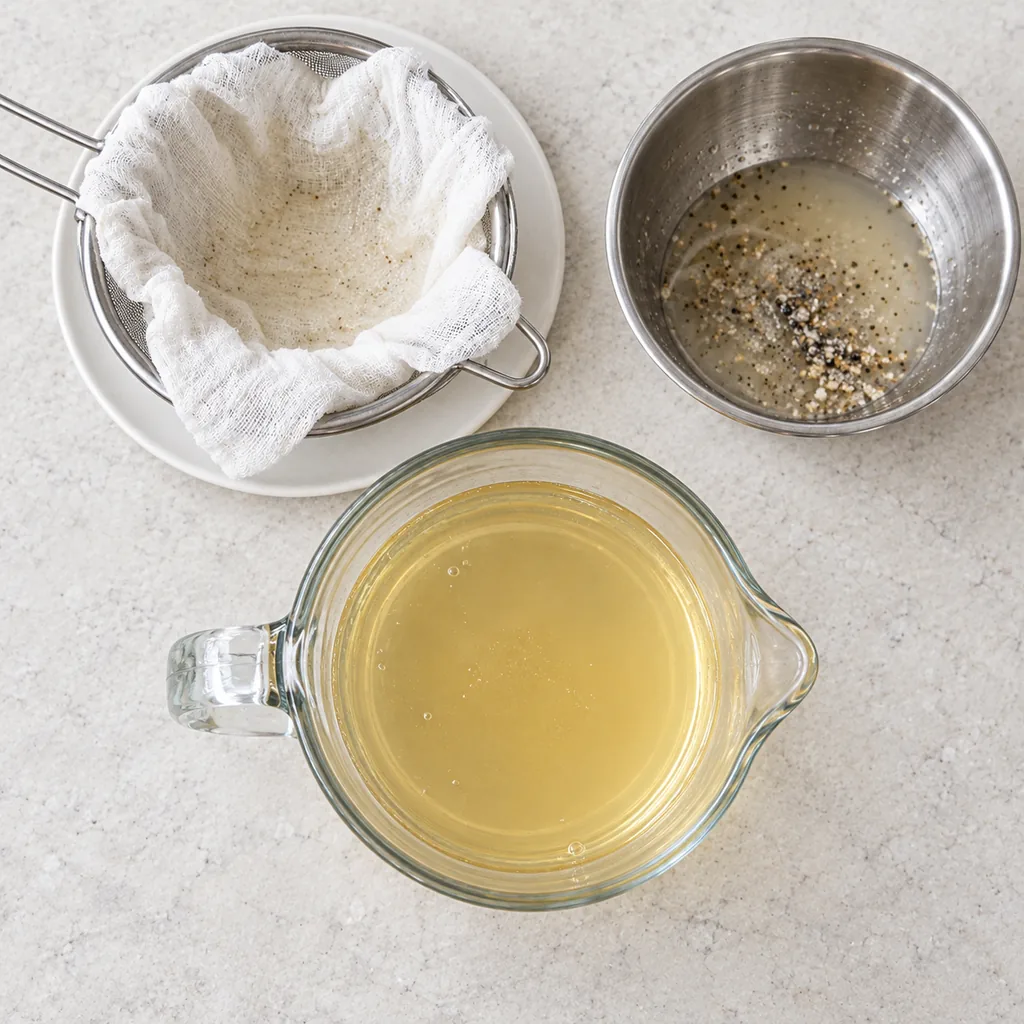
Strain the liquid from the pot and the bowl slowly through the lined strainer into the measuring cup, stopping before the grit at the bottom. Add 1/2–1 cups water, only as much as you need to reach 2 1/2 cups of liquid in all. Rinse and dry the pot. The strained liquor is clear, with no grit.
House call: plain water for the top-up
No sodium in the broth: the clams are briny enough on their own. Topping up with water keeps the clam flavor clean and leaves the salt decision to you at the end.
Crisp the bacon
For each pot of chowder
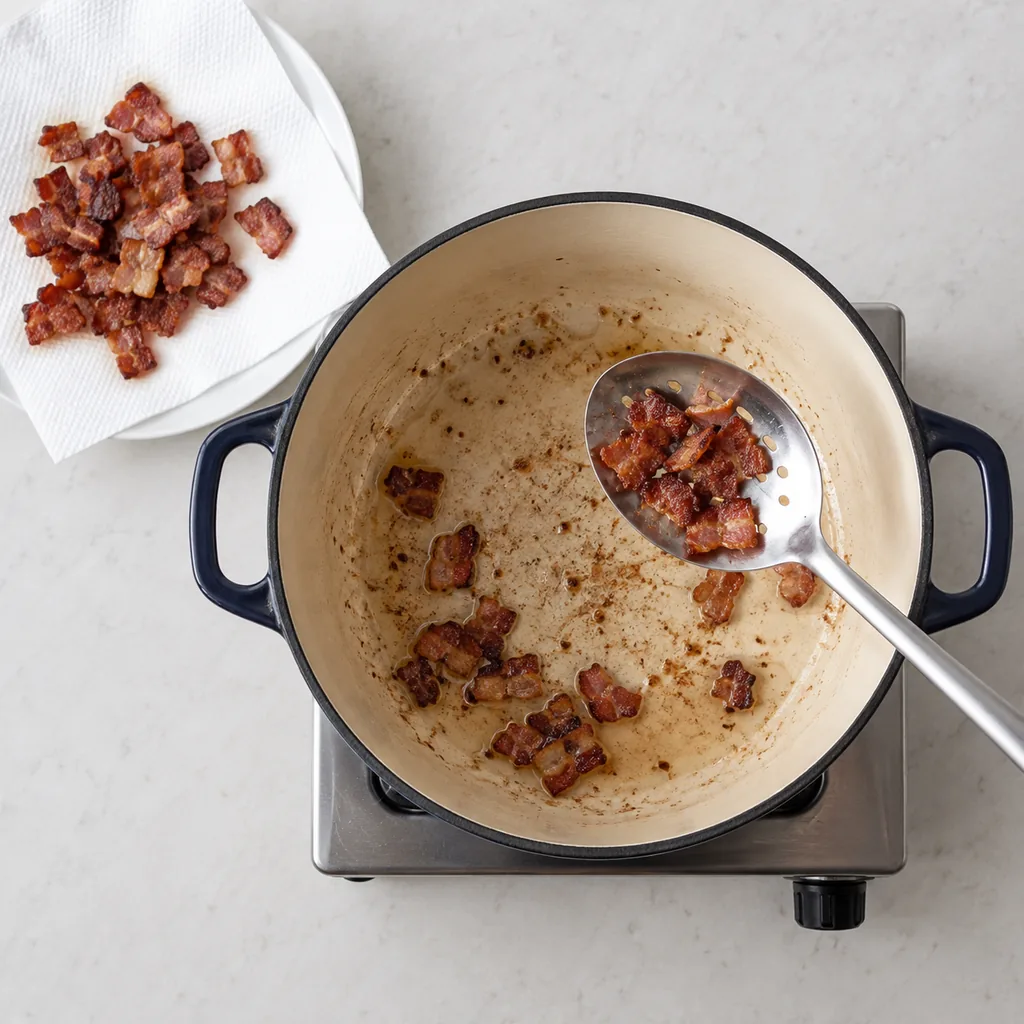
Cook 4 oz thick-cut bacon in the clean pot over medium heat, stirring now and then, until the fat has melted out and the pieces are crisp, about 8 to 10 minutes. Lift the bacon onto the lined plate with the slotted spoon. Spoon off the fat, leaving just enough to coat the bottom of the pot.
Soften the onion and celery
For each pot of chowder
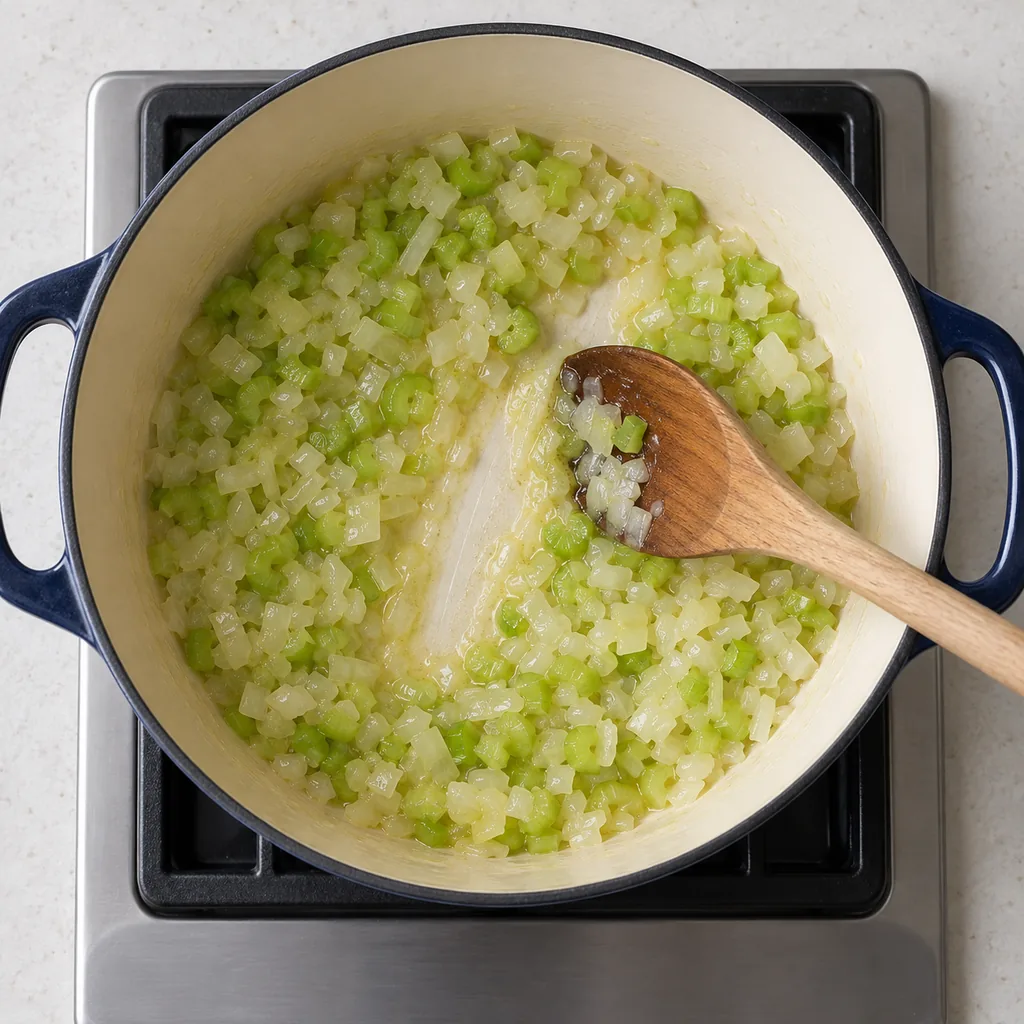
Melt 2 tbsp unsalted butter in the bacon fat over medium heat. Add the onion and celery and cook, stirring often, until the onion is soft and translucent but not browned, about 6 to 8 minutes.
Bloom the paprika and cook out the flour
For each pot of chowder
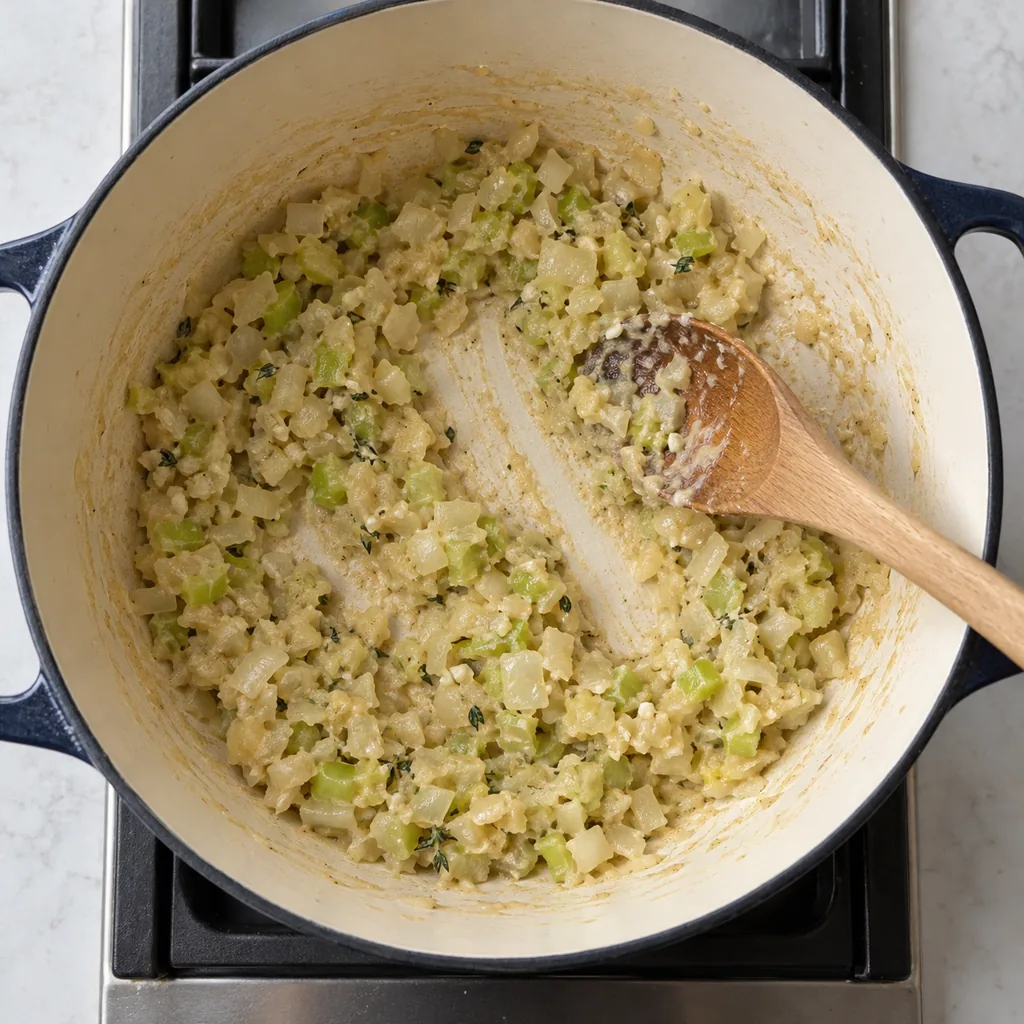
Stir in the garlic, 1 tsp fresh thyme leaves and 1/2 tsp smoked paprika until fragrant. Sprinkle in 3 tbsp all-purpose flour and stir constantly over medium heat until the flour coats the vegetables and smells toasty, not raw, about 2 minutes.
Why it works: cook out the flour
Stirring the flour in the hot fat until it smells toasty cooks off the raw, pasty taste and lets it thicken smoothly. Just enough flour keeps the chowder spoonable instead of gluey, and the paprika blooms in the same fat for that smoky edge.
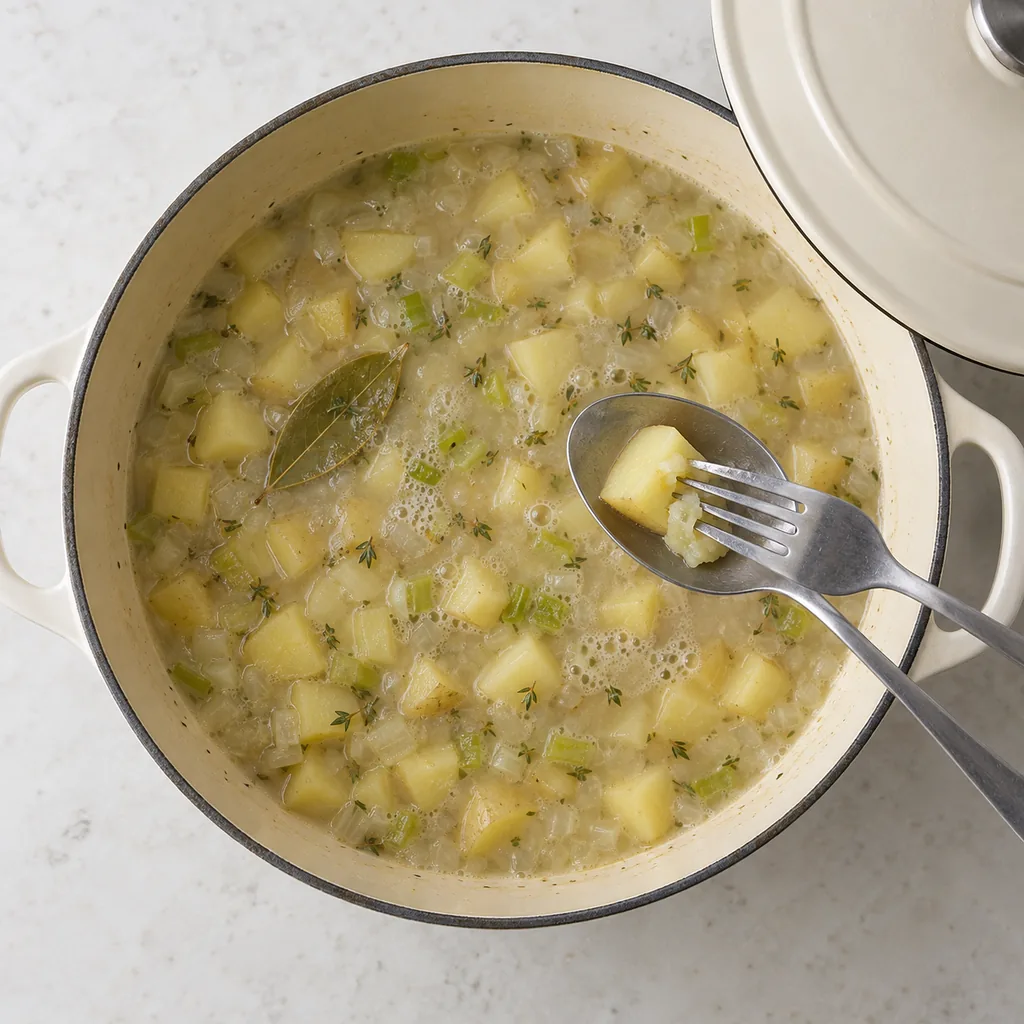
Add the liquor and simmer the potatoes
For each pot of chowder
Pour in the measured clam liquor a little at a time, stirring and scraping the bottom of the pot so no lumps form. Add 1 1/4 lb Yukon Gold potatoes and the bay leaf, if using. Bring to a simmer over medium-high heat, then turn to low heat so it bubbles gently. Partly cover and simmer until a potato cube crushes easily against the side of the pot, about 12 to 15 minutes.
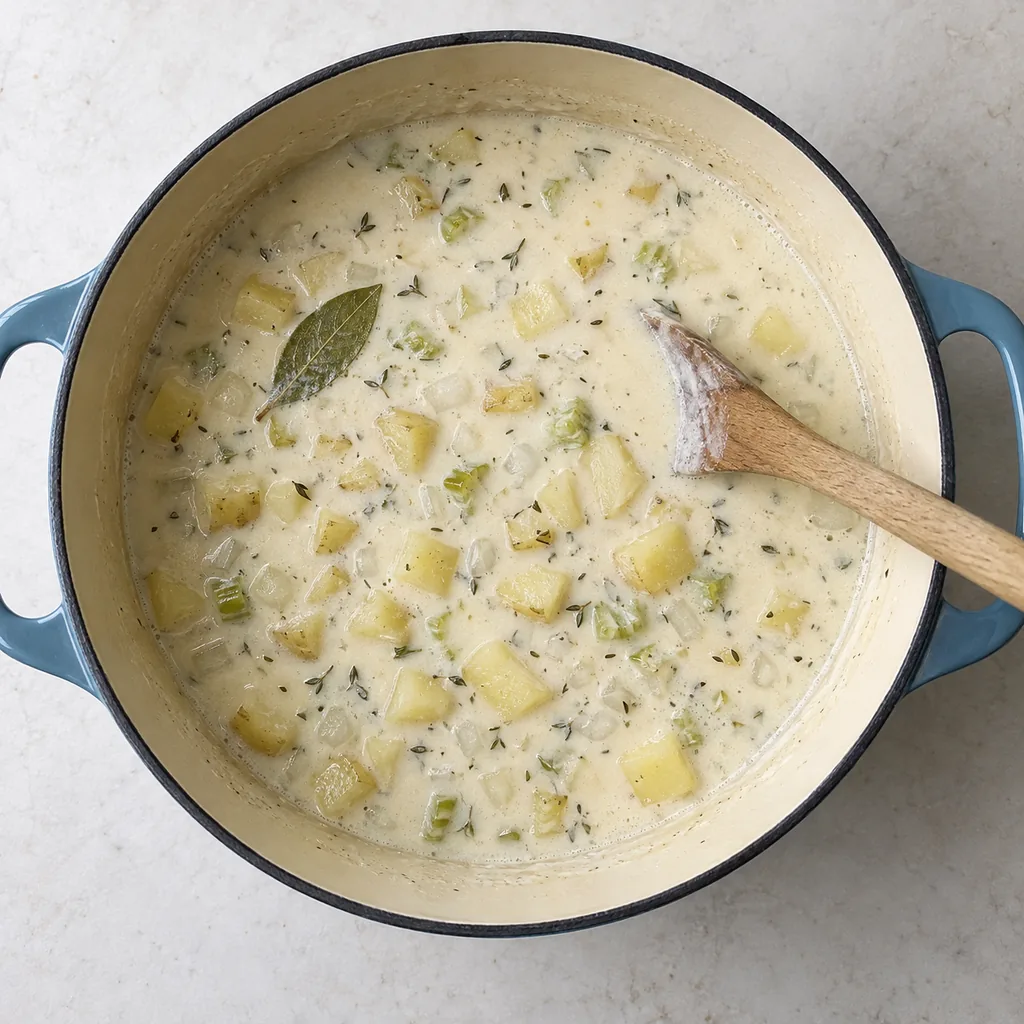
Meanwhile, char the corn
For each pot of chowder
Meanwhile, heat a 12-inch skillet over high heat. Add 1 1/2 cups fresh corn kernels in one layer and cook, stirring only once or twice, until charred in spots and sweet-smelling, about 6 to 8 minutes. Scrape the corn into a bowl.
Technique: charring corn
A very hot, dry pan and kernels left alone in one layer let the sugars blacken in spots before the corn turns mushy. Stir only once or twice; constant stirring just steams it.
Toast the cracker crumbs
For each pot of chowder
Wipe out the skillet and melt 1 tbsp unsalted butter in it over medium heat. Add 1 cup oyster crackers and 1/2 tsp seafood seasoning and toss until the crumbs are golden and fragrant, about 2 to 3 minutes. Move them to a small bowl.
Stir in the milk and cream
For each pot of chowder
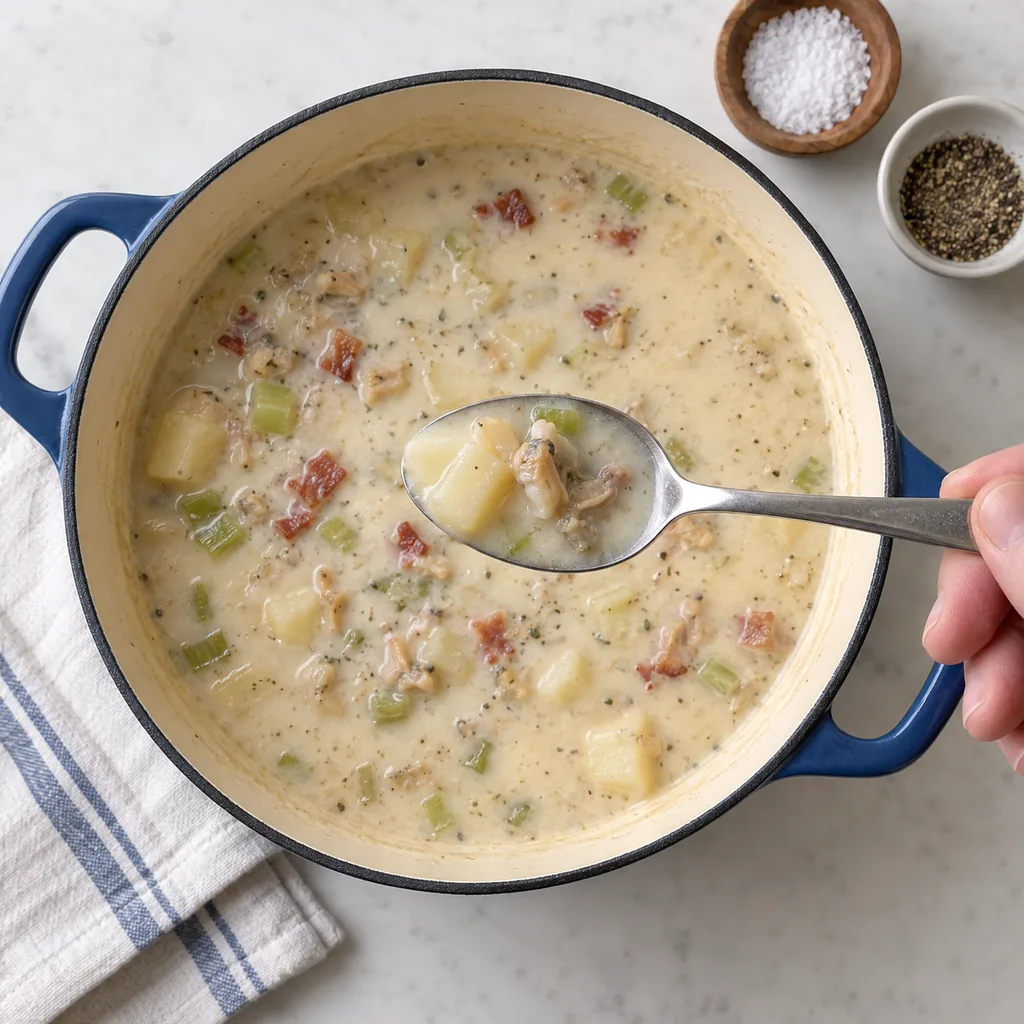
Stir 1 cup whole milk and 1 cup heavy cream into the pot over low heat. Warm the chowder until it steams and small bubbles form at the edge, without letting it boil, about 5 minutes.
If it goes wrong: the milk breaks into flecks
The pot got too hot. Pull it off the heat right away and keep it below a boil from here; a slightly grainy chowder still tastes good.
Tradition: before the cream
The earliest clam chowders had no milk at all and were thickened with crackers or stale bread. Milk and cream are associated with the New England style, tomato with Manhattan, and a clear broth with Rhode Island.
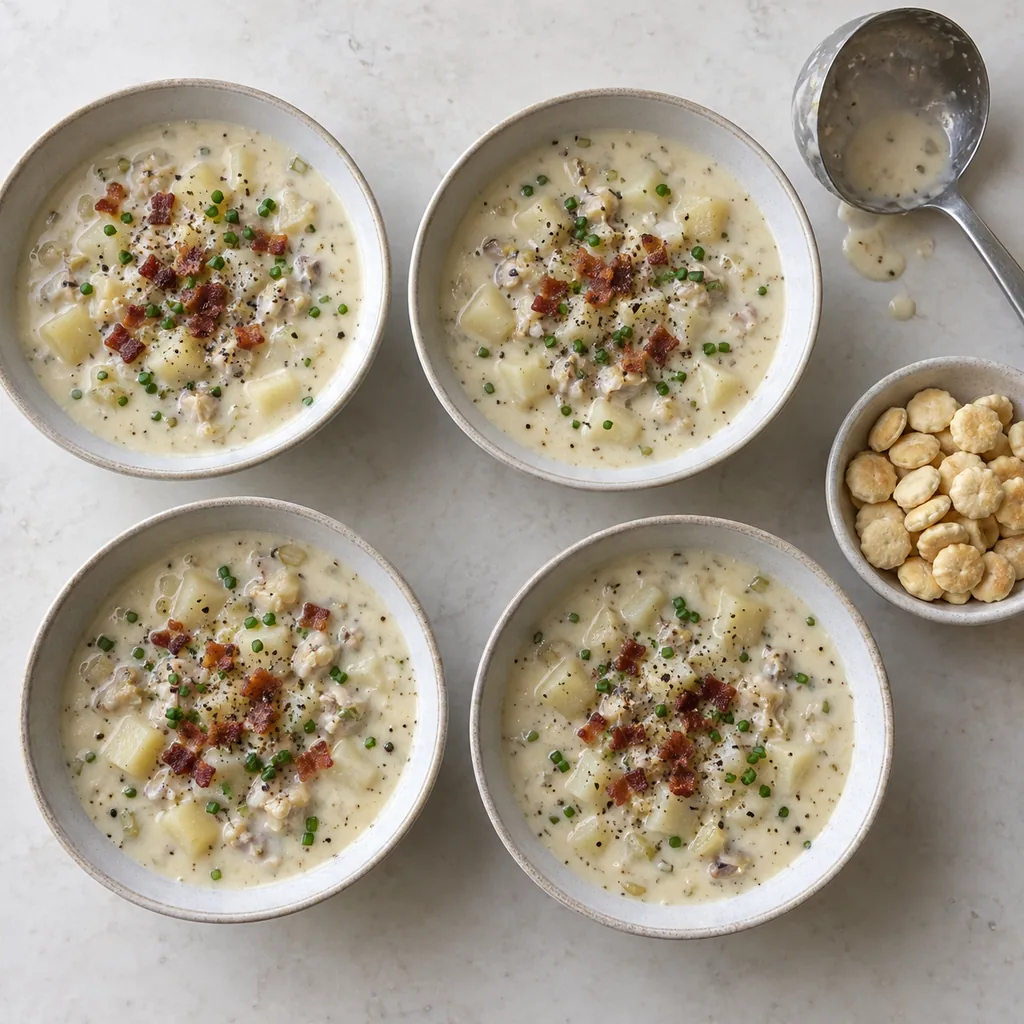
Add the clams and corn off the heat
For each pot of chowder
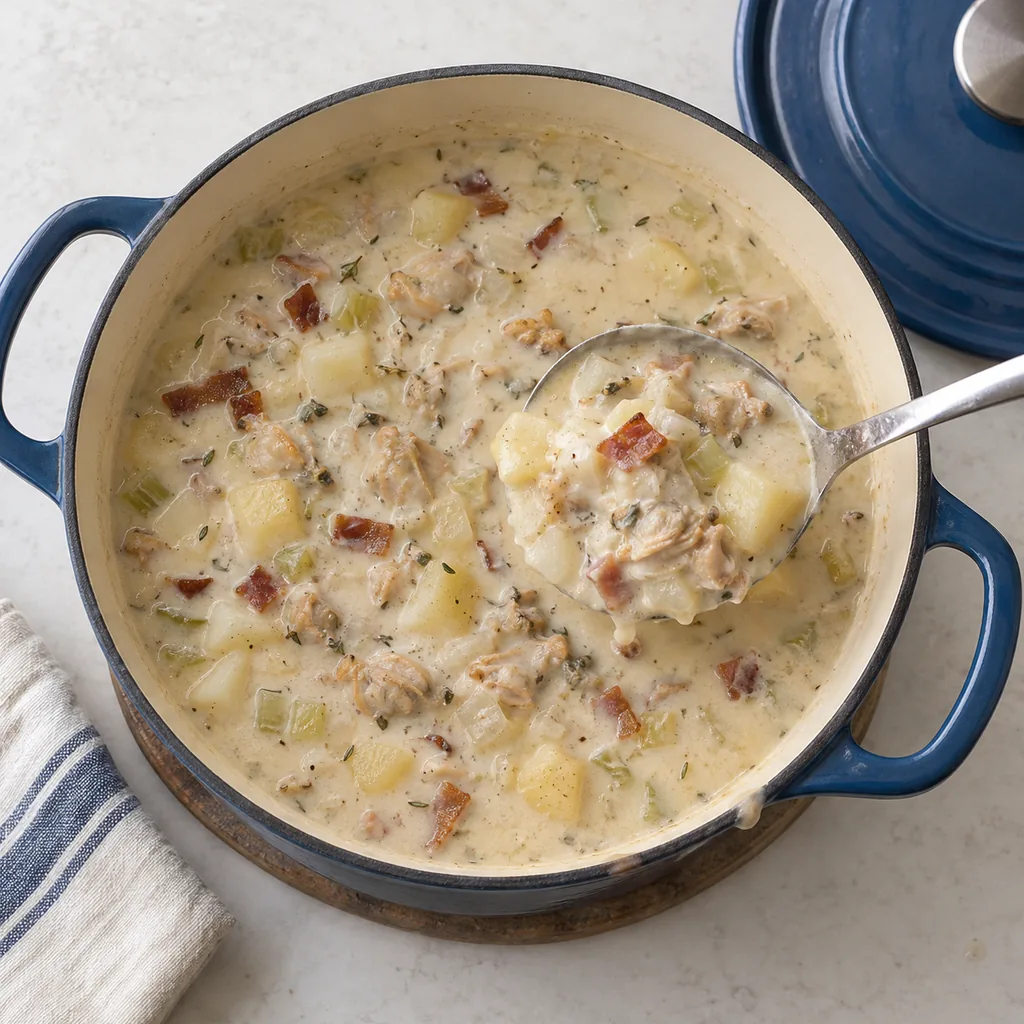
Take the pot off the heat and stir in the chopped clams, the charred corn and half of the cooked bacon. Cover and let the chowder stand until the clams are warm and the broth thickens slightly, about 5 minutes. Lift out the bay leaf, if you used it.
Taste, then fix
For each pot of chowder
Taste a spoonful with a piece of clam and potato. Aim for briny and sweet, a little smoky, rich but not heavy. If it tastes flat, add flaky kosher salt to taste; if it tastes heavy or one-note, add black pepper to taste. The clam liquor is already salty, so add salt a little at a time and taste again. The chowder tastes briny, sweet and well seasoned.
Top it and serve
For the whole recipe
Ladle the chowder into warm bowls to make 4 servings, dividing the potatoes and clams evenly. Stir 2 tbsp fresh chives into 2 tbsp olive oil and spoon it over the bowls, then top them with the other half of the bacon, the cracker crumbs and black pepper to taste, and serve with the lemon wedges. Refrigerate leftovers promptly and reheat them over low heat, stirring, to 165°F (74°C) on an instant-read thermometer. The chowder is portioned and garnished.
Make ahead: stop at the potatoes
Cook the base through the potatoes, cool it and refrigerate it. When you're ready, warm it, add the milk, cream, clams and corn, and keep it below a boil; toast the crumbs fresh so they stay crisp.
Make it yours: from safe to wild
Safe: flake in some smoked trout with the clams. Bolder: go Rhode Island style and skip the milk and cream for a clear, briny broth. Wild: chowder ramen, ladled over springy noodles with a soft egg, chili oil and torn nori.
About this recipe
Allergens / Diets
Rebuilt recipe in review. Allergen and diet details are being re-checked.
Research preview: these details come from our sourced research and haven't been reviewed by our chef yet.
Why it works
Steaming the clams first gives a briny liquor that seasons the whole pot. The vegetables soften in rendered bacon fat, a light roux gives body, and the potatoes simmer in the clam liquor. Milk and cream go in below a boil so they stay smooth, and the clams go back in last, off the heat, so they stay tender.
Associated with
American (New England)
Early clam chowders had no milk and were thickened with crackers or stale bread. The milk-and-cream style became the New England, or Boston, chowder; the tomato Manhattan style was in print before 1919, and Rhode Island makes a clear-broth version.
Taste
- Sweet
- Sour
- Salty
- Bitter
- Savory
- Heat
Briny clam liquor with sweet clam meat., A little smoke from the bacon; rich but not heavy from milk and cream. · creamy, lightly thickened broth, tender clams, soft potato cubes · hot
Skill level
Some practice
Several stages and live-shellfish handling, each with a clear cue to watch for; none needs special equipment beyond a heavy pot.
Occasions
Lenten Fridays
Clams are seafood, which the Catholic abstinence rule permits; bacon is meat, so it comes out on those days.
Cold-weather comfort
A hearty, creamy chowder suits fall and winter; clams are sold year-round.
Serving and keeping
Best served: Right after the clams warm through off the heat Ladle into warm bowls, dividing the clams and potatoes evenly, and top with the rest of the bacon, chives and pepper, with oyster crackers at the table.
Make ahead: Add the milk, cream and chopped clams when you reheat to serve, keeping the pot below a boil.
Storage: Refrigerate within 2 hours (1 hour above 90 °F / 32 °C), divided into shallow containers so it cools quickly. Freezing is not recommended for quality: the cream can separate and the potatoes turn grainy.
Leftovers: Use refrigerated leftovers within 3 to 4 days.
Food safety
- Before cooking, throw out any clam with a cracked or broken shell, or one that stays open when you tap it.
- Discard any clam that does not open during steaming.
- Keep the shelled clam meat covered in the refrigerator until it goes back into the pot.
- Refrigerate leftovers within 2 hours, or 1 hour above 90 °F (32 °C), in shallow containers, and reheat to 165 °F (74 °C).
We make no statement about cross-contact in your kitchen or in packaged ingredients. Check the clam juice and oyster cracker labels.
Nutrition notes
Clams, their liquor, bacon and bottled clam juice all bring salt. Taste before adding any; using water instead of bottled clam juice, or less bacon, makes a less salty pot.
For your food tracker
Fields for MyFitnessPal and other trackers
- Recipe url
- https://isthebestrecipe.com/soups/clam-chowder
- Name
- Smoky Clam Chowder with Charred Corn and Oyster-Cracker Crumbs
- Servings
- 4
- Recipe yield
- 4 servings
- Recipe ingredient
- 4 lb littleneck clams scrubbed; throw away any with cracked shells or that stay open when tapped, 1 cup dry white wine, 1/2–1 cups water only as much as the strained liquor needs, 4 oz thick-cut bacon cut into 1/2-inch pieces, 3 tbsp unsalted butter, 1 whole medium yellow onion finely chopped, 2 stalks celery finely chopped, 2 cloves garlic minced, 1 tsp fresh thyme leaves, 1/2 tsp smoked paprika, 3 tbsp all-purpose flour, 1 1/4 lb Yukon Gold potatoes scrubbed and cut into 1/2-inch cubes, 1 1/2 cups fresh corn kernels cut from about 2 ears, 1 cup oyster crackers coarsely crushed, 1/2 tsp seafood seasoning a celery-salt and paprika blend, 1 cup whole milk, 1 cup heavy cream, to taste flaky kosher salt, to taste black pepper freshly ground, 2 tbsp fresh chives finely chopped, 2 tbsp olive oil, 1 whole lemon cut into wedges
- Copy action wording
- Copy recipe and estimated nutrition
Make it the best
Copy this recipe and make it your own. Change amounts, swap ingredients, rewrite steps. The original stays as it is.
Nutrition Values
Nutrition estimates aren’t available for this recipe yet.
Your notes
Kept on this device.Return: https://isthebestrecipe.com/soups/clam-chowder