
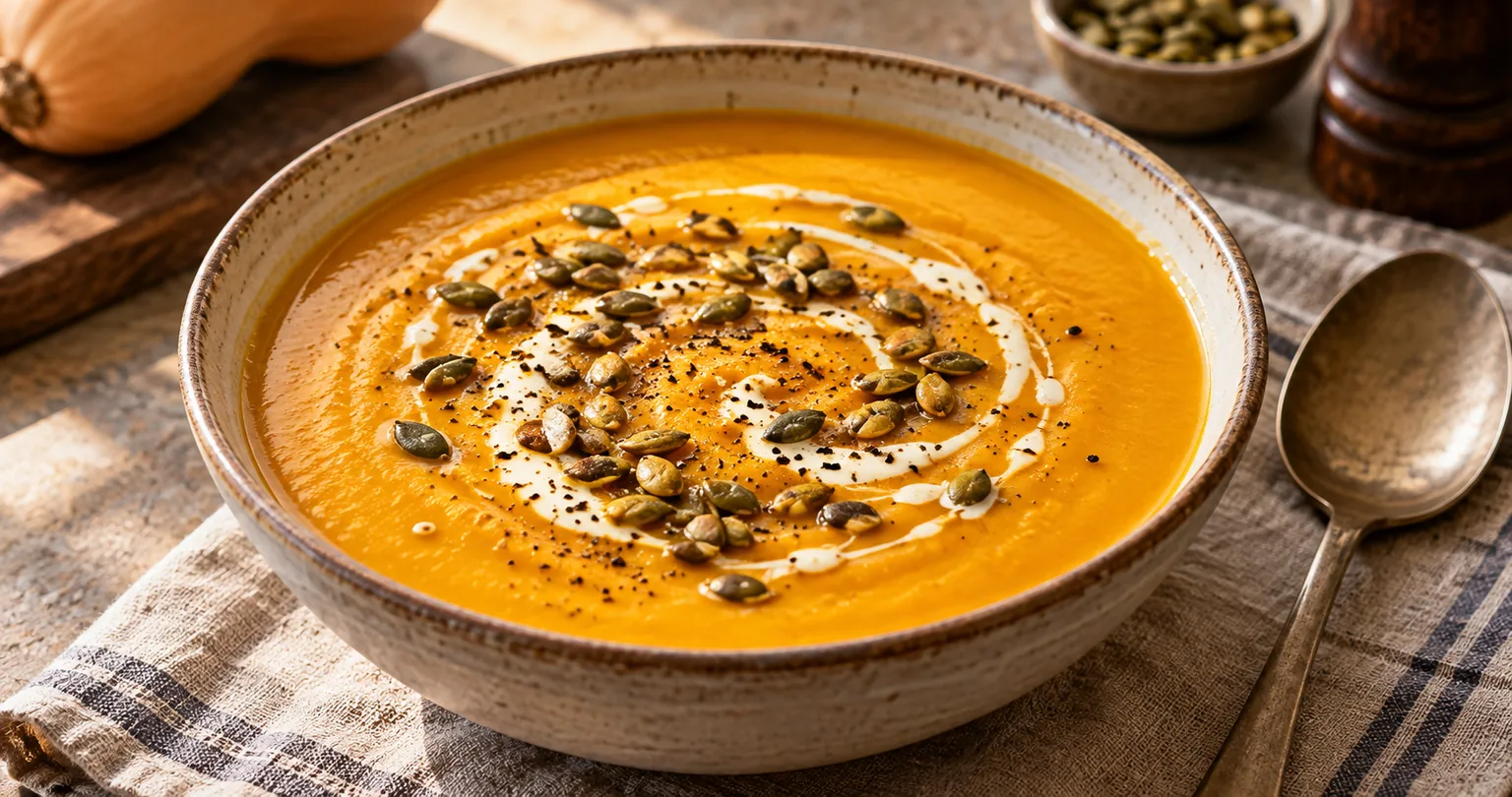
Roasted butternut squash soup
- Yield
- 4 servings
A smooth, golden soup that shows what the oven can do for a vegetable. Roasting the squash browns its sugars and deepens its flavor, and then the rest is balance: salt and a little acid so the sweetness tastes bright instead of flat. It also teaches you to blend hot soup safely and set its thickness at the end.
IngredientsTips are one tap away.
Ingredients
Batches and reset
4 servings · US measures · 1 batch
Batching
Roast one base batch of squash on each 18- by 13-inch rimmed sheet pan and cook it in one 5- to 6-quart pot; for a larger yield, use a second pan and pot or cook a second batch. Roasting, simmering and blending follow the same cues; cooking times do not multiply with ingredient quantities.
Original recipe: 4 servings.
The apple, heavy cream, extra broth, extra salt and vinegar, and black pepper are left out of the nutrition estimate. Low-sodium chicken broth is the selected broth, so this edition is not vegetarian. Nutrition is incomplete: the edible share of the whole squash and the mass of the fresh sage leaves are not established.
Before you start
- Read through the recipe before heating the oven. Gather the sheet pan, knife, pot, blender, towel, heatproof bowl and measured ingredients. If your kosher salt is the dense, fine-grained kind, use about half as much.
Directions
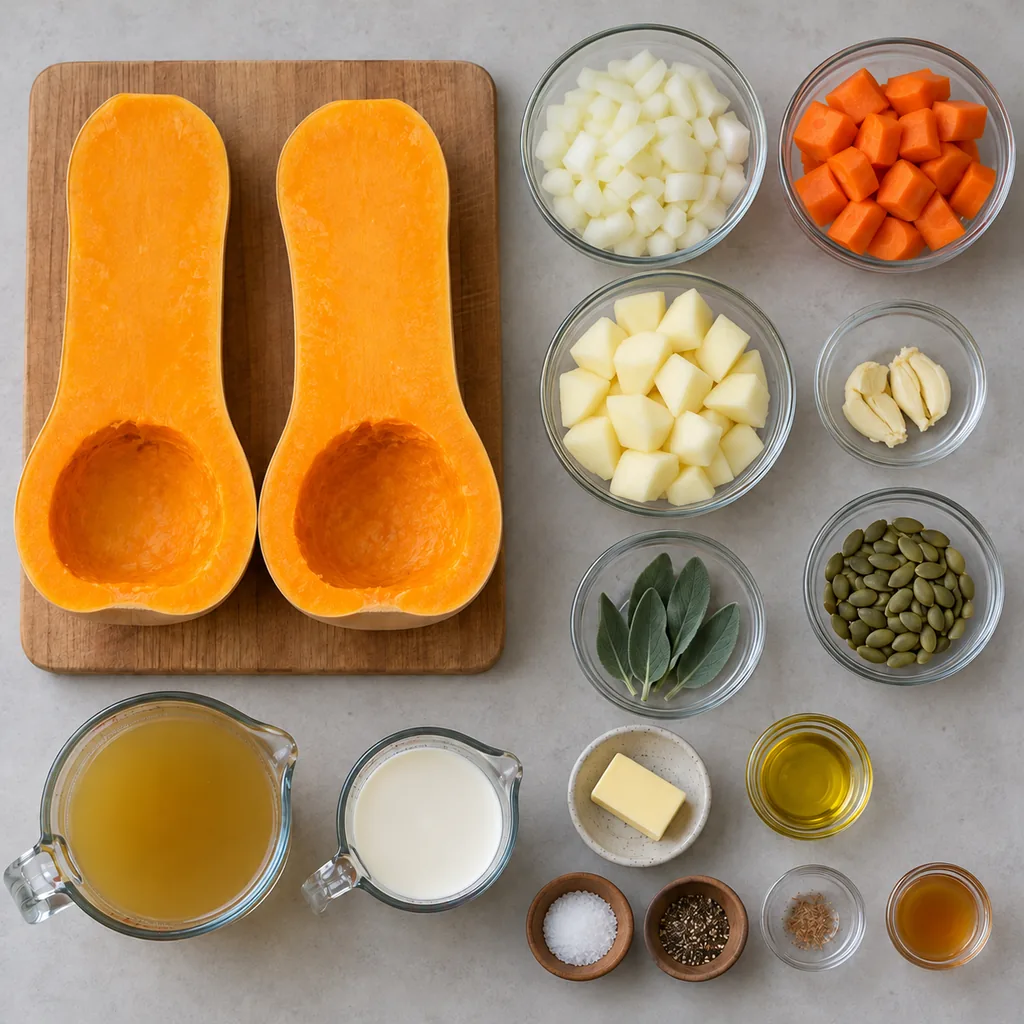
Read through and gather
For the whole recipe
Read through the recipe, then gather the equipment and use the ingredient lines to prepare and measure everything. To halve the squash, stand it on a flat end and rock the knife down through it rather than forcing it. Everything is prepared and measured before the oven goes on.
Heat the oven and oil the squash
For each pan and pot of soup
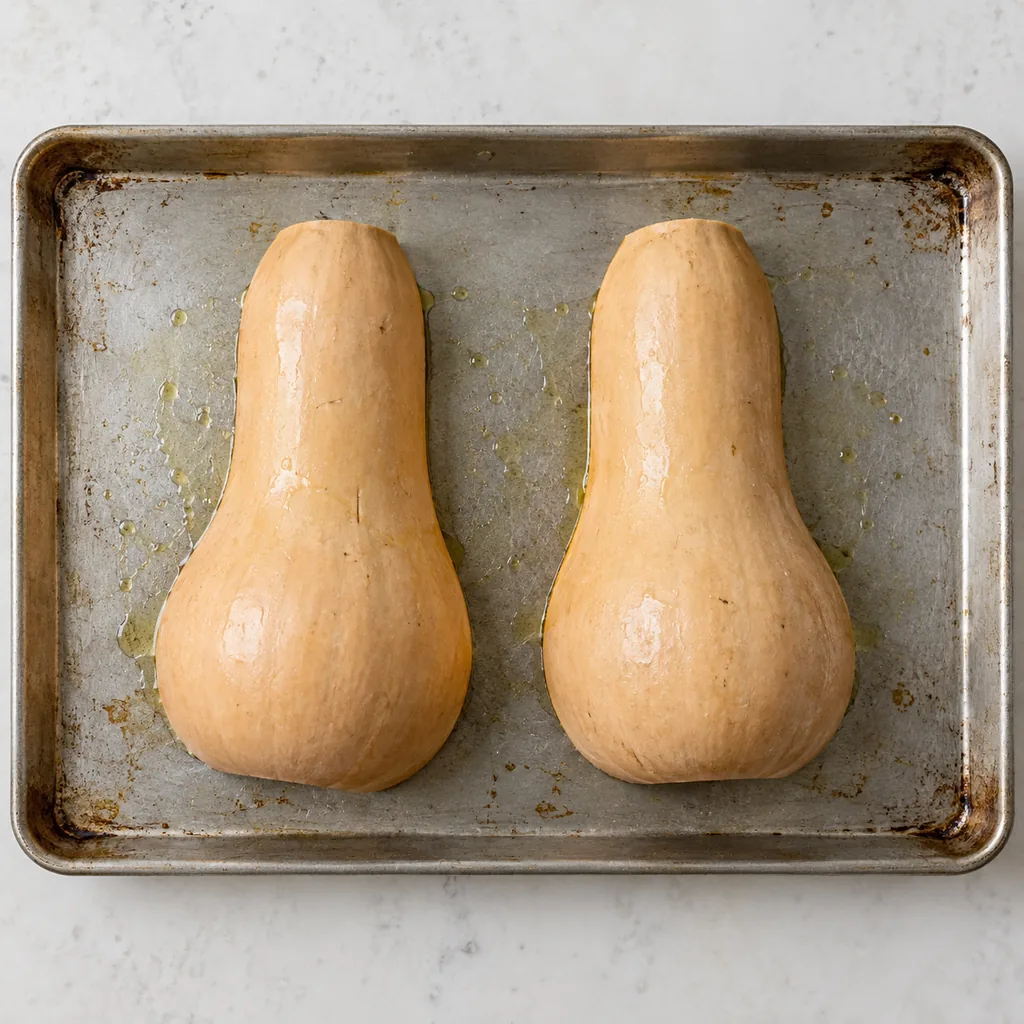
Heat the oven to 400°F with a rack in the middle position. Brush the cut sides of 3 lb butternut squash with 1 tbsp olive oil, sprinkle them with 1/2 tsp flaky kosher salt and lay the halves cut side down on an 18- by 13-inch rimmed sheet pan. The squash halves lie cut side down on the pan.
Roast the squash
For each pan and pot of soup
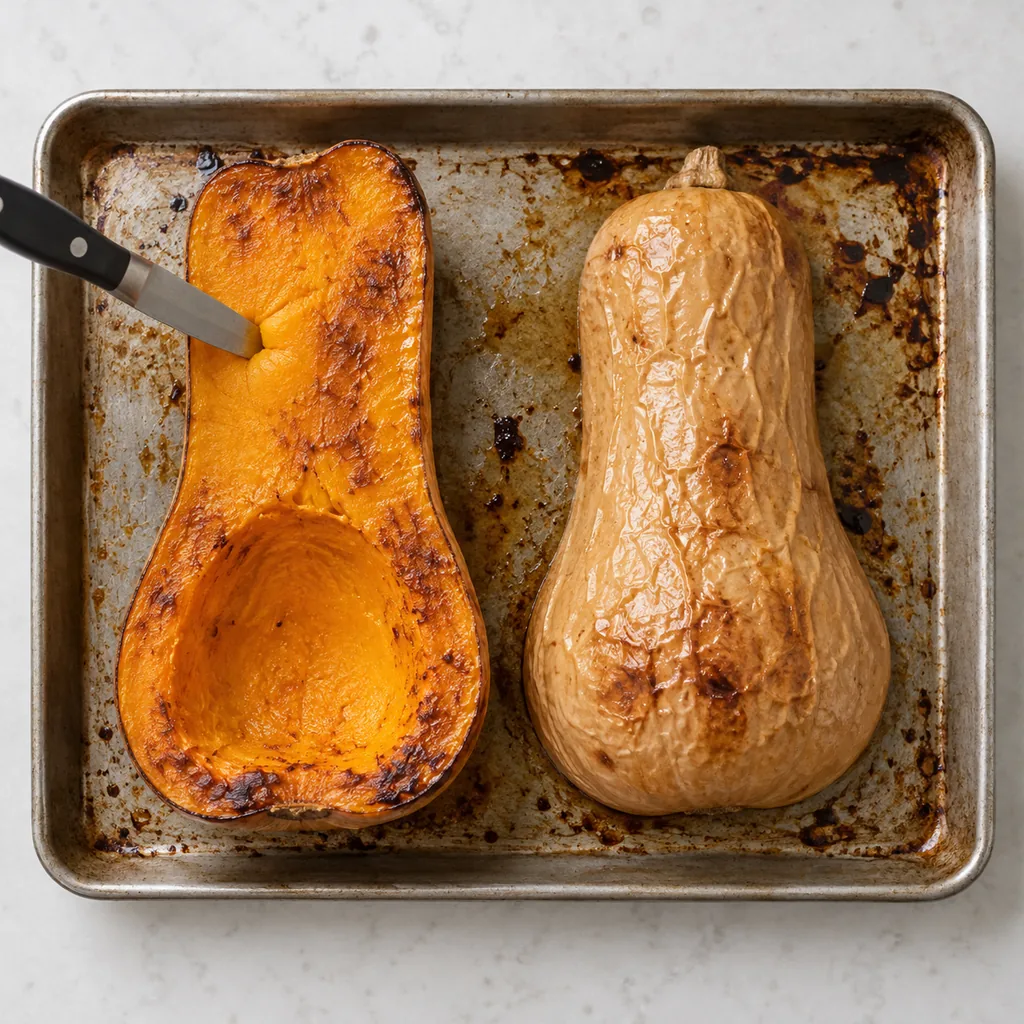
Roast the squash at 400°F on the middle position rack until a knife slides easily into the thickest part of the neck and the undersides are browned, about 45 to 55 minutes.
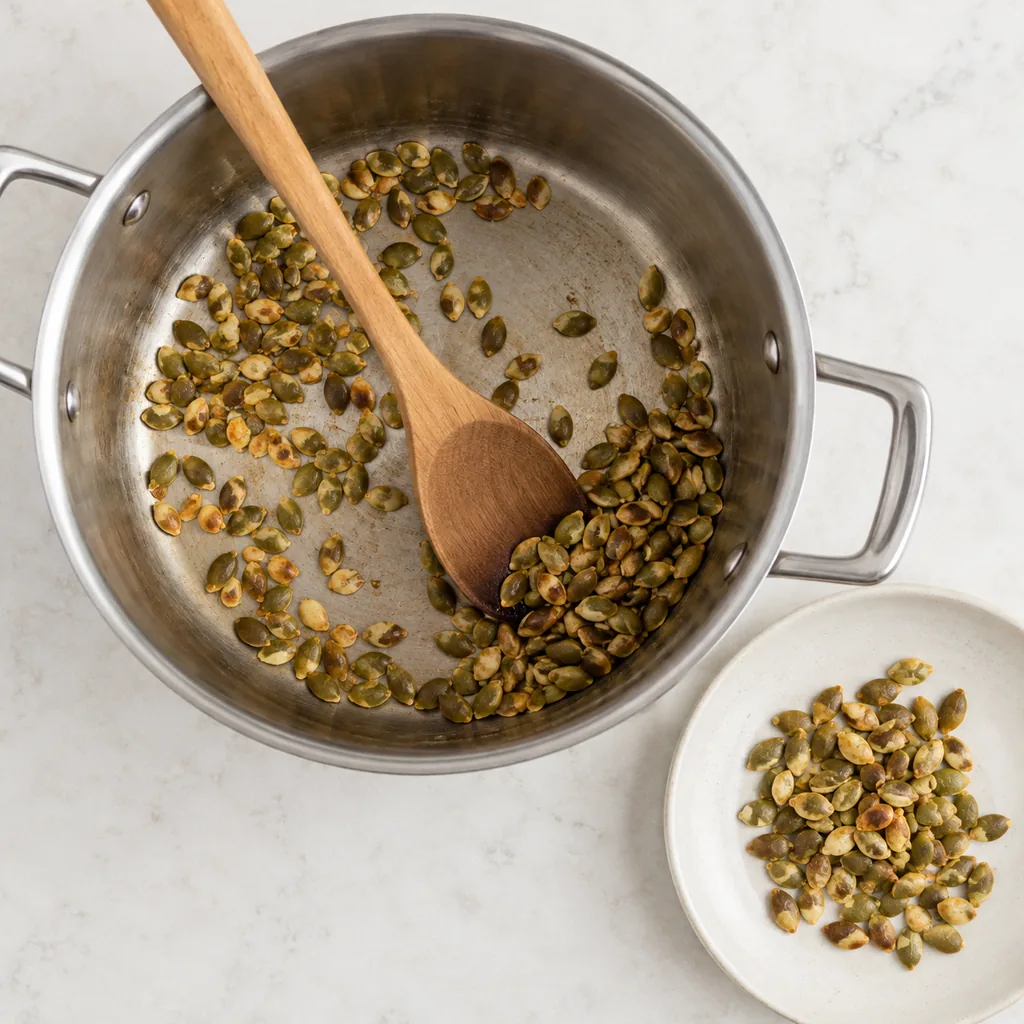
Toast the pumpkin seeds
For each pan and pot of soup
Toast 1/4 cup hulled pumpkin seeds (pepitas) while the squash roasts, in the dry 5- to 6-quart Dutch oven or soup pot over medium heat, stirring often, until golden and starting to pop, about 3 to 4 minutes. Move them to a plate.
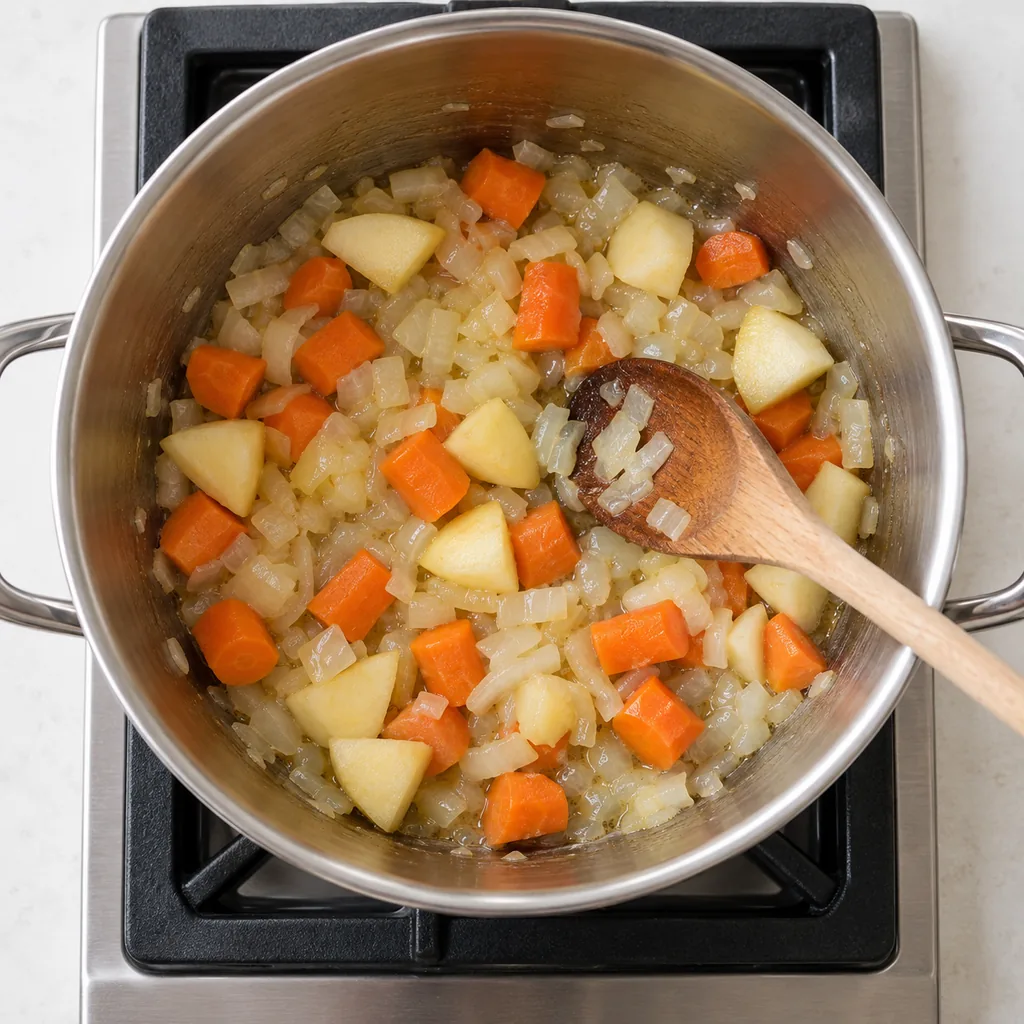
Melt the butter and soften the vegetables
For each pan and pot of soup
Melt 2 tbsp unsalted butter with 1 tbsp olive oil in the same pot over medium heat. Add the onion, carrot, apple, if using, and 1/2 tsp flaky kosher salt. Cook, stirring now and then, until the onion is soft and see-through but not browned, about 10 to 12 minutes.
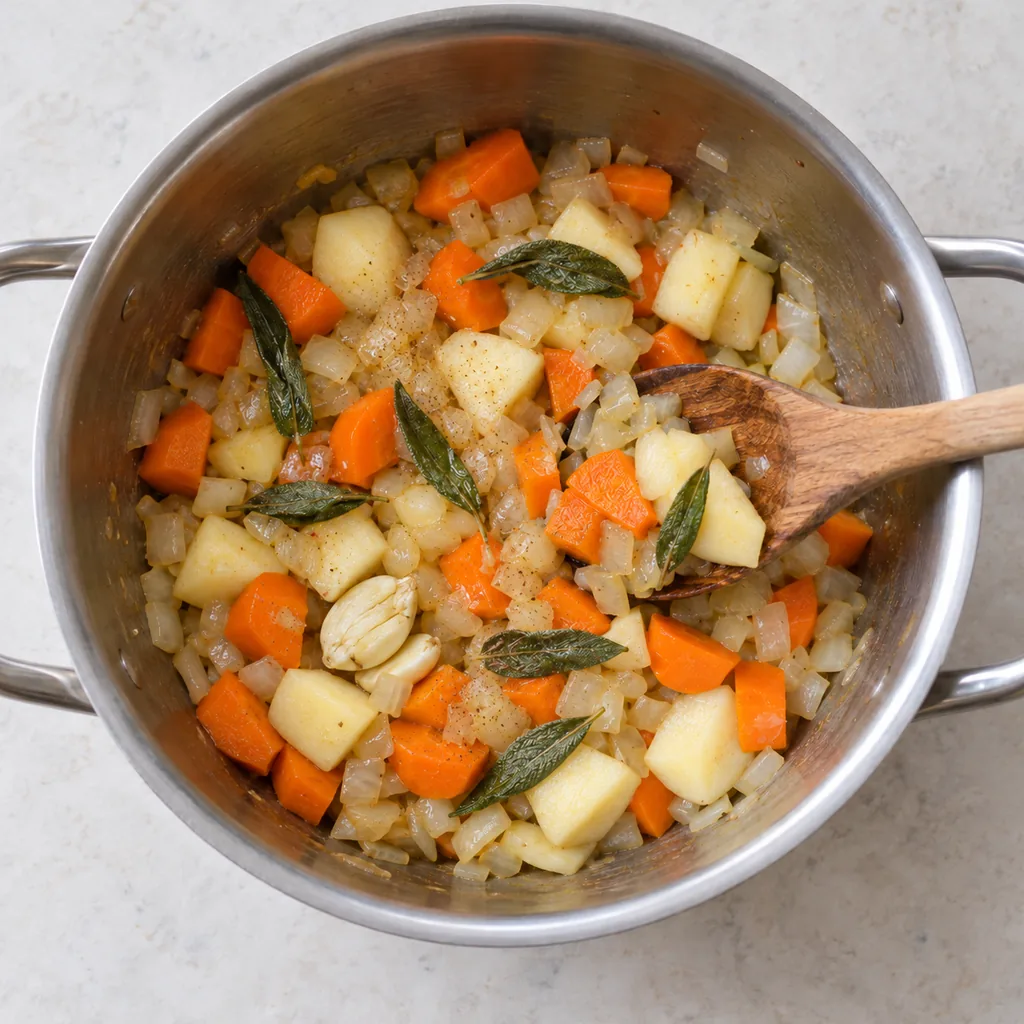
Stir in the garlic, sage and nutmeg
For each pan and pot of soup
Stir in the garlic, the sage leaves and 1/8 tsp nutmeg over medium heat until fragrant, about 1 minute.
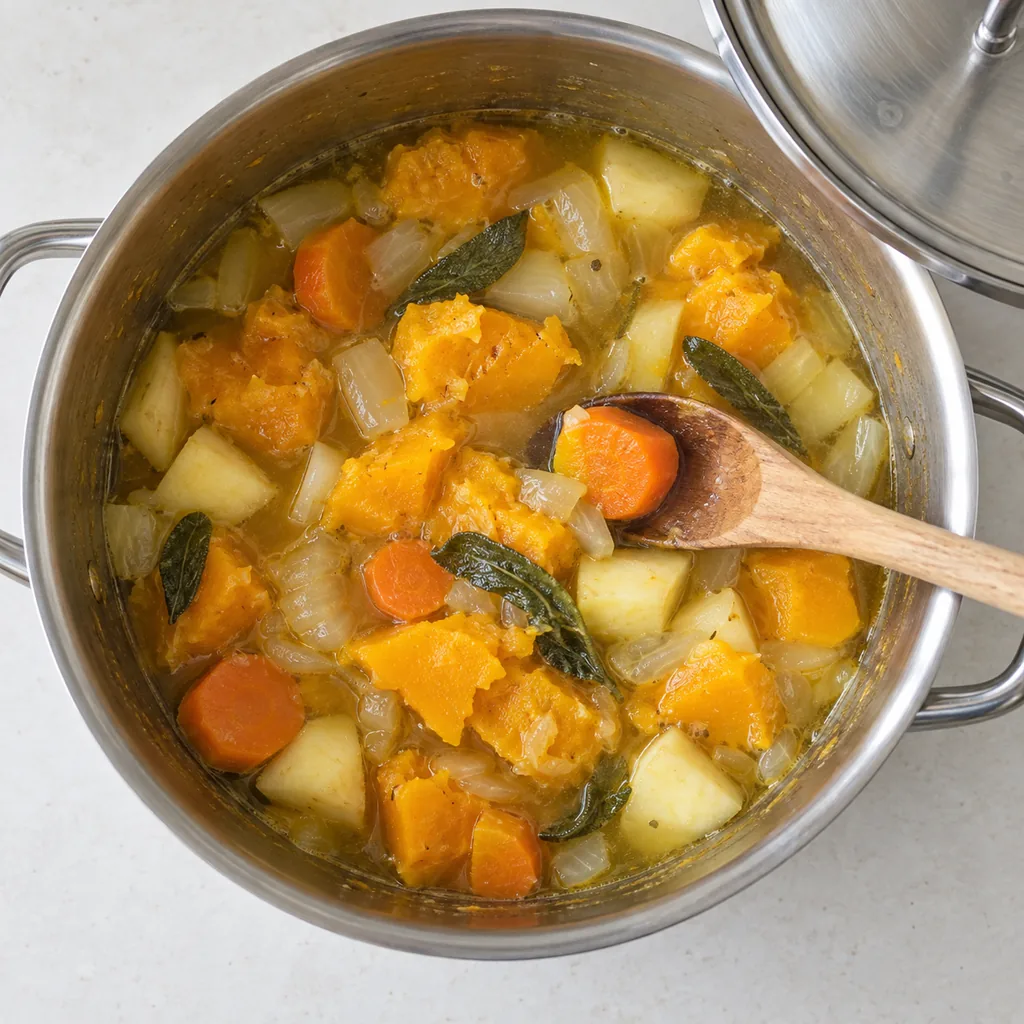
Scoop in the squash and simmer
For each pan and pot of soup
Scoop the squash flesh out of the skins into the pot, holding each hot half in a folded towel, and throw away the skins. Scrape in the browned bits from the sheet pan and add 3 1/2 cups low-sodium chicken broth. Bring to a simmer over medium-high heat, then turn to low heat, set the lid ajar and simmer until the carrot mashes easily against the side of the pot, about 10 minutes.
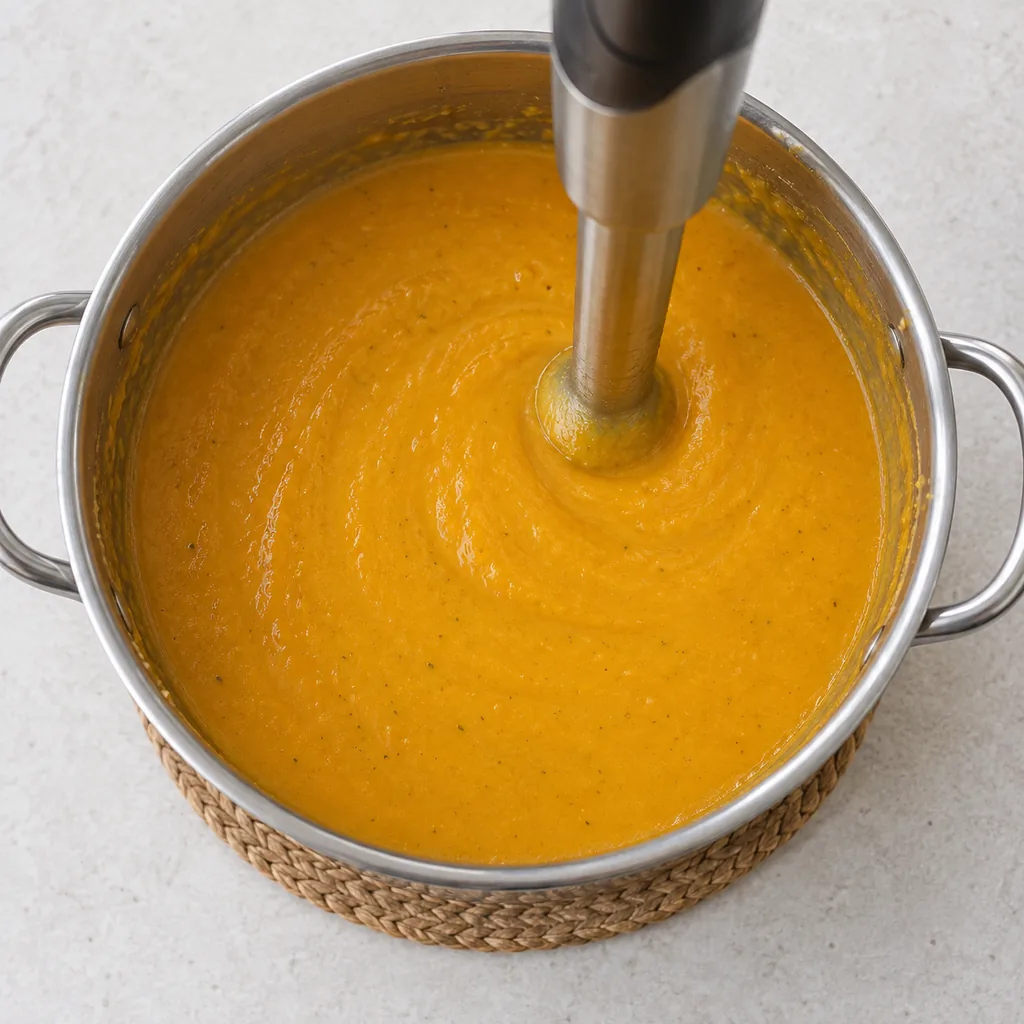
Blend the soup smooth
For each pan and pot of soup
Blend the soup off the heat. With an immersion blender, keep the blade under the surface and blend until completely smooth. With a countertop blender instead, blend in batches no more than half full, with the center cap removed and a folded towel held over the opening, and pour each batch into the heatproof bowl before returning it all to the pot. The soup is completely smooth.
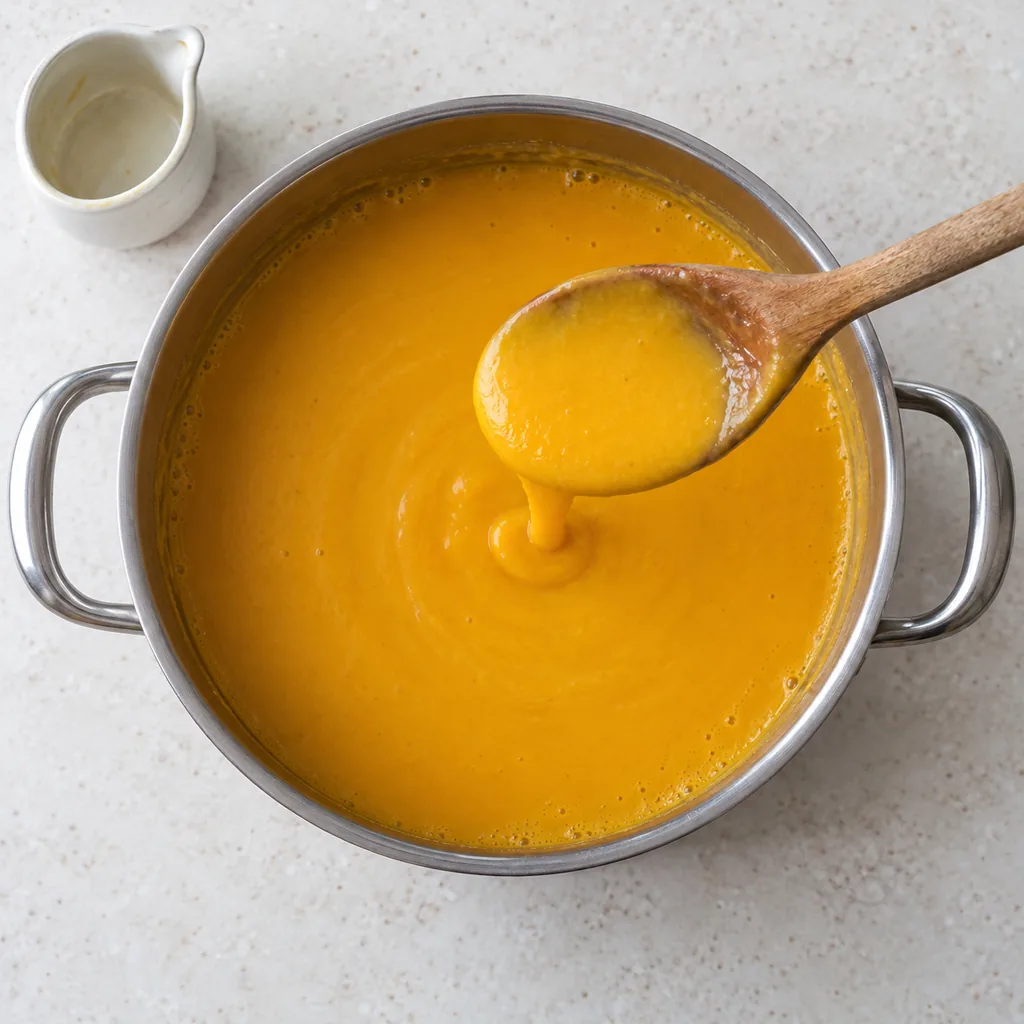
Set the pot over low heat and finish the soup
For each pan and pot of soup
Set the pot over low heat and stir in 1/2 cup heavy cream, if using. If the soup is too thick, stir in extra low-sodium chicken broth to taste, 1/4 cup at a time. Stir in 1 tsp cider vinegar. Warm the soup without letting it boil hard until it steams and coats a spoon in a thick ribbon.
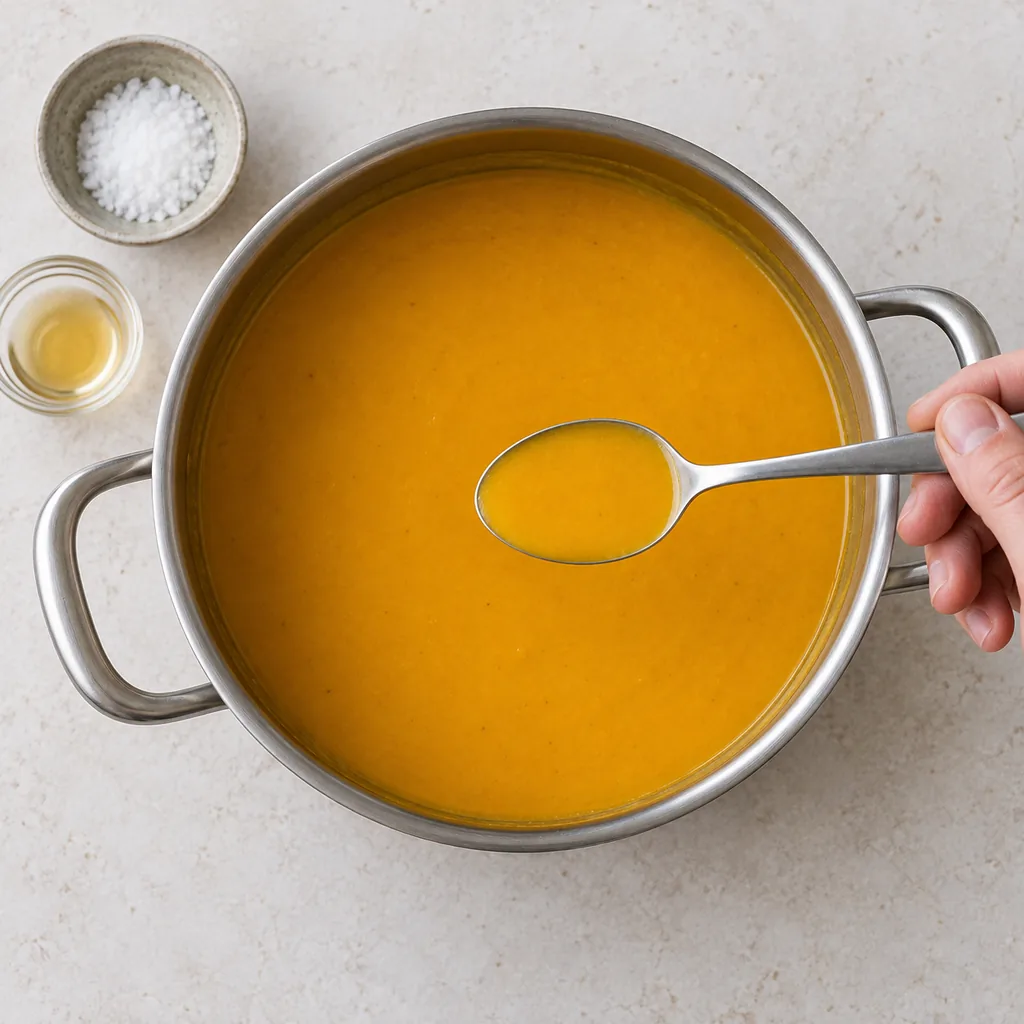
Taste and balance the soup
For each pan and pot of soup
Taste the soup. Aim for sweet and earthy, savory underneath, with a bright finish. If it tastes flat, add flaky kosher salt to taste; if it still tastes flat or too sweet, add cider vinegar to taste, up to 1 tsp more. The soup tastes sweet, savory and bright.
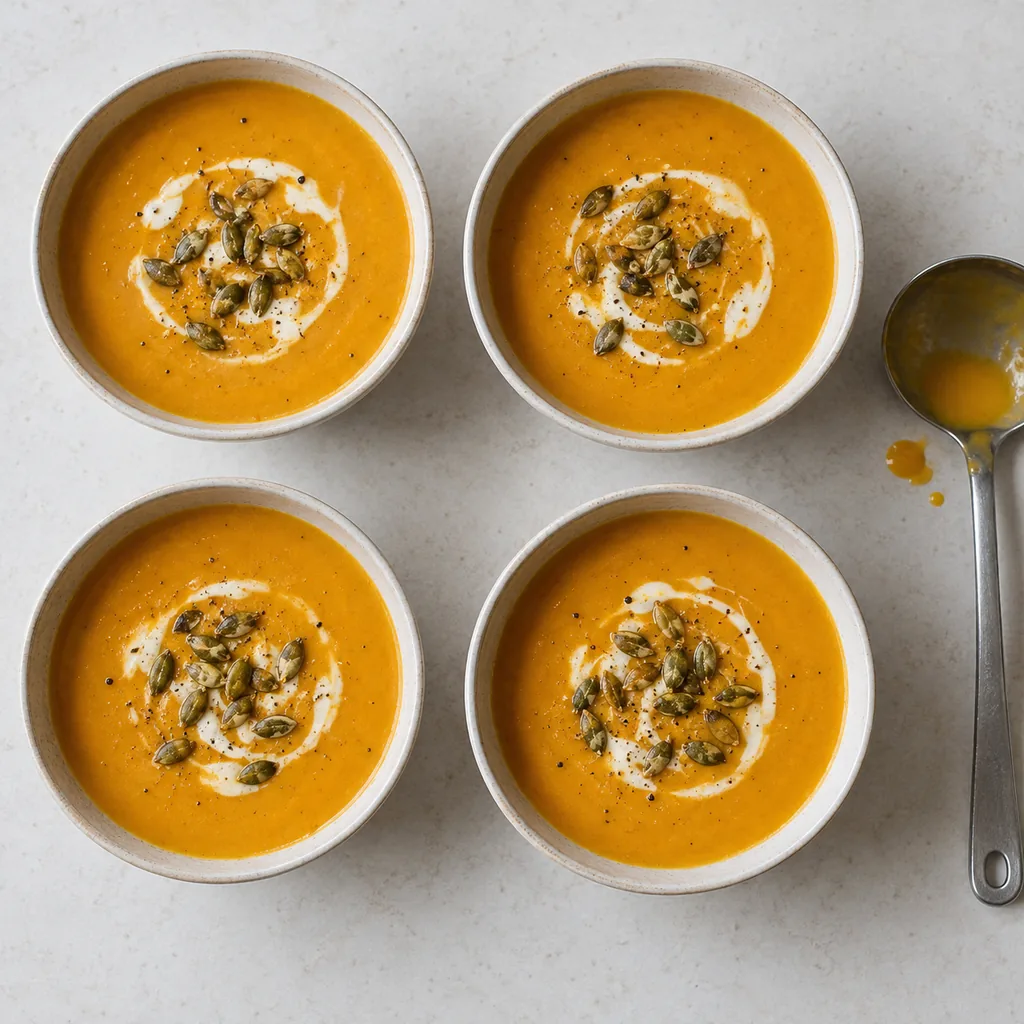
Ladle and serve
For the whole recipe
Ladle the soup into warm bowls to make 4 servings. Swirl heavy cream to taste over each bowl, if using, and top with the toasted pumpkin seeds and black pepper to taste. Cool leftovers promptly, refrigerate them, and reheat them over low heat, stirring, to 165°F (74°C) on an instant-read thermometer. The soup is portioned and garnished.
About this recipe
Research preview: these details come from our sourced research and haven't been reviewed by our chef yet.
Why it works
Roasting browns the squash and concentrates its flavor before it ever meets liquid. Onion, carrot and apple soften without color, the soup is blended completely smooth, and its thickness is set last with broth. Salt and then a little acid keep the sweetness bright instead of flat.
Associated with
American home cooking
Butternut squash is a modern variety, bred in Massachusetts in the 1940s from older squashes. Squash and pumpkin soups are much older and widespread: pumpkin soup is a common US Thanksgiving dish, squash soup belongs to Mozambican and Namibian cooking, and butternut soup is a usual starter in South Africa.
Taste
- Sweet
- Sour
- Salty
- Bitter
- Savory
- Heat
Sweet, earthy roasted squash with a savory base., Sage and a little nutmeg; a bright finish from cider vinegar. · velvety, completely smooth puree that coats a spoon, crunchy toasted pepitas on top · hot
Skill level
Easy
Familiar steps with clear cues; the only hard part is cutting the raw squash, and the recipe shows how.
Allergens
Contains: milk.
Check the broth label for wheat and the vinegar label for sulfites. Pepitas can share equipment with sesame or tree nuts; check the pack.
Diets
Vegetarian: Doesn't fit as written Vegan: Doesn't fit as written Pescatarian: Doesn't fit as written Dairy: See the allergen lines Egg: See the allergen lines Gluten: See the allergen lines
Occasions
US Thanksgiving
Pumpkin soup is a common US Thanksgiving dish, and roasted squash soup is its close relative.
Halloween and fall
A golden squash soup suits fall; this is an editorial tag, not a tradition.
Lenten Fridays
There are no meat pieces in this soup.
Haitian Independence Day (soup joumou's relative)
Soup joumou, a Haitian pumpkin soup, is eaten on 1 January; this butternut soup is a relative, not that dish.
Serving and keeping
Best served: Right after the final taste In warm bowls with toasted pepitas, black pepper and, if you like, a swirl of cream
Make ahead: Freeze the soup before adding cream if you can; stir the cream in when you reheat, over low heat.
Storage: Refrigerate within 2 hours (1 hour above 90 °F / 32 °C), in shallow containers. Freeze for longer keeping, about 2 to 3 months for best quality.
Leftovers: Cream-finished soup can split if boiled hard; reheat it gently.
Food safety
- Stand the squash on a flat cut end and rock the knife through it rather than forcing it.
- Blend hot soup in a stand blender no more than half full, with the center cap out and a folded towel over the opening; an immersion blender stays under the surface.
- Refrigerate leftovers within 2 hours, or 1 hour above 90 °F (32 °C), in shallow containers, and reheat to 165 °F (74 °C).
We make no statement about cross-contact in your kitchen or in packaged ingredients. Check the broth, vinegar and pepita labels.
Nutrition notes
Butternut squash gets its orange color from beta-carotene, which the body can turn into vitamin A.
Most of the sodium comes from the broth and the added salt. Low-sodium broth, or water with a little salt, plus a splash of vinegar at the end, keeps it lower.
Swap notes
low-sodium chicken broth · vegetarian
Use: Low-sodium vegetable broth, same amount
What changes: Slightly sweeter.
Not a swap: Full-salt broth; it leaves you no room to salt at the end.
heavy cream · lighter
Use: Half-and-half, or leave it out
What changes: Half-and-half is lighter; without cream the soup is brighter and more of squash.
Not a swap: Sour cream or yogurt stirred into the hot pot; they curdle.
low-sodium chicken broth
Use: Water, with a little more flaky kosher salt to taste
What changes: Keeps the soup squash-forward and lighter; finish with the vinegar.
Not a swap: Full-salt broth; it leaves you no room to salt at the end.
butternut squash · keto
Not a swap: Squash is the soup; there is no low-carbohydrate version of this recipe.
These notes don't change the amounts, allergens or nutrition shown for this recipe.
For your food tracker
Fields for MyFitnessPal and other trackers
- Recipe url
- https://isthebestrecipe.com/soups/roasted-butternut-squash-soup
- Name
- Roasted butternut squash soup
- Servings
- 4
- Recipe yield
- 4 servings
- Recipe ingredient
- 3 lb butternut squash ends trimmed, halved lengthwise and seeded, 2 tbsp olive oil, 1 tsp flaky kosher salt, 1/4 cup hulled pumpkin seeds (pepitas), 2 tbsp unsalted butter, 1 whole medium yellow onion chopped, 1 whole medium carrot peeled and chopped, 2 cloves garlic smashed, 6 whole fresh sage leaves, 1/8 tsp nutmeg freshly grated, 3 1/2 cups low-sodium chicken broth, 1 tsp cider vinegar, to taste black pepper freshly ground
- Copy action wording
- Copy recipe and estimated nutrition
Sources
- Pumpkin soup (Wikipedia (English), 2026-03-05)
- Butternut squash (Wikipedia (English), 2026-09-21)
- Food Allergies: What You Need to Know (major food allergens under FALCPA and the FASTER Act) (U.S. Food and Drug Administration, 2026-03-11)
- FASTER Act: Sesame Is the Ninth Major Food Allergen (U.S. Food and Drug Administration, 2024-04-12)
- Regulation (EU) No 1169/2011, Annex II: Substances or products causing allergies or intolerances (The National Archives (legislation.gov.uk), reproducing the EU Official Journal text, 2014-02-19)
- Cold Food Storage Chart (FoodSafety.gov (U.S. HHS/USDA/FDA))
- Leftovers and Food Safety (USDA Food Safety and Inspection Service, 2020-07-31)
- Four Steps to Food Safety (U.S. Centers for Disease Control and Prevention, 2025-11-24)
- FoodData Central 169295: Squash, winter, butternut, raw (USDA Agricultural Research Service, FoodData Central, 2019-04-01)
- FoodData Central 171413: Oil, olive, salad or cooking (USDA Agricultural Research Service, FoodData Central, 2019-04-01)
- FoodData Central 173468: Salt, table (USDA Agricultural Research Service, FoodData Central, 2019-04-01)
- FoodData Central 170556: Seeds, pumpkin and squash seed kernels, dried (USDA Agricultural Research Service, FoodData Central, 2019-04-01)
- FoodData Central 173430: Butter, without salt (USDA Agricultural Research Service, FoodData Central, 2019-04-01)
- FoodData Central 790646: Onions, yellow, raw (USDA Agricultural Research Service, FoodData Central, 2019-04-01)
- FoodData Central 170393: Carrots, raw (USDA Agricultural Research Service, FoodData Central, 2019-04-01)
- FoodData Central 1750343: Apples, honeycrisp, with skin, raw (USDA Agricultural Research Service, FoodData Central, 2019-04-01)
- FoodData Central 169230: Garlic, raw (USDA Agricultural Research Service, FoodData Central, 2019-04-01)
- FoodData Central 171583: Soup, vegetable broth, ready to serve (USDA Agricultural Research Service, FoodData Central, 2019-04-01)
- FoodData Central 170859: Cream, fluid, heavy whipping (USDA Agricultural Research Service, FoodData Central, 2019-04-01)
- FoodData Central 173469: Vinegar, cider (USDA Agricultural Research Service, FoodData Central, 2019-04-01)
- Daily Value on the Nutrition and Supplement Facts Labels (U.S. Food and Drug Administration)
- 21 CFR 101.54 Nutrient content claims for 'good source,' 'high,' 'more' (Legal Information Institute, Cornell Law School (eCFR text))
Make it the best
Copy this recipe and make it your own. Change amounts, swap ingredients, rewrite steps. The original stays as it is.
Nutrition Values
Nutrition estimates aren’t available for this recipe yet.
Your notes
Kept on this device.Return: https://isthebestrecipe.com/soups/roasted-butternut-squash-soup